
DEI in Uniform: A Threat to Civil-Military Discipline?
The most essential requirement of military command is allegiance to the chain of command. In a republic such as ours, that chain begins with the people, proceeds through their elected commander in chief, and concludes with the officer corps tasked with executing lawful orders. When that chain is weakened by ideology, insubordination, or factional allegiance, the result is not merely administrative dysfunction. It is a quiet crisis in civilian control of the military.
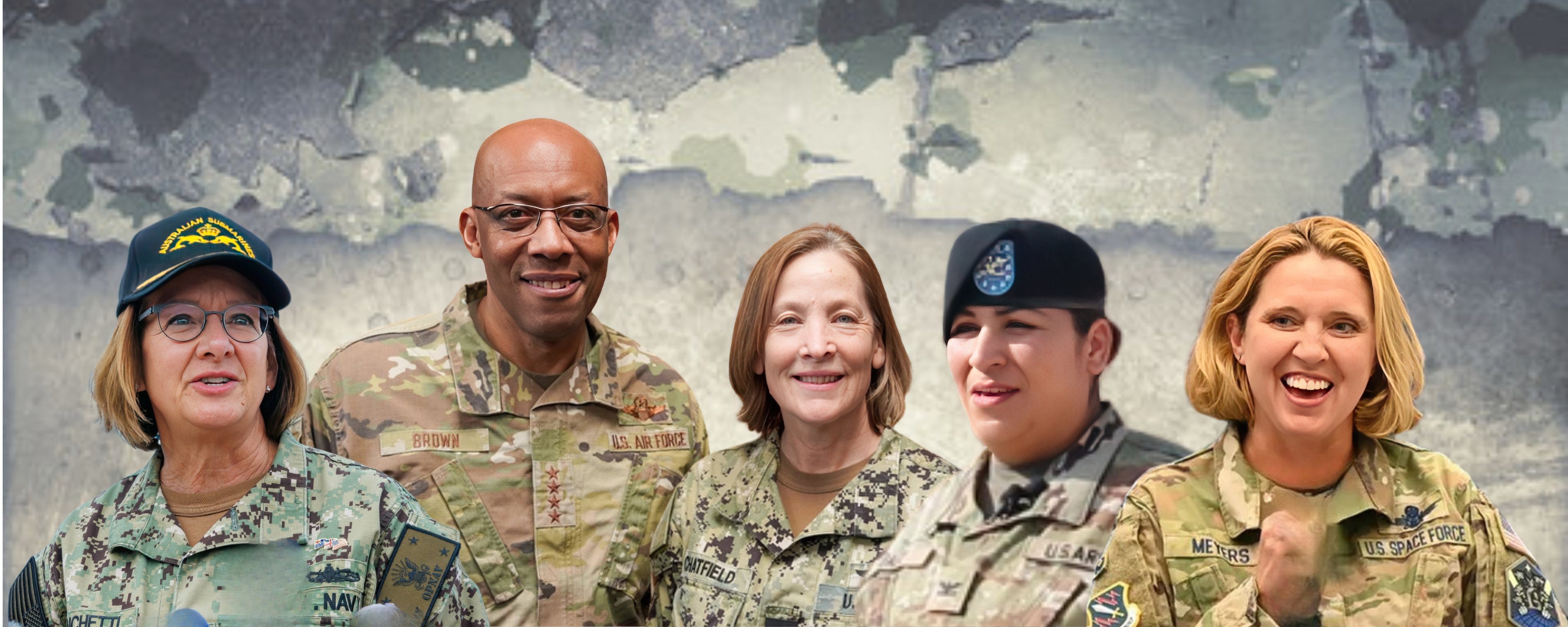
Recent high-profile firings illustrate this crisis with unnerving clarity. In February, Secretary of Defense Pete Hegseth dismissed Admiral Lisa Franchetti, the first woman to serve as Chief of Naval Operations. No official reason was provided, though the context was telling. Just weeks earlier, President Trump had removed General Charles Q. Brown Jr., the Chairman of the Joint Chiefs of Staff, along with several other senior leaders. According to analysis from SOFREP, these actions were motivated not by a shift in strategic doctrine, but by a necessary reorientation away from the DEI-centered leadership both Franchetti and Brown had come to represent.
During their tenures, both officers were at the vanguard of institutionalizing DEI priorities throughout the military hierarchy. Their focus, in many public statements and internal initiatives, veered away from warfighting readiness and toward demographic parity and identity-based advancement. Most observers were confident that they were dismissed for their "woke obsession with DEI," echoing a broader sentiment that their leadership styles stood in direct conflict with the Trump administration’s ethos of readiness and merit. Crucially, during their command, they oversaw the elevation of hundreds of officers whose primary qualification appeared to be their alignment with DEI values rather than exceptional military competence.
We are now seeing the results of that promotion pipeline. Many of the officers elevated during Franchetti and Brown’s tenure have begun to push back, publicly and defiantly, against the authority of President Trump and Secretary Hegseth. This is not just policy dissent. It is institutional resistance from those who have been conditioned to believe that identity trumps hierarchy.
The cases of Colonel Susannah Meyers, Vice Admiral Shoshana Chatfield, and Colonel Sheyla Baez Ramirez are emblematic. Each of these officers has, in recent weeks, taken actions that openly defy or symbolically repudiate the civilian leadership. Colonel Meyers, commander of Pituffik Space Base in Greenland, sent an extraordinary email distancing her command from Vice President J.D. Vance’s remarks about U.S. strategic interests in Greenland. The email was distributed not only to military personnel but also to civilians and foreign officers stationed at the base. The Pentagon rightly interpreted this as a disruption of the chain of command.
Vice Admiral Chatfield refused to display the official portraits of the President and Secretary of Defense at NATO headquarters and in an all-hands meeting explain she would simply "wait out" the administration. Such statements undermine not only internal discipline but also the United States’ image before allied commands. Portraits are not ornamental. They symbolize constitutional authority. To hide them is to erase the face of the republic.
Colonel Baez Ramirez, at Fort McCoy, is under scrutiny for allegedly removing or reversing the same portraits. Though no disciplinary action has yet been taken, the incident has already caused confusion and division among subordinates, further undermining command integrity.
These are not isolated incidents. They are symptoms of an institutional transformation, one catalyzed by DEI ideology. Officers groomed under this doctrine were not merely taught to accommodate diversity, they were trained to elevate it as a moral compass, a lens through which all authority must be judged. The result is a class of officers who view their personal identity as inseparable from their professional authority.
What begins as symbolic defiance can metastasize into structural disobedience. These officers, taught that their demographic distinctiveness confers moral superiority, now feel justified in resisting an administration they deem ideologically unfit. And they do so not as private citizens, but as uniformed leaders entrusted with command authority.
This is not an argument against including women, minorities, or LGBTQ personnel in the armed forces. The question is not whether a Navy should be diverse, but whether diversity should be the Navy’s mission. The military’s historic function is to project power, secure national interests, and preserve the republic. When those ends are subordinated to an ideological campaign, the consequences are not merely abstract. They are measurable, in morale, in cohesion, and in the erosion of lawful authority.
One might ask: what is the real danger of a few dissenting officers? The answer lies in the logic of civilian control. The President, whether one supports him or not, is the commander in chief. That title is not contingent on popularity within the ranks. It is a constitutional fact. If officers believe they can selectively implement or quietly undermine the administration’s policies because of personal disagreement, they invite a form of soft mutiny, an erosion of command authority that spreads not through bullets or coups, but through email blasts, symbolic refusals, and whispered resistance.
The Framers feared precisely this. They created a civilian-led military to avoid the European model, where powerful generals often became political actors. George Washington, perhaps the greatest general in American history, modeled this principle when he resigned his commission before Congress. He understood that the virtue of a soldier is not personal brilliance, but submission to lawful authority.
The DEI-era officer, however, has been taught a different lesson: that her uniqueness is a kind of superpower, and that her conscience is indistinguishable from her command. This ethos leads to a politicized officer corps, and ultimately, to instability. When officers make ideological statements through their professional roles, they compromise the apolitical nature of the military. And when they oppose the elected civilian leadership, they do not merely break protocol. They break trust.
The public expects and deserves a military that follows orders, not fashions. It is one thing for a citizen to criticize a President. It is another for a colonel or admiral to do so from behind the seal of their command. That seal is not theirs. It belongs to the people, who delegated their will to the President through an election. To undermine that chain of authority is to undermine democracy itself.
A republic cannot survive if its guardians see themselves as its tutors. The officer corps is not a seminar for ideological reeducation. It is a sword held in trust. And that trust is fragile, even under ideal conditions. During President Trump’s first term, General Mark Milley, then Chairman of the Joint Chiefs of Staff, reportedly sought private assurances from senior commanders that they would not carry out presidential orders to strike without his approval. He even contacted Chinese military officials to promise advance notice of any potential U.S. actions, directly undermining the President’s authority as commander in chief. Such extraordinary breaches reveal just how precarious civilian control of the military can become, even absent DEI distortions. Those who wield the sword must be selected for their ability, not their demographics, and judged by their discipline, not their dissent. Anything less is not inclusion. It is insubordination masquerading as virtue.
If you don't already please follow @amuse on 𝕏.


Milley should be brought back to active duty to face a court-martial for treason, among other charges. Gen Hayden, LTC vindman, and others, should be brought back to face court-martial for sedition.
Can a president issue an amnesty for treason?
What Milley did is DEFINITELY treason - to communicate with an enemy and promise advanced warning of military actions can be NOTHING else.