


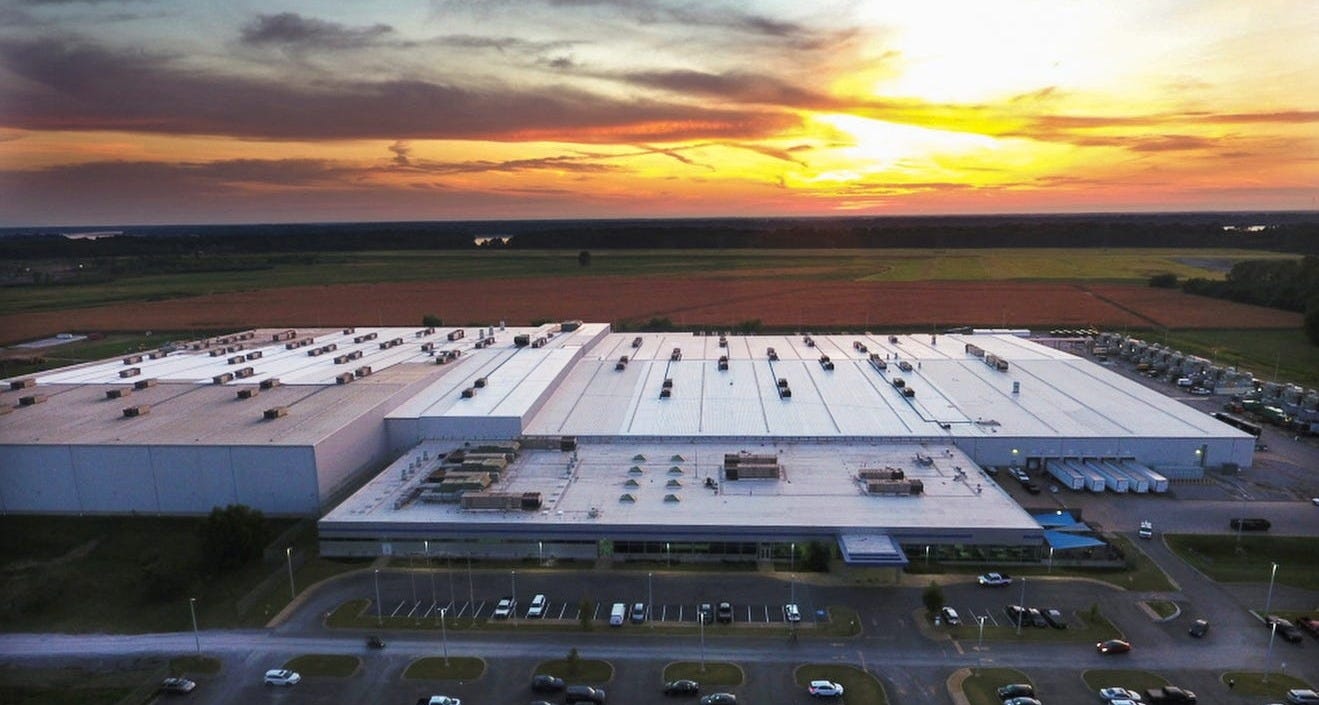
Sarah Houston, the executive director of Protect Our Aquifer, has spent years as one of xAI’s sharpest local critics. So when she stood near the groundbreaking of the Colossus Water Recycling Plant on October 10, 2025, and called the project “a step forward and a win,” that admission deserves to be taken seriously. It came from a woman whose professional life is devoted to defending the Memphis Sand Aquifer, and it came in the same week that a different industrial neighbor, the Valero Memphis Refinery, was still quietly recovering petroleum from the shallow aquifer beneath its tank farm, a recovery operation that has, by Protect Our Aquifer’s own count, retrieved more than 2.6 million gallons of leaked hydrocarbons and is ongoing to this day.
Hold those two facts side by side, and the entire activist case against xAI collapses. One company has leaked 2.6 million gallons of petroleum into the shallow aquifer beneath southwest Memphis. Another company has committed $80 million of private capital to return 4.745 billion gallons a year of recycled water to the same community. Guess which one is being sued by out-of-state environmental litigators hired by Democrat-aligned NGOs flush with Chinese cash, and which one has been operating in the neighborhood, more or less unbothered, since 1941.
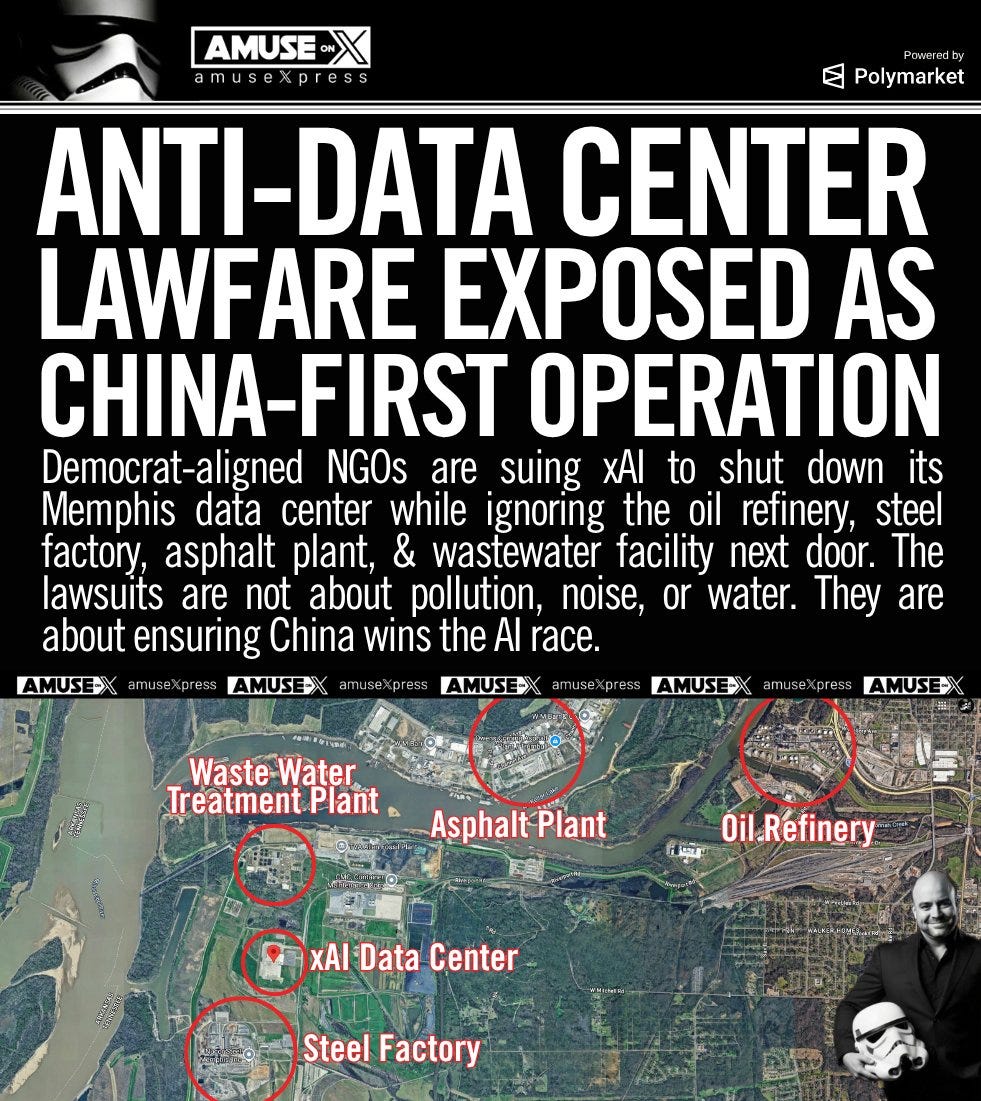
The contrast is the story. For roughly eighty years, the southwest quadrant of Memphis has functioned as something close to a sacrifice zone. The Valero refinery has stood at 2385 Riverport Road since the Roosevelt administration, processing 195,000 barrels of crude a day and, according to the 2017 National Emissions Inventory, ranking as the top stationary source of toxic air pollutants in Shelby County. During a single flare event in February 2021, the refinery released 6,089 pounds of sulfur dioxide and 101 pounds of hydrogen sulfide, and misted unburned oil into Nonconnah Creek. Three miles away, Sterilization Services of Tennessee operated for five decades emitting ethylene oxide, a chemical the Environmental Protection Agency now classifies as 60 times more carcinogenic than previously understood. Three miles in another direction, the old Allen Fossil Plant burned 7,200 tons of coal a day for sixty years and left behind roughly 4 million tons of toxic coal ash, with arsenic above EPA limits showing up in monitoring wells directly above the aquifer that supplies Memphis its drinking water. The neighborhood absorbed all of it.
What did southwest Memphis get in return? A life expectancy in some adjacent ZIP codes that runs about ten years below the Tennessee state average, in communities where roughly 87% of residents are black. That is the actual industrial inheritance of Boxtown. That is the baseline against which any new neighbor should be measured.
Into this inheritance arrives xAI, and a reader unfamiliar with the details might assume, based on the national press coverage, that Elon Musk’s supercomputer company is the latest in a long line of corporate predators. The opposite is true, and the numbers are not close. Consider what xAI is actually building. The Colossus Water Recycling Plant, which broke ground in October 2025 at 3029 Paul R. Lowry Road, is designed to treat 13 million gallons per day of municipal wastewater that currently flows from the T.E. Maxson Wastewater Treatment Plant into the Mississippi River. That diversion equals roughly 23% of the Maxson plant’s average daily discharge, or about 4.745 billion gallons of water per year that will be put to industrial use rather than dumped downriver. The Greater Memphis Chamber estimates that the project will reduce local industrial demand on the Memphis Sand Aquifer by approximately 9%. The treatment technology, the world’s largest ceramic membrane bioreactor, consists of 13,000 modules spread across more than 900,000 square feet, an area roughly the size of sixteen football fields. The recycled output is contracted to serve xAI, the TVA Allen Combined Cycle Plant, and Nucor Steel Memphis, meaning that three of the largest industrial water users in the corridor will, for the first time, be drawing from a treated wastewater stream rather than the aquifer that supplies the city’s drinking water.
Now ask the obvious question. Who, in the eighty-year industrial history of southwest Memphis, has ever proposed anything remotely like this? The honest answer is nobody. Mayor Paul Young, a Democrat, put it plainly when he said xAI had “brought a solution that our community has been asking for since 2017.” TVA’s chief executive Don Moul confirmed that the recycled supply would reduce his own utility’s draw on potable water at the Allen plant. Doug McGowen, the chief executive of Memphis Light, Gas and Water, called the project a way to “preserve five billion gallons of water each and every year.” These are not Republican operatives. They are the senior local Democrat officials responsible for the city’s water, power, and economic development, and they are uniformly on the record describing xAI as the first industrial neighbor in living memory to leave the place measurably better than it found it.
Critics will reach, as critics do, for the comparison to other large water users. The arithmetic does not cooperate. The Memphis Sand Aquifer holds somewhere between 57 and 100 trillion gallons of pristine groundwater, much of it sealed beneath clay for two millennia. Historic peak pumpage in Shelby County reached 190 million gallons per day in 1974. xAI’s current draw is approximately 1.3 million gallons per day, less than 0.7% of that historic peak, and once the recycling plant comes online in late 2026 the company’s aquifer draw approaches zero. The 13 million gallons per day diverted from the Maxson discharge stream amounts to roughly 0.003% of the Mississippi River’s average flow at Memphis. The math does not support the panic. It never has.
What about the gas turbines? Here too the framing is upside down. xAI operates 15 permitted Solar SMT-130 natural gas turbines with a total nameplate capacity of 247.2 megawatts, all running under valid Shelby County Health Department permits and equipped, according to the Chamber, with pollution controls calibrated well below federal limits. Compare that to Valero’s Title V emissions or to the ethylene oxide that drifted out of the Sterilization Services plant for fifty years under perfectly valid permits, and the proportionality problem becomes embarrassing. xAI also installed 150 megawatts of Tesla Megapack battery storage on site, 168 Megapacks representing roughly $230 million in equipment, and enrolled in MLGW’s Demand Response program. That means during a heat wave, a winter cold snap, or a grid emergency of the kind that produced the 2022 rolling blackouts, xAI’s combined battery and turbine capacity can flow outward to the grid, providing roughly 10% of citywide peak demand, enough to support about 200,000 homes. No prior industrial neighbor in southwest Memphis has ever offered to stabilize the grid in a crisis. xAI has, in writing.
So who is actually opposing this? The answer, when one looks closely, is not the people of Boxtown. The April 2026 federal lawsuit against the Colossus 2 turbines was filed by the Southern Environmental Law Center, headquartered in Charlottesville, Virginia, working with Earthjustice, headquartered in San Francisco. The Memphis mayor, the city council representative for the affected district, the regional utility, the state environmental regulator, the Tennessee Valley Authority, and the Greater Memphis Chamber have all endorsed the water plant. Even the local aquifer-protection nonprofit, as noted at the top of this column, has called the project a step forward. The opposition is a coalition of out-of-state attorneys using federal Clean Air Act provisions to override the considered judgment of every elected and accountable Memphian who has weighed in. That is not environmental justice. It is legal colonialism, and it is being conducted at the direct expense of the 500 high-paying permanent jobs and roughly $30 million in annual city tax revenue that xAI is bringing into ZIP codes that need both.
There is a deeper principle at stake, and Theodore Roosevelt named it more than a century ago at Osawatomie, Kansas. “Conservation means development as much as it does protection,” Roosevelt told the country in 1910. “I recognize the right and duty of this generation to develop and use the natural resources of our land; but I do not recognize the right to waste them, or to rob, by wasteful use, the generations that come after us.” That is precisely the framework xAI has adopted. Develop the resource. Reduce the waste. Protect the generations that come after. A wastewater stream that has been flowing unused into the Mississippi for half a century is being captured for industrial purpose, and the aquifer beneath the city is being relieved of nearly a tenth of its industrial burden. Roosevelt would have signed the ribbon at the groundbreaking.
The question, then, is not whether xAI is a perfect industrial citizen. No industrial citizen, anywhere, has ever been perfect. The question is whether xAI is a better neighbor than the eight decades of refineries, sterilizers, coal plants, and asphalt facilities that preceded it. On the evidence, the answer is unambiguous, and it has been confirmed by the very activists who were paid to say no. Southwest Memphis has finally, after a long wait, gotten an honest industrial neighbor. The decent thing for the rest of us to do is to let Memphis keep it.

If you enjoy my work, please subscribe https://x.com/amuse/creator-subscriptions/subscribe
Alexander Muse is a Fellow at the John Milton Freedom Foundation and publishes daily political analysis at amuseonx.com. Primary sources cited in this piece are linked inline; campaign finance figures are drawn from FEC filings, polling data from publicly released crosstabs, and legal claims from filed pleadings. Corrections are posted to the original URL with a dated changelog. Readers who identify errors are invited to contact the author directly.
Great piece, with receipts.
I’ve been in commercial real estate development for 35 years and can assure any doubters that this is not a new thing. Activists can render a project still born on the thinnest pretense. This is an egregious example of their objections lacking any basis in fact, or reality.
I’m also in Virginia, where the data center debate has moved to the legislature trying to undo the tax deals that created the industry in the first place. That’s another story, but I sense change in the air. People are finally paying attention to who’s behind the lawfare, and how the corruption machine takes dollars out of pockets- theirs. Your piece is an excellent takedown of the charade.
I just found you in the past week or so and so glad I did. This is what journalism is supposed to look like.
By "Democrat" you mean, of course, CCP. From Feinstein, Swalwell, Cuomo, Hochul, etc. Even going back to Bill Clinton and the Loral Missile Deal that sold our missile guidance tech to China.