
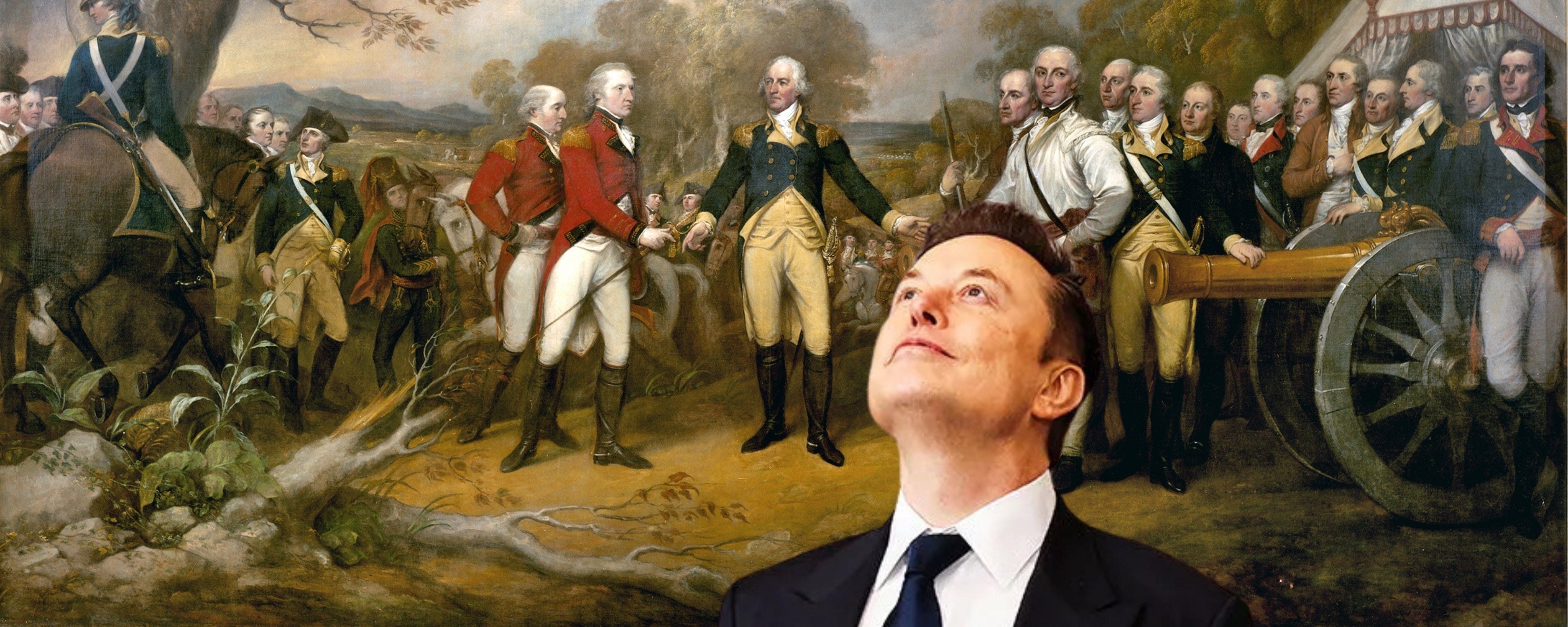
Elon Musk: A Contract with America 2.0 Is the Real Revolution...
Calls for a new political party often arise from noble intentions but rest on fragile ground. Elon Musk, having concluded his term as head of the Department of Government Efficiency, now stands at a political crossroads. Some suggest he should break ranks with the entrenched political class by forming a third party. The appeal is obvious. Disgust with the Uniparty, mistrust of incumbents, and a belief that both major parties are corrupt beyond redemption animate many of Musk's supporters. But this strategy, however emotionally satisfying, is not strategically sound. A far more potent and enduring path lies not in founding a third party but in reviving a reformist insurgency within the Republican Party itself, a new Tea Party powered by twenty-first-century tools, inspired by the 1994 Contract with America, and led by a singular figure uniquely positioned to fund and fuel its ascent.
History bears this out. In 2009, the Tea Party burst forth not as a standalone political party but as a populist insurgency aimed squarely at redirecting the Republican Party. Frustrated by bailouts, bureaucratic overreach, and the fecklessness of GOP leadership, grassroots conservatives coalesced online under banners like #TCOT (Top Conservatives on Twitter). This was no accident of digital chatter. The hashtag became a rallying point for policy discussions, campaign planning, and candidate vetting. Through this decentralized infrastructure, a network of activists and candidates took shape, culminating in the 2010 midterm red wave: 63 seats flipped in the House of Representatives, propelled by Tea Party-backed insurgents.
This movement reshaped the ideological topography of the Republican Party. Incumbents, once secure in their seats, found themselves ousted by principled conservatives. Candidates like Rand Paul, Marco Rubio, and Ted Cruz did not ride a third-party ticket. They rode a wave of organized discontent, amplified through Twitter, and channeled into the existing electoral machinery of the Republican Party. That wave did not merely reshape Congress. It redefined the GOP’s agenda, emphasizing limited government, fiscal discipline, and constitutional conservatism. Musk, whose libertarian streak and deep disdain for bureaucracy are well known, finds himself ideologically aligned with this tradition. The irony is striking: many of the leaders most compatible with Musk's views entered politics through the Tea Party.
The limitations of third-party movements are not theoretical. They are practical, legal, and institutional. State ballot access laws, fundraising hurdles, media marginalization, and debate exclusions form a latticework of resistance to third-party viability. Moreover, the very inertia of American political tradition compounds the difficulty. The US political system, shaped by single-member districts and plurality voting, naturally converges into two dominant coalitions. This is not some failure of imagination. It is a structural feature of our constitutional republic. Those who pine for a third way must grapple with the near-total failure of third-party bids at every level of government, from Ross Perot to Jill Stein.
New parties, however well-funded, end up as spoilers, not saviors. They divide coalitions rather than building them. They empower incumbents rather than displacing them. And they inevitably disappoint their own founders. Elon Musk, the man who lands rockets and reignited American industrial optimism, should know better than to build atop a foundation of quicksand. His talents and capital would be squandered in a doomed third-party gambit. Far better to focus those resources on what the Tea Party almost achieved, a wholesale replacement of the political class from within.
This requires a framework. Fortunately, one already exists: the Contract with America. Crafted by Newt Gingrich in 1994, the Contract was a masterstroke of political communication and strategic clarity. It unified Republican candidates under a common banner of reform. It nationalized the midterm elections, which are typically fragmented across local issues. And most importantly, it promised specific legislative actions, to be delivered within 100 days of a new Republican majority. The result? A forty-year Democratic stranglehold on the House was broken. The GOP gained 54 seats and set the stage for a new era of governance. The details of the Contract, tax cuts, welfare reform, term limits, balanced budgets, resonated because they offered concrete solutions to a public fed up with vacuous rhetoric.
A new version, call it "The America Contract," could do the same in 2026. This is not utopian speculation. Musk commands a following unrivaled in corporate or political life. His influence dwarfs most elected officials. He understands systems, incentives, and narratives. He knows how to build infrastructure, be it physical, digital, or ideological. Most importantly, he knows how to energize people. That energy can be directed not toward a quixotic third-party bid, but toward reshaping the GOP from within. The America Party, then, need not be a party in the formal sense. It can be a banner, a movement, a PAC, a network. What matters is not its legal form but its functional power: to elect new conservatives who pledge to dismantle the administrative state, slash federal spending, restore border sovereignty, and defend the primacy of the individual against collectivist drift.
There is precedent for this. The Tea Party did not win every battle, but it did shift the Overton window. It reintroduced concepts like nullification, budget sequestration, and constitutional originalism to the popular lexicon. It provoked real, if messy, fights within the Republican caucus. And though some of its champions drifted toward the establishment, others remain forces for liberty. The new Tea Party, America Party-style, can do even more—because it will start with far more resources, a clearer mandate, and the benefit of hindsight.
One must also note the moment. The United States is riven with distrust. Institutional decay, executive overreach, and elite arrogance have left the electorate disillusioned. But disillusionment is not apathy. It is energy waiting for direction. The anti-incumbent fervor now sweeping the country is real and rising. Yet it requires a vessel. Third parties offer the illusion of purity, but not the mechanics of power. Primaries, on the other hand, are fertile ground. Every entrenched senator or representative must face the electorate eventually. A movement that organizes to challenge incumbents in their own primaries, with a contractually bound slate of challengers, has the power to remake Congress from the inside out.
To be clear, this is not a matter of partisan tribalism. The America Party, while focused primarily on Republican primaries, should not shrink from targeting far-left Democrats in safe districts. There is no reason moderates aligned with a Contract for America vision could not emerge from blue districts, particularly those suffering most under progressive misrule. Musk's appeal is not limited to conservatives. His cultural cachet, technological optimism, and outsider persona attract independents and moderates alike. That is political capital, and it ought to be invested wisely.
For now, the mission is structural. Write the contract. Recruit candidates. Build the digital and legal scaffolding to support primary challengers in 2026. Create scorecards. Publish lists. Name names. Reward courage and punish betrayal. Make it clear: you are either for the America Party vision, or you are part of the problem. Let the candidates sign the contract, pledge their votes, and face voters on the strength of their fidelity to it.
Until there are term limits, let the primary be the term limit. Until there is reform in Washington, let reformers flood Washington. And until the Uniparty is dislodged, let the America Party take its rightful place as the insurgent force within the Republican fold, restoring to that party its own better angels.
If you enjoy my work, please consider subscribing https://x.com/amuse.


Very Good! I'll support this!
Great ideas, I'll forward to Elon's X, hope he reads it.