


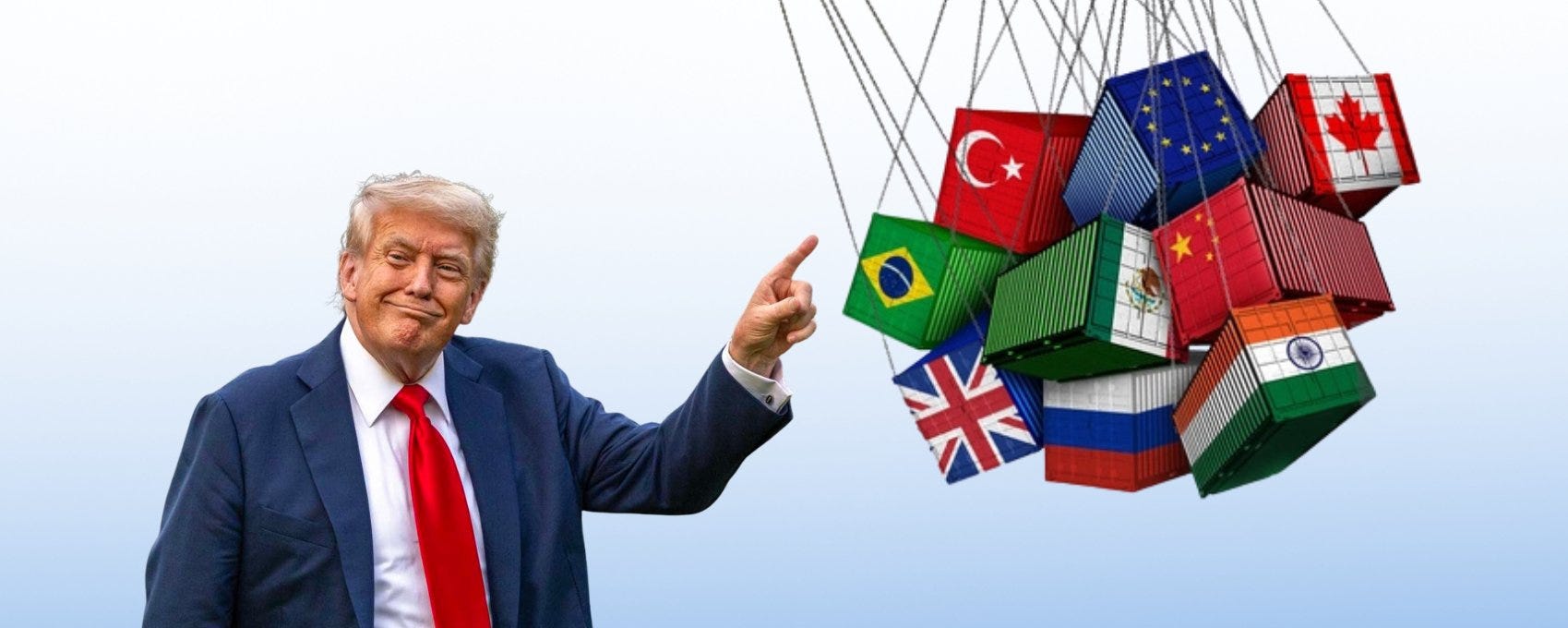
When the Supreme Court decided Learning Resources, Inc. v. Trump, the conventional verdict in Washington was that the tariff agenda had been decapitated. That reading confused a vehicle with a destination. The Court did not hold that presidents may not impose tariffs. It held that the International Emergency Economic Powers Act was not the statute that authorized these particular ones, because IEEPA lacks the express duty language and the defined ceilings that Congress ordinarily supplies when it delegates the taxing power over imports. Chief Justice Roberts explained that Congress delegates tariff authority in explicit terms and under strict limits. Then the majority did something unusual for an opinion striking down executive action. It named a statute that satisfies its own test.
That statute is Section 338 of the Tariff Act of 1930, codified at 19 USC §1338. Justice Kavanaugh, in dissent, was blunter still. He wrote that the tariffs had simply been placed in the wrong statutory box, and he identified Section 338 as one of several boxes that might have held most or all of them. Earlier this month, President Trump signed three proclamations under that provision, imposing an additional 50% duty on roughly $20 billion in Canadian goods, effective August 19, after the statute’s mandatory 30-day waiting period. It is the first time in 96 years that a president has actually used Section 338 to impose tariffs.
I want to walk carefully through why this is not merely a lawyer’s workaround but a genuinely superior instrument, because the distinction matters. A workaround preserves a policy by finding a technicality. What happened here is different. The administration abandoned a broad, contested authority and replaced it with a narrow, express one, thereby acquiring capabilities the original approach never had.
Consider first what Section 338 actually says. It authorizes the president to impose new or additional rates of duty when he finds that a foreign country imposes any unreasonable charge, regulation, limitation, prohibition, classification, or administrative practice on American products that it does not apply equally to like products from every other country. The trigger is not an emergency. It is discrimination. Congress capped the additional duty at 50%. Congress required the president to find that the public interest will be served. Congress required that the duties be designed to offset the burden on American commerce. Congress imposed a 30-day delay before collection begins. Congress permitted the president to suspend, revoke, supplement, or amend the proclamation at will. Congress permitted action against a whole country or against particular subdivisions of it, which matters enormously when the discriminating parties are provincial liquor monopolies. Congress even authorized duties on goods produced in a third country that benefits from the discrimination.
Read that list again with the Court’s opinion in mind. Express tariff language, a numerical ceiling, a defined factual trigger, a public interest finding, a waiting period. These are precisely the features the majority said distinguish a legitimate tariff delegation from an improvised one. The administration did not resist the ruling. It complied with it, and that compliance strengthened the policy.
The constitutional pedigree here runs deep, and it is worth pausing on, since critics will call this novel. In Field v. Clark, decided in 1892, the Court upheld a reciprocity provision empowering the president to respond when foreign nations imposed unequal or unreasonable burdens on American products. Congress had made the policy; the president merely found whether the triggering condition existed. In J.W. Hampton, Jr. & Co. v. United States, decided in 1928, Chief Justice Taft wrote for a unanimous Court upholding flexible tariff adjustment under congressionally prescribed standards, and gave us the intelligible principle doctrine that still governs delegation law. Section 338 sits comfortably inside that tradition. Indeed, it is more constrained than the statutes upheld in either case, since its operative finding is tied to identifiable foreign misconduct rather than to production cost differentials or presidential judgment about what the national interest requires in the abstract.
Now to the facts, which are the strongest part of the administration’s position and the part critics most want to skip past. Since April 2025, Canada has imposed a 25% tariff on non-USMCA-qualifying American vehicles and has applied that rate to non-Canadian and non-Mexican content in qualifying vehicles, reaching up to 85% of a vehicle’s value. It created company-specific tariff-rate quotas. Most remarkably, it reduced quota access for companies that moved manufacturing from Canada to the United States. The measurable result was that American vehicle exports to Canada fell by about 22%, from $25.9 billion to $20.3 billion, while Mexican vehicle exports to Canada rose by 23.6% and shipments from Japan, Korea, and Germany rose by between 10.1% and 13.5%. Non-US suppliers picked up roughly $2.85 billion in Canadian sales, with Mexico accounting for nearly $2 billion of that.
Alcohol tells the same story with even sharper numbers. Beginning in March 2025, every Canadian province and territory suspended the purchase, distribution, or retail sale of American alcoholic beverages. Ontario’s monopoly canceled orders, delisted American products from its catalog, and pulled them from shelves. Only Alberta and Saskatchewan later relented. No comparable national-origin ban was applied to anyone else’s liquor. Canadian imports of American alcohol collapsed by 81%, from about $718 million to $137 million, while imports from other countries rose by more than $170 million, even as total alcohol imports fell by 12%. European suppliers absorbed more than $100 million of that shift.
Dairy is the quietest of the three and in some ways the most instructive. Canada operates one cheese tariff-rate quota under the USMCA and another under its agreement with the European Union. Under the American quota, retailers may not obtain or use allocations. Under the European quota, they may. Same product, same market, different rules, and the difference is drawn by nationality. That is, in fact, discrimination, which is exactly the phrase Congress used.
So the statutory trigger is satisfied not by inference but by documentation. Compare this to the posture the administration occupied under IEEPA, where the legal predicate was a declared emergency, and the remedy was global. Here the predicate is a specific foreign rule, the injury is quantified in trade data, and the remedy is tailored to it.
Tailored is the operative word. The three proclamations cover 554 tariff classifications and approximately $20 billion of imports, which White & Case calculated at roughly 5% of everything America buys from Canada, and Reuters put at 5.2% of 2025 volumes. The White House excluded energy, potash, critical minerals, fish, civil aircraft covered by the World Trade Organization agreement, and goods already carrying Section 232 duties. Every one of those exclusions protects a supply chain where American substitution would be slow or where continental security interests are implicated. The administration chose pressure points rather than mirroring Canada line by line, which the statute expressly permits, since Section 338 allows duties on any products of the offending country rather than only the products caught up in the discrimination.
The three-proclamation structure deserves more credit than it has received. Each contains its own factual record, its own finding, its own product list, its own severability clause. Each can be negotiated, narrowed, suspended, or defended in court independently of the others. If a judge somewhere finds a defect in the dairy action, the auto action survives untouched. That is what legal durability looks like when it is engineered rather than hoped for.
Then there is the clock, which is the whole point. The 30-day delay is not bureaucratic sludge; it is the bargaining instrument, and Ottawa understood this immediately. Prime Minister Carney announced within a day that he and the president had agreed to intensify negotiations, Canadian officials publicly discouraged preemptive retaliation before August 19, and none of that would have occured if the schedule were not credible. Canada knows the rate, the products, the effective date, the conduct that caused it, and the conduct that would end it. Ambassador Greer told the Senate Finance Committee that the administration remains open to discussing a path forward, which is the language of leverage rather than punishment.
History suggests this is how the provision was always meant to work. Section 338 was copied largely from Section 317 of the Tariff Act of 1922, which the Tariff Commission designed to secure equality of treatment for American commerce. Veroneau and Gibson’s scholarship found that the prospect of tariff action was frequently sufficient on its own. In 1932, the United States threatened Section 338 action against France over discriminatory quotas and a tax arrangement favoring Belgium, and obtained an agreement assuring equal treatment without ever imposing a duty. The weakness of the old model was that the threat was eventually no longer believed. Trump has repaired that, permanently. Every trade ministry contemplating a discriminatory digital tax, licensing rule, port fee, or shelf ban must now price in a statute they had written off as decorative.
This is why the move works regardless of which way Canada jumps. If Ottawa and the provinces restore equal treatment before August 19, American producers get what reciprocity was always supposed to deliver, and not a dollar is collected. If Canada refuses, collection begins, and the world learns that access to the American consumer is conditional on treating American goods no worse than anyone else’s. The America First Policy Institute called Section 338 the best statutory vehicle available two months before the proclamations issued, and even the Center for Strategic and International Studies, hardly a friendly forum, concedes the statute gives this administration a faster path to the table.
Greer testified that the goods deficit with Canada grew from $13 billion in 2020 to $61 billion in 2024, and American Compass has documented that the average world tariff of 6.7% is more than double the 2.7% American rate. Those numbers describe an asymmetry that decades of polite negotiation failed to correct. A defeat at the Supreme Court has produced a narrower, faster, better-grounded, and considerably more dangerous instrument than the one it replaced. That is not luck. That is reading the opinion carefully and doing what it said.
If you enjoy my work, please subscribe https://x.com/amuse/creator-subscriptions/subscribe
Alexander Muse is a Fellow at the John Milton Freedom Foundation and publishes daily political analysis at amuseonx.com. Primary sources cited in this piece are linked inline; campaign finance figures are drawn from FEC filings, polling data from publicly released crosstabs, and legal claims from filed pleadings. Corrections are posted to the original URL with a dated changelog. Readers who identify errors are invited to contact the author directly. Each op-ed edited for grammar and clarity using Ai in partnership with Grammerly. Data provided in a sponsored partnership with Polymarket.
I learn more from reading an AMuse essay than I ever did attending a year of classes. It is a joy to have such an expert teacher.
Thanks for this articulate, precise analysis grounded in solid legal and historical fact. The corporate/TDS media cannot be happy with the yellow liquid in their cornflakes this morning.