


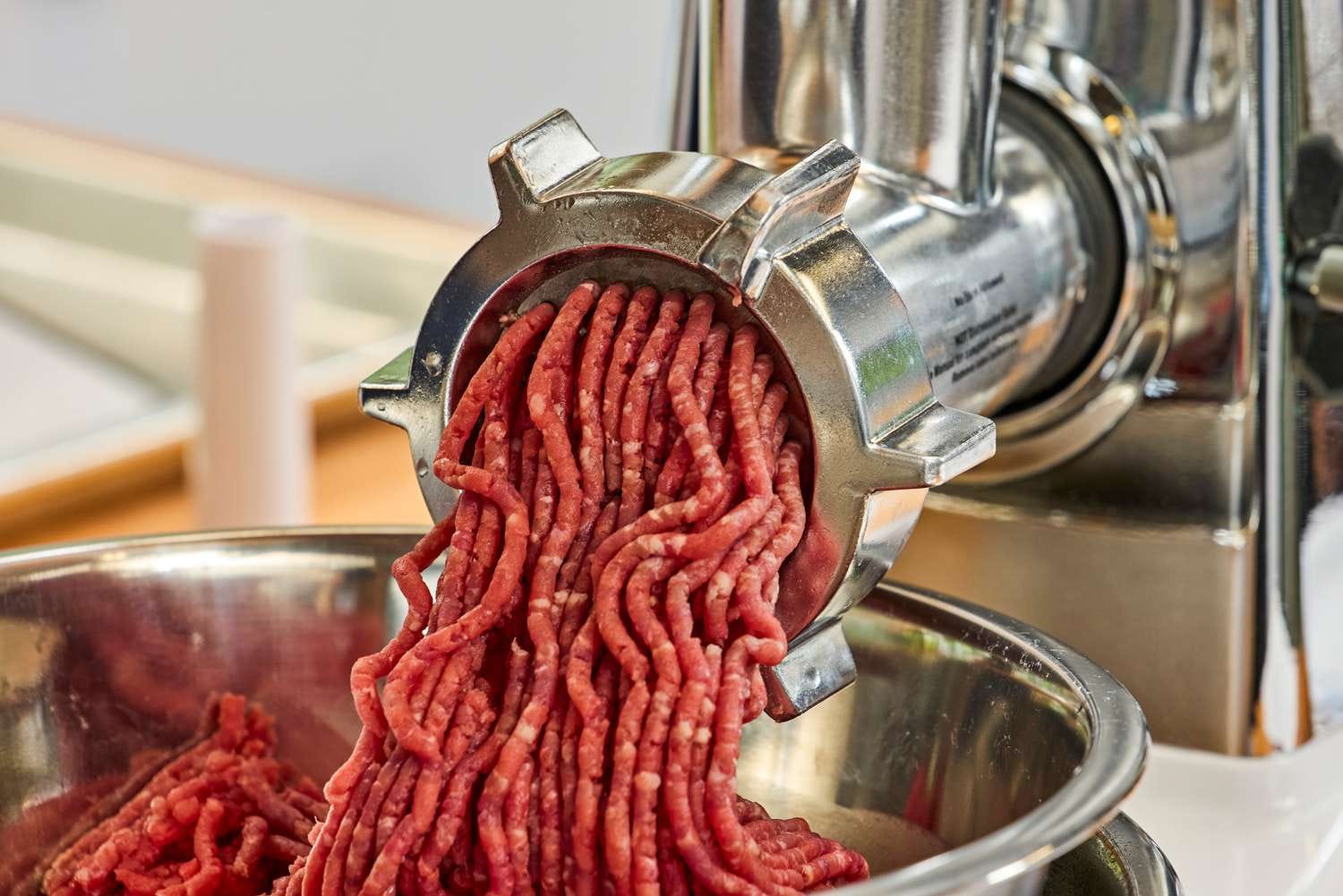
On Friday, August 21, President Trump announced his largest beef intervention yet, a temporary window allowing up to 300,000 metric tons of additional beef destined for the grinder to enter at the lower tariff rate for 90 days, to be formalized by executive order within two weeks, with a commitment that the product will be sold 25% below current market prices. Last fall I made the case for the administration's beef arrangement with Argentina and argued that it was a swap, not a subsidy, that lean trimmings from a friendly democracy would replace lean trimmings from a tariffed Brazil, and that American ranchers would feel no harm because imported lean beef is a complement to their product, not a competitor with it. Some of what I wrote has aged well, but one claim has not: I forecast modest register relief from a reallocation that was never large enough for the hole, and Friday's window is the president reading that shortfall and raising the dose.

Brazil’s beef did recede under punitive duties, and Argentina did step into the gap, exactly as forecast. On February 6, the president raised the 2026 tariff-rate quota by 80,000 metric tons specifically for Argentine lean trimmings, divided into four quarterly tranches of 20,000 tons, by invoking the statutory authority Congress provided to increase agricultural import quotas when domestic supply cannot meet demand at reasonable prices. The complements thesis held as well. The imported product went into grinders, not the steak case, and cattle prices kept setting records even as imports ran high, which is what you would expect if domestic scarcity, not import volume, governs price formation. USDA was forecasting higher cattle prices before Friday’s announcement, not because of imports but despite them.
I predicted that rewiring import sources would deliver modest relief for ground beef, on the order of 2% to 5% relative to the counterfactual. Relief against the counterfactual is not relief at the register. Ground beef averaged $6.89 per pound in July, roughly 10% higher than a year earlier. The reallocation was too small in absolute terms for the size of the hole. I also wrote that, under the Argentina deal, the composition of imports would shift, while the total would not. Friday’s action deliberately and temporarily expands the total. So the honest revision is this: the diagnosis was right, and the dosage was wrong. When a treatment is correctly aimed but underpowered, the rational response is to increase the dose while the underlying condition is treated, and that is the two-track structure that the president has now adopted. Conservatives who treat any extra ton as surrender should ask whether a 2% to 5% paper win would keep a family in hamburger at $6.89.
The underlying condition has not changed, and critics still argue as if it had. Roughly half the beef Americans eat is hamburger, and hamburger is a blend. American feedlots produce abundant fatty trim as a by-product of the marbled steaks that pay the bills, and that fat must be blended with very lean beef, 90% lean or better, to make the 80/20 and 90/10 packages families buy. The lean is mixed with that fat, so the package is neither grease nor shoe leather. It comes from cull cows at home or from imports, and the domestic side of that ledger is exhausted. Drought forced ranchers to liquidate, the New World screwworm closed the Mexican border and cut off feeder cattle, and the US herd has fallen to about 86.2 million head, the smallest in roughly 7 decades. Cattle are not manufactured; they are raised, and a heifer retained today becomes beef years from now. No order signed in Washington can change that biology. What an order can change is whether families abandon beef in the meantime.
Friday’s action is limited in quantity, since 300,000 metric tons is on the order of 2% of annual US beef consumption. It is time-limited, expiring in 90 days. It is limited in kind, applying to beef bound for the grinder rather than to the steaks, roasts, and briskets that define the premium market American ranchers actually serve. And it is disciplined in price, since the president has secured a commitment that the imported product will sell 25% below current market prices, which means the benefit is designed to land at the retail case rather than in a middleman’s margin. This is not an open border for beef. It is a pressure valve with a gauge. A conservative can support a valve that expires and still oppose the left’s appetite for permanent statutes that treat every grocery price as a crime scene.
The ranchers’ objection deserves a serious answer rather than a dismissal, because cattle futures fell after the announcement and the National Cattlemen’s Beef Association is angry. The answer requires a distinction between the price level and the price signal. The level of cattle prices is set by the scarcity of finished animals, and a capped, 90-day window for lean trim cannot repeal that scarcity, any more than record import volumes in 2024 and 2025 prevented cash cattle from setting record highs. A dip in futures is the market repricing policy risk, not a collapse in fundamentals, and fundamentals are at a multidecade low that will take years to rebuild. Meanwhile, the demand side is the rancher’s silent partner. At $6.89 per pound and climbing, families substitute toward chicken and pork, and consumption habits, once broken, do not fully return. A rancher who spends 3 years and considerable borrowed money rebuilding a herd needs customers still eating beef at the end of it. Keeping hamburger within reach during the rebuild preserves the market he is rebuilding for, and the NCBA would serve members better by defending that long market.
That defense would be incomplete if imports were the whole policy, and they are not. Beginning August 24, USDA is reopening the Mexican border to live cattle in phases, starting at Douglas, Arizona, with animals from lower-risk regions, with Santa Teresa and Columbus, New Mexico expected to follow. Live feeder cattle are a distinct economic category from boxed beef, since they are fed in American feedlots, processed in American plants, and marbled into the American product line, thereby restoring the supply chain rather than bypassing it. At the same time, USDA’s new SPUR program is making payments to independent and regional processors whose cattle acquisition costs have skyrocketed, precisely so that competition in packing survives the shortage. Conservatives have complained for years, with justice, that 4 large packers dominate the industry. A policy that keeps the small and mid-sized processors alive through the trough is a policy for competition, and competition is the rancher’s long-run friend when the herd returns and he needs bidders for his calves. The left would rather hold hearings about packer greed than keep a regional plant solvent for a second bid.
A cattle herd is like an orchard. You cannot harvest apples from trees you failed to plant 3 years ago, and if a drought forced you to cut down trees for firewood, no act of will can restore them this season. A sensible farm family buys fruit at the market while the saplings grow, and nobody believes the purchased fruit uproots the orchard, provided the buying stops when the trees bear. The 90-day sunset and the quarterly tranches are the stopping rule written into the policy itself. The same administration that opened this window also raised Brazilian duties to prohibitive levels, which demonstrates that the tools dial in both directions and will be dialed back as domestic supply recovers.
There remains the open question of who fills the 300,000 tons, and here the principle from the Argentina essay should govern. The White House has not yet named the supplying countries, and the choice matters, because the window will reward whoever walks through it. The candidates are the usual lean-trim exporters, Argentina, Australia, New Zealand, Uruguay, and a chastened Brazil. My counsel is the same conditional cooperation I urged last fall. Prefer the friends. Argentina under President Milei has earned its expanded access through reform and alignment; Australia and New Zealand are treaty allies with impeccable sanitary systems; and Mexico and Canada are integrated partners. If Brazil wishes to re-enter, let it first correct the conduct that occurred, the trade behavoir, the treatment of political allies, the drift toward China. A tariff window is leverage, and unused leverage is wasted leverage. Milei aligned a formerly hostile supplier with American interests, and rewarding that work is statecraft.
Some will say the timing is political, that a president does not announce cheaper hamburger 10 weeks before an election season heats up by accident, and to this I plead the obvious, responsiveness to grocery bills is the job, and a government that noticed families paying 10% more for ground beef and did nothing would deserve the voters’ contempt, while a government that responded with price controls or windfall-profit inquisitions would deserve the economists’ contempt, so the president chose the one instrument that is targeted, temporary, transparent, and reversible, which is what separates a market intervention from a market distortion. The Heritage Foundation has long argued that when Washington must act in a market, it should act through narrow, sunsetted, rules-based measures rather than open-ended controls, and Friday’s order is close to a textbook specimen of that standard. Compare the alternatives seriously entertained on the left, investigations of packer greed and federal price gouging statutes, and the conservative character of the two-track approach comes into focus. Packer-greed theater and a federal price-gouging statute would plant a permanent prosecutor in every meat case, which is why conservatives who want sunsetted valves rather than controls should take Friday’s instrument and reject the left’s substitute.
I closed the earlier essay by calling the Argentina deal a textbook case of targeted, pro-consumer, pro-producer trade adjustment, and I stand by the textbook while amending the page. The diagnosis, that lean imports complement American production during a herd rebuild, was correct. The forecast of adequate relief was not, and the president, to his credit, read the same evidence and escalated rather than rationalized. If we care about stable grocery bills, resilient supply chains, and a cattle industry still standing when the orchard bears again, prudence is a larger, time-limited shot of lean for the grinder, friends first through the window, and a sunset that honors ranchers’ long-run market instead of the left’s demand that Washington police every pound.
If you enjoy my work, please subscribe https://x.com/amuse/creator-subscriptions/subscribe
Alexander Muse is a Fellow at the John Milton Freedom Foundation and publishes daily political analysis at amuseonx.com. Primary sources cited in this piece are linked inline; campaign finance figures are drawn from FEC filings, polling data from publicly released crosstabs, and legal claims from filed pleadings. Corrections are posted to the original URL with a dated changelog. Readers who identify errors are invited to contact the author directly. Each op-ed edited for grammar and clarity using Ai in partnership with Grammarly. Data provided in a sponsored partnership with Polymarket.
This is America First pragmatism. The left wants price-gouging theater and federal prosecutors in the meat case. Trump chose a targeted, temporary, reversible market tool: 90 days, grinder beef, 25% below market, friends first, and no permanent control scheme. Ranchers deserve respect, but demand is their silent partner. If families abandon beef for chicken and pork during the rebuild, ranchers lose the market they are trying to restore. Muse’s orchard analogy lands. You buy fruit while the trees grow. You stop when the orchard bears. That is prudence, not capitulation.
Another great article; thank you for breaking it down so well…sometimes the naysayers seem to scream too loud and drown out the truth.