


The new “
“ feature on my website surfaced something uncomfortable. Readers were asking where I stand on the death penalty, and the system had nothing to give them. Despite writing more than 1,000 op-eds I had never published my position on capital punishment. The omission was not an accident. My view is unpopular with much of my audience, and I suspect I avoided the subject because I knew it would cost me. That ends today.
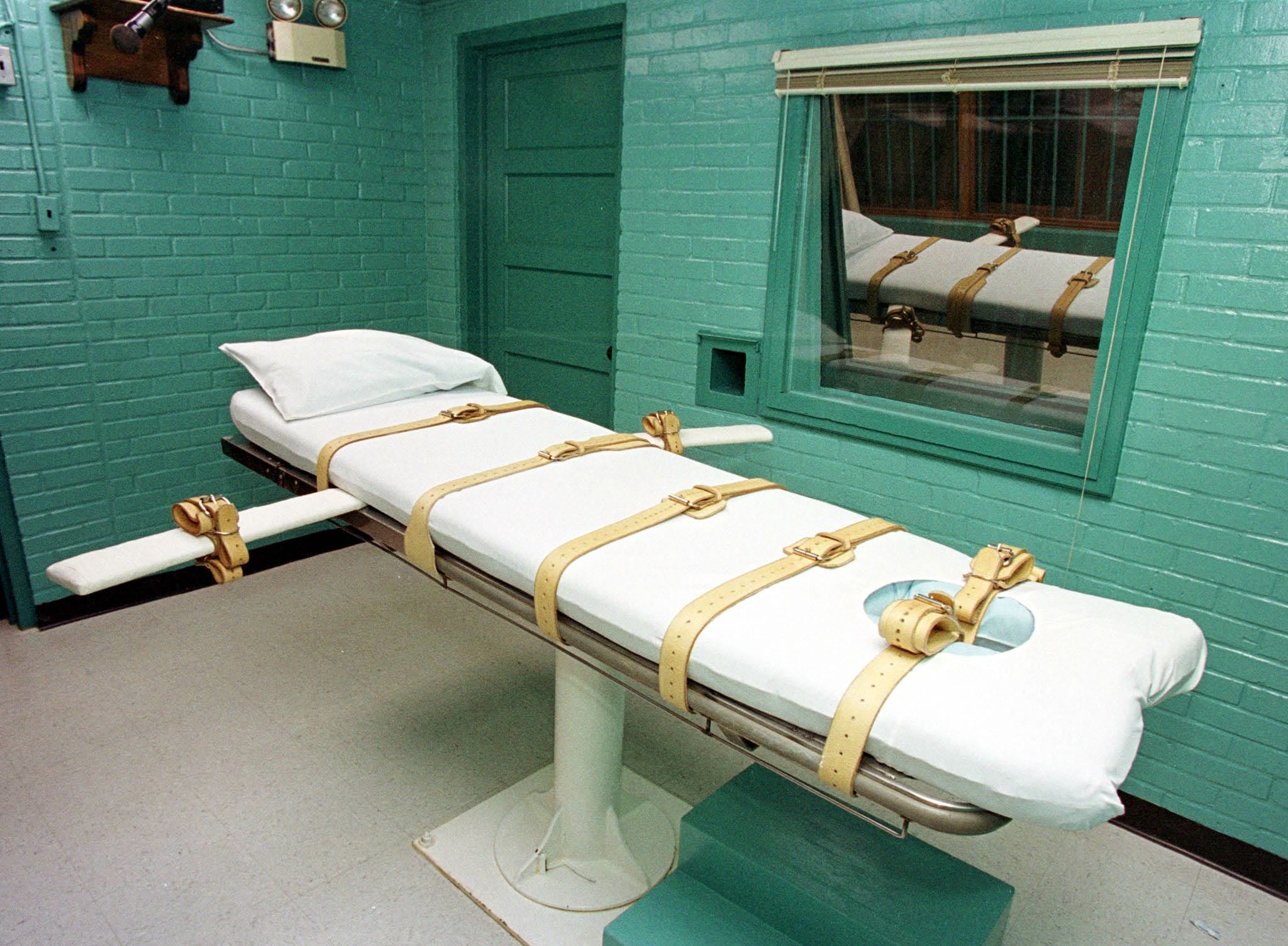
Here is my position, stated plainly. I support the death penalty in theory. Certain crimes are so depraved that death is a proportionate punishment, and I feel no squeamishness about saying so. A man who tortures a child to death has forfeited any moral claim to continue living. My objection is not to that principle. My objection is to the people who must apply it. Prosecutors conceal evidence. Police pressure witnesses. Government experts overstate junk science. Defense lawyers fail to investigate. Judges overlook misconduct, and bureaucracies protect themselves. Because an execution cannot be corrected, I do not trust the state with the power to carry one out.
Notice what this argument is not. It is not an argument for leniency, and it is not sympathy for murderers. It is an argument against government infallibility, which is to say it is the most conservative argument I know how to make. Consider an analogy. A gun can be a perfectly legitimate tool while remaining too dangerous to hand to a man with a documented history of recklessness. The question is never only whether the tool is justified. It is also whether the particular hands reaching for it can be trusted. Capital punishment is the tool. The state is the hands.
Conservatives already understand this logic everywhere else. We do not trust the IRS with political power. We do not trust intelligence agencies with surveillance power. We spent the pandemic learning exactly how much deference public health bureaucracies deserve, which is to say very little. We assume, correctly, that government agencies pursue their own interests, shade the truth, resist accountability, and defend their mistakes long after those mistakes are exposed. The death penalty asks us to suspend that entire worldview for one government program, and not just any program, but the only one whose errors are permanently uncorrectable. A wrongly imprisoned man can be released and compensated. A wrongly executed man cannot be unkilled. Every other serious sanction preserves the possibility of correction. Execution alone destroys it.
Perhaps you think wrongful death sentences are a hypothetical, the sort of thing law professors imagine and legislatures need not worry about. The record says otherwise. At least 202 people sentenced to death in the US since 1973 have been exonerated, roughly 1 exoneration for every 8 executions carried out. A peer-reviewed study in the Proceedings of the National Academy of Sciences estimated that at least 4.1% of defendants sentenced to death were falsely convicted, and the authors explained why even that figure understates the problem, since many condemned prisoners leave death row through resentencing before anyone examines their innocence claims seriously. These are not the numbers of a system with rare, freakish failures. They are the numbers of a system that routinely places innocent people within reach of the execution chamber.
Why does this keep happening? The National Registry of Exonerations studied 2,400 exonerations and found official misconduct in 54% of them. In murder exonerations the rate rose to 72%. In death-sentence murder exonerations it reached 79%. Read that again. In nearly 4 of every 5 cases where the state condemned an innocent person to die, government officials had behaved improperly. The misconduct was not exotic. It was evidence suppression in 61% of murder exonerations, plus witness tampering, official perjury, and prosecutors knowingly permitting false testimony. The Registry’s 2025 report shows the problem is current, not historical: 70 of 97 exonerations that year involved official misconduct, including 55 failures to disclose exculpatory evidence and 30 cases of official perjury.
Now ask the follow-up question a skeptical reader should ask. Surely officials who help convict the innocent face consequences? They do not. Among 729 exonerations involving prosecutorial misconduct, prosecutors were professionally disciplined in 26, or about 4%. Exactly 2 were criminally convicted, and between them they served 5 days in jail. Think about the incentive structure this creates. A prosecutor who hides evidence gains a conviction, headlines, and political advancement. If the misconduct surfaces decades later, the defendant has already served the time and the prosecutor typically loses nothing. Conservatives who understand why the administrative state misbehaves should recognize this pattern instantly. Unaccountable discretion produces abuse. It always has.
The corruption cases are chilling, but the incompetence cases frighten me more, because incompetence requires no villain. In 2015 the FBI acknowledged that its examiners had given erroneous microscopic hair testimony in 257 of 268 reviewed trials, a 96% error rate, including 33 of 35 reviewed death penalty cases. By the time the review concluded, 9 of the affected defendants had already been executed. The Bureau’s own root-cause analysis blamed vague standards, poor training, and weak supervision rather than malice. The National Academies reached a similar diagnosis in 2009, finding that outside nuclear DNA analysis, no forensic method had been rigorously validated to identify a specific source with consistently high certainty. An honest mistake kills as permanently as a corrupt act. That sentence carries the whole argument, so let it sit for a moment.
If the statistics feel abstract, the cases are not. Louisiana was days from executing John Thompson when a defense investigator found a hidden laboratory report showing the perpetrator’s blood type did not match his. The report had sat in the government’s own files for years while Thompson spent 14 years on death row, and when he finally received a fair trial, a jury acquitted him in about 35 minutes. Texas prosecutor Charles Sebesta manufactured a capital case against Anthony Graves by concealing exculpatory statements and threatening a witness’s wife; Graves came within days of execution twice before his exoneration, and Sebesta was not disbarred until 2015, two decades after the trial. And in Oklahoma, Republican Attorney General Gentner Drummond, a death penalty supporter who has personally witnessed executions, refused to defend Richard Glossip’s conviction after learning prosecutors had knowingly allowed false testimony. The Supreme Court vacated the conviction in February 2025. Drummond never declared Glossip innocent, and that is precisely the point. He concluded that a verdict obtained through uncorrected false testimony could not justify a killing, whatever the underlying truth turned out to be. That is what law-and-order integrity actually looks like.
The skeptic’s last refuge is reform. Fix the labs, discipline the prosecutors, fund the defense bar, and keep the penalty. Illinois tested that theory. Republican Governor George Ryan entered office a death penalty supporter and left it having emptied death row, because the audit was unanswerable: the state had executed 12 people while exonerating 13, roughly half of nearly 300 capital cases had been reversed, 33 condemned men had been represented by lawyers later disbarred or suspended, and prosecutors had used jailhouse informants in 46 death-row cases. Ryan told the Senate the odds of justice being done were as arbitrary as a coin flip. Illinois already had every safeguard reformers propose, the trial judges and the appellate courts and the professional standards and the constitutional protections, and the failures penetrated every single layer anyway, which tells you the problem is not a missing rule but the permanent character of human institutions under political pressure. The Columbia University study of 5,760 death sentences found serious reversible error in 68% of fully reviewed capital judgments. A system is only as reliable as its weakest necessary link, and capital cases have many links.
Cato Institute cofounder Edward Crane put the position in a single sentence in 2003, writing that the government is often so inept and corrupt that innocent people might die as a result. Arthur Rizer and Marc Hyden, writing in The American Conservative, observed that the state is not God and capital punishment is not infallible. Rod Dreher was blunter still: I don’t trust the state to get convictions right. Even Justice Sandra Day O’Connor, a Reagan appointee with no abolitionist sympathies, warned in 2001 that the system may well be allowing innocent defendants to be executed. None of these voices romanticizes the condemned. Each applies ordinary conservative skepticisim of state power to the one program where a mistake lasts forever.
So here is where I land, and where I should have landed publicly years ago. The moral question was never whether some murderers deserve death. They plainly do. The question is whether a government with a documented record of suppressed evidence, coerced witnesses, official perjury, overstated forensics, and near-zero accountability deserves the power to make an uncorrectable mistake. Life imprisonment without parole is severe, permanent in practice, and protective of the public, yet it preserves the one thing execution destroys, which is society’s ability to correct the state when the state is wrong. Prudence is supposed to be our virtue. A prudent people does not hand an irreversible power to institutions it correctly refuses to trust with reversible ones. I support the death penalty in theory. I oppose giving it to this government, or any government staffed by human beings, and I no longer intend to be quiet about it.
If you enjoy my work, please subscribe https://x.com/amuse/creator-subscriptions/subscribe
Alexander Muse is a Fellow at the John Milton Freedom Foundation and publishes daily political analysis at amuseonx.com. Primary sources cited in this piece are linked inline; campaign finance figures are drawn from FEC filings, polling data from publicly released crosstabs, and legal claims from filed pleadings. Corrections are posted to the original URL with a dated changelog. Readers who identify errors are invited to contact the author directly. Data in sponsored partnership with Polymarket.
That was sobering to read.
Well Alex I am going to answer you. I believe in the death penalty also. There are some crimes that are so heinous that I do not care what happens to these animals. I share your concern about mistakes. No excuse for it. I do recommend a cure for this and I do believe it should be looked at. A law should be instituted or passed. If there is an execution that is in error, then the prosecutor faces the death penalty also. They have committed murder. A jury can decide what degree to take this. This might cure this problem if their own lives were on the line. Thanks for your articles. Love them.