


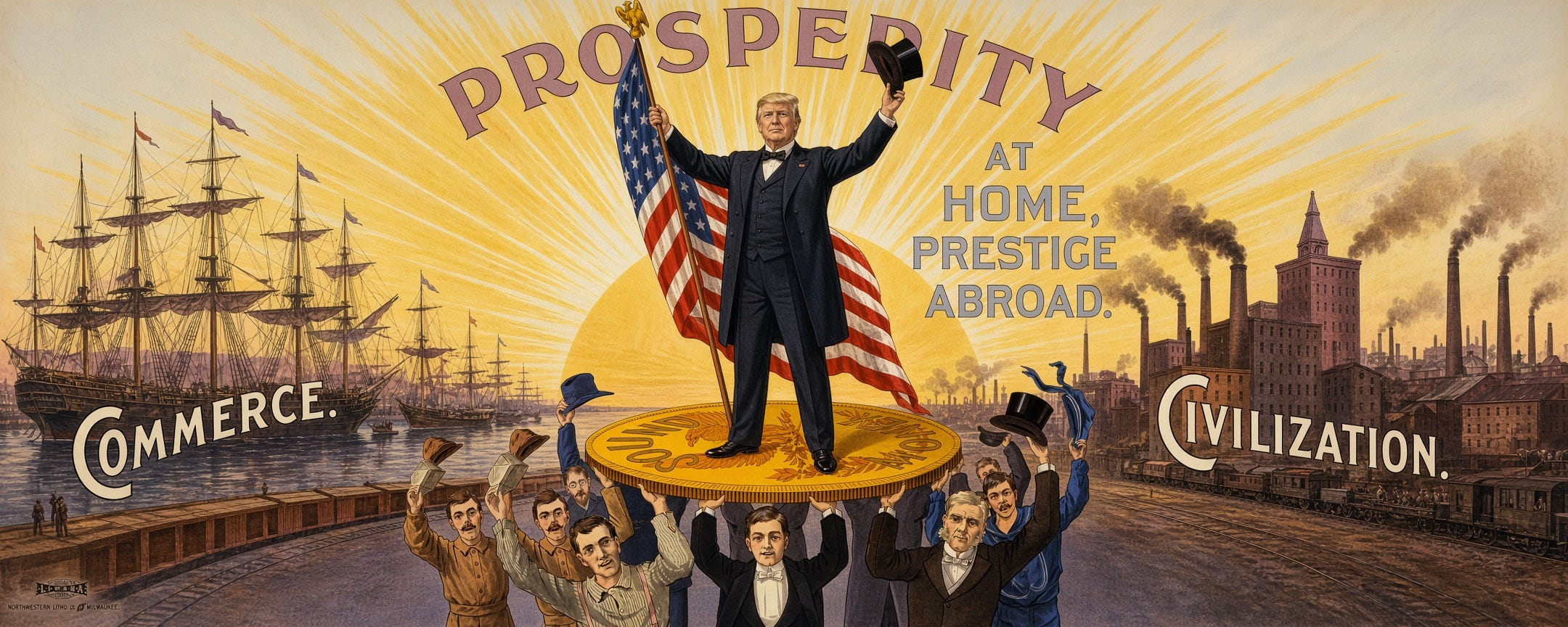
This month, in Donaldsonville, Louisiana, Hyundai and POSCO broke ground on a $5.8 billion electric-arc mill built to pour 2.7 million tons of automotive sheet metal a year. It is the first purpose-built automotive mill of its kind in the country, and it anchors Hyundai’s $26 billion American program. Officials put the local effect at 1,300 direct jobs and roughly 4,000 indirect ones, with the first coil targeted for 2029. The steel is meant for vehicle bodies assembled in Alabama and Georgia, coil that would otherwise have been stamped from imported steel. Contractors are already on the site in Ascension Parish.
The week before, Commerce Secretary Howard Lutnick sat down on CNBC and put a number on the wider map. The United States, he said, now holds $1.2 trillion in commitments to build semiconductors on American soil. When this administration took office, America produced less than 2% of the world’s chips. The path Lutnick described runs toward 40%, and toward 50% if Intel’s foundry holds.
Liberation Day tariffs put a charge on access to the American consumer and turned the world’s richest market from a free good into a scarce one. The July 2025 tax law then changed the plant’s return. 100% expensing of equipment and qualified production property lets a firm deduct the full cost of a factory in the year it builds it. Power finished the argument for the projects that swallow electricity. American energy abundance made the American data center and the American fab among the few sites that can feed an AI load at scale. European industrial power is still expensive, and several Asian grids cannot promise the same firm load on a construction calendar, which is why data centers and leading-edge semiconductor fabs keep landing here. Reciprocal trade frameworks did the last piece of work. Tariff relief became a multi-year investment vehicle from Japan, South Korea, Taiwan, the UAE, Saudi Arabia, and Europe’s industrial champions. Lutnick stated the bargain plainly. If you make it here, you don't pay tariffs, but if you don't, be prepared to pay to enter the greatest market in the world. Kevin Hassett, the president’s economic adviser, added the tax half. Tariffs are pushing people to onshore activity, and expensing is making them want to invest like crazy.
The plants themselves have counties and start dates, which is the evidence that finally matters. TSMC arrived in Phoenix under the prior administration with a $65 billion program. In March 2025, standing beside President Trump, it added $100 billion. In July 2026, after the US-Taiwan trade and investment agreement, it added $100 billion more. The Arizona program now totals $265 billion across ten fabs and two packaging plants. The company’s own chairman calls it the largest foreign direct investment in American history, and the first fab is already in high-volume production of 4-nanometer chips. Micron’s memory program has been lifted to $250 billion. Add Texas Instruments and GlobalFoundries, and four companies alone account for more than $440 billion.
Medicine has begun to move on the same terms. Eli Lilly’s chief executive, David Ricks, said his company hadn’t built a new American site in more than 40 years until the first Trump tax cuts changed the arithmetic. In February 2025, with pharmaceutical tariffs on the table, Lilly pledged four new plants and 13,000 manufacturing and construction jobs. Virginia came first, then a $6.5 billion site in Houston, then a $6 billion plant in Huntsville that stands as the largest single-site investment in Alabama history, and finally a $3.5 billion injectables facility in Pennsylvania’s Lehigh Valley. Three of the four will make active pharmaceutical ingredients, the link in the medicine supply chain the country had exported to Asia. Lilly is not an outlier. On August 31, nine additional drugmakers posted at least $19.6 billion in new American manufacturing commitments, bringing the pharmaceutical total the Commerce Department now puts above $600 billion. Add the first new primary aluminum smelter in 45 years, a $4 billion Oklahoma project that doubles domestic capacity, and the industrial map starts to look different county by county.
The Bureau of Economic Analysis counted $232.2 billion in new foreign direct investment expenditures in 2025, and the total investment President Trump and his team have secured is now over $11.2 trillion over the next 4 to 10 years. That $232.2 billion BEA figure is a 49.5% jump after four consecutive years of decline, with manufacturing taking $121.8 billion of the flow. Nominal private nonresidential fixed investment hit a series high of $4.62 trillion annualized in the second quarter of 2026. Factory-construction employment has grown by nearly 100,000 jobs since Inauguration Day, with 16,000 manufacturing jobs added in August alone. TSMC’s first Arizona fab is already running. Hyundai’s contractors are in the dirt in Louisiana. Even Bloomberg Economics, examining an earlier $9.6 trillion version of the White House list with every intention of trimming it, still found about $7 trillion it was willing to call real investment pledges, and then conceded that the trimmed figure exceeded all the foreign direct investment accumulated in the United States since statistics were first collected. Even a hostile trim, then, left a figure larger than every dollar of foreign direct investment booked in the United States since the series began.
In January 2025, the outgoing Biden White House closed its books by claiming over $1 trillion in announced private-sector investments catalyzed by its three signature laws across four years. Same scoreboard, same class of claim. Set the two ledgers next to each other, and the ratio is hard to talk past: $11.2 trillion in 20 months against $1 trillion in 48. If the announcement standard was good enough to crown the Biden industrial policy a success, it is good enough to measure its successor at 10 times the scale in less than half the time.
For a generation, Washington wrote grant checks and hoped the factories would stay. This term treats the taxpayer as a partner with a claim on the result. In August 2025, the government converted Intel’s unpaid CHIPS grants into 433.3 million shares at $20.47, a 9.9% stake purchased with money already appropriated, plus a warrant for another 5% if Intel ever surrenders majority control of its foundry, and by June 2026 the president could mark that position above $60 billion after the stock’s re-rating so that money already appropriated did not vanish into a finished plant but remained an asset the public still held. The same design appears in the golden share in US Steel, which carries a veto over plant closures, in preferred stock in MP Materials, and in positions in Lithium Americas, Korea Zinc, Vulcan Elements, and L3Harris Missile Solutions. One count puts those equity-linked arrangements at 39 and the total at $27.7 billion.
Japan’s $550 billion framework is the hardest version of the same idea. Washington selects the projects, and after Japan recoups its capital, the United States keeps 90% of the profits. A Hudson Institute review of the memorandum noted that Tokyo puts up the capital and Washington chooses the projects. Access to the American customer used to be treated as a given. It is now priced, and payment arrives as plants and fabs rather than as a note that can be rolled over. Once Japan crosses the threshold of getting its capital back, the residual does not stay in Tokyo. The donor state pays and then watches the appreciation accrue somewhere else. The ownership state pays once, keeps a claim, and can vote when a plant is slated to close.
Alexander Hamilton wrote in 1791 that a country’s independence and security are materially connected to the prosperity of its manufactures. The Marshall Plan spent about $13 billion in then-dollars, roughly $170 billion today, rebuilding allied industry so that allies could buy American goods. What is underway now runs that sequence the other way. Allied treasuries and allied champions are rebuilding American industrial capacity as the price of admission to the American customer. For four decades America gave its market away and watched the factories follow the giveaway. This term reversed the bargain. If you want the customer, you build the plant here, and in the strategic sectors the taxpayer keeps a warrant. Today, that claim is $11.2 trillion in announced commitments, a steel mill rising in a Louisiana parish, and a stock certificate in the public’s name.
If you enjoy my work, please subscribe https://x.com/amuse/creator-subscriptions/subscribe
Alexander Muse is a Fellow at the John Milton Freedom Foundation and publishes daily political analysis at amuseonx.com. Primary sources cited in this piece are linked inline; campaign finance figures are drawn from FEC filings, polling data from publicly released crosstabs, and legal claims from filed pleadings. Corrections are posted to the original URL with a dated changelog. Readers who identify errors are invited to contact the author directly. Each op-ed edited for grammar and clarity using Ai in a sponsored partnership with Grammarly. Data provided in a sponsored partnership with Polymarket.
I pray the country can continue on the track that Trump has set forth.
Foreign direct investment is economic lifeblood when it finances productive work here. Trump understands this and welcomes overseas capital that puts Americans on payrolls, orders from American suppliers, and gives communities a reason to build for the future. A foreign company building a factory in Louisiana has a stake in that community’s success. That is a relationship worth cultivating. The bargain should remain clear: investors receive opportunity and predictable rules; Americans receive tangible economic benefits, with national security protected. Announcements deserve attention, but operating plants earn the applause. America’s strength should attract the world’s capital and put it to work building the New American Golden Age.