


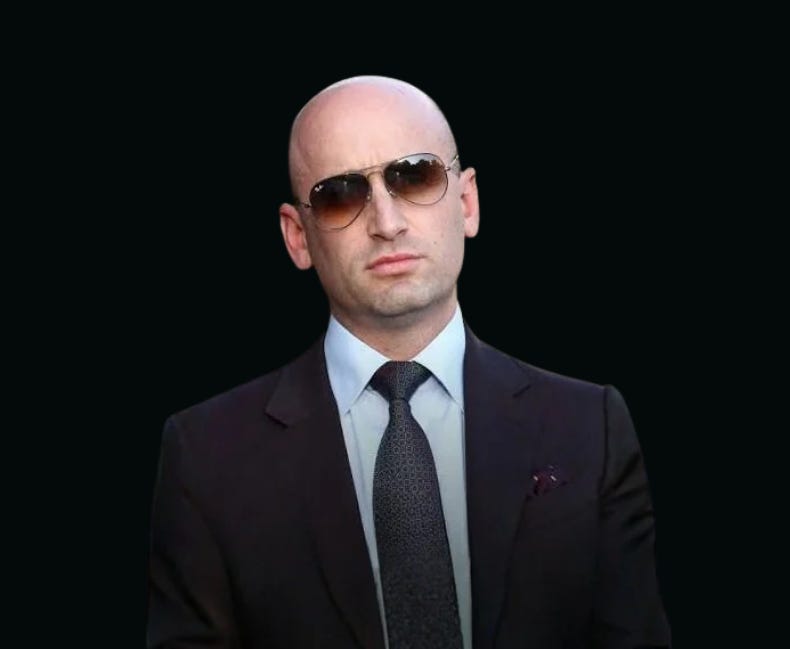
On November 6, President Trump named Stephen Miller the 33rd White House chief of staff. Three days earlier, voters had handed the Democrat Party control of both chambers of Congress, and the incoming majority wasted no time announcing its plans. Robert Garcia, the expected chairman of the House Oversight Committee, told PBS on November 5 that his priorities include “stopping and slowing the Trump agenda,” and he spoke openly about contempt proceedings and the courts as tools to force cooperation. Colorado Congresswoman-elect Melat Kiros had previewed the approach back in July, promising on Firing Line that a Democrat House would “haul in every single administration official for questioning.”
President Trump should answer before the new Congress is sworn in. He should sign a formal, written direction instructing his immediate White House advisers, beginning with Miller, to decline compelled congressional testimony about their official responsibilities. The direction would rest on presidential independence, on the confidentiality of advice, and on a doctrine the Justice Department has defended under Nixon, Ford, Carter, Reagan, both Bushes, Clinton, Obama, and Trump himself. Nothing about it is novel. What would be novel is abandoning it just as the opposition announces its intentions.
We already know where the subpoenas will point. On June 17, Garcia sent a letter to then-Chief of Staff Susie Wiles demanding internal memoranda, communications involving Miller, records of a senior staff meeting, and the identities of officials who argued for particular options on habeas corpus and the Insurrection Act. That last request deserves attention. Garcia wanted to know which adviser said what to the president in a private meeting. A committee that can extract that information can punish the adviser who gave unwelcome counsel, and every adviser in the building knows it.
Picture the meeting itself. The president is weighing a hard decision, and one aide thinks the popular option will fail. Another wants to test an unconventional alternative by arguing for it as forcefully as he can, though he is not sure he believes it. A third has incomplete information and says so. This is how good decisions get made, through half-formed arguments, rejected proposals, and blunt disagreement. Now suppose each person at the table expects to explain his words under oath to a hostile committee, with the cameras on and the clip headed for 𝕏 by dinner. The aide with doubts keeps them to himself, and the devil’s advocate goes quiet. The president hears safer advice, which means worse advice.
The Supreme Court recognized this in United States v. Nixon in 1974. Even while ruling against the president on a criminal trial subpoena, the justices affirmed the public interest in “candid, objective, and even blunt or harsh opinions in Presidential decisionmaking,” and they grounded that interest in the Constitution. The damage from exposure begins long before any hearing. It begins when an adviser first edits his own sentence for a future audience instead of the man across the desk.
Congress understands the principle perfectly well when its own staff is at stake. In Gravel v. United States in 1972, the Court held that the Speech or Debate Clause protects congressional aides for legislative acts, because a privilege that covers the senator and leaves his assistant exposed protects very little. A senator cannot legislate freely if a prosecutor may interrogate his aide; likewise, a president cannot deliberate freely if a committee may interrogate his chief of staff. The constitutional sources differ, but the structural logic is the same, and members who enjoy the one protection are poorly placed to mock the other.
Lawyers call the executive version “testimonial immunity.” It is the claim that the president’s immediate advisers, the handful of people who meet with him regularly, may not be compelled to appear before a congressional committee to answer for how they perform their duties. It differs from executive privilege, which shields particular communications. Attorney General Janet Reno drew the line clearly in 1999, during the fight over President Clinton’s clemency decisions: privilege protected the advice, while the president’s counsel, as an immediate adviser, was immune from being summoned at all. Privilege governs the answers. Immunity governs the summons.
The pedigree is long. In 1948, presidential assistant John Steelman declined congressional subpoenas at President Truman’s direction. In 1955, Sherman Adams declined to testify about official business, citing his confidential relationship with President Eisenhower. William Rehnquist put the doctrine in writing for the Office of Legal Counsel in 1971, and Antonin Scalia defended it there in 1974. Carter’s Justice Department reaffirmed it in 1977. Theodore Olson applied it in 1982 to keep White House Counsel Fred Fielding out of the witness chair. George W. Bush’s lawyers applied it to Harriet Miers in 2007, and Trump’s applied it to Don McGahn and Kellyanne Conway in 2019.
The most useful precedent, though, comes from Barack Obama. In 2014, a Republican House committee subpoenaed David Simas, Obama’s political strategy director, over the White House political office and the Hatch Act. On July 15th, Obama’s Justice Department concluded that Simas did not have to appear. Its opinion warned that committees could use compelled appearances to influence a president’s advisers, to retaliate for executive actions, and to weaken a president politically. Those words were written by a Democrat administration to stop Republican investigators. They describe Garcia’s announced program with some precision.
The courts have also limited Congress. In Senate Select Committee v. Nixon, the D.C. Circuit refused to enforce a subpoena for presidential tapes because the committee could not show the material was “demonstrably critical” to its legislative work. In Trump v. Mazars in 2020, the Supreme Court told judges to weigh a congressional demand for presidential information by its legislative purpose, its breadth, the availability of other sources, and the burden on the presidency. And Watkins v. United States settled in 1957 that Congress has no power to expose for the sake of exposure. A chairman who says his goal is slowing the president’s agenda has a Watkins problem before he signs a single subpoena.
The Democrats and their willing accomplices in the drive-by media will reply that no court has ever blessed this immunity, and on the narrow point they are correct. The Supreme Court has never ruled on it. Two district judges, John Bates in the Miers case in 2008 and Ketanji Brown Jackson in the McGahn case in 2019, rejected it. Yet neither ruling produced a binding appellate decision on the merits, and both disputes ended the way these disputes have ended since George Washington withheld the Jay Treaty papers from the House in 1796, with a negotiated settlement. The McGahn fight took 2 years and concluded with a limited, closed-door interview on agreed terms. The D.C. Circuit described the design in United States v. AT&T in 1977, saying the branches are expected to accommodate one another. A president who never asserts his position has nothing to accommodate.
So the direction should be drafted with that negotiation in mind. It should identify the covered advisers by function, meaning those who meet with the president regularly and advise him directly, and it should name the chief of staff first. It should apply only to compelled testimony about official duties. It should require White House Counsel Will Scharf and the Justice Department to review each subpoena and convey the president’s instruction in writing. Documents and staff further from the Oval Office should go through a separate privilege review rather than receive blanket immunity. And it should authorize accommodations where Congress shows a real legislative need, written answers or agency witnesses, the model Olson sketched in the Fielding matter. Scharf’s November 9 letter to Garcia already charged that the planned investigations aim to “harass and aggrandize rather than to advance any legitimate legislative end.” A presidential direction would give that objection a defined scope and a working process.
Two practical objections fall away quickly. Miller is a public advocate for the president’s policies, and some will say a man who appears on television cannot claim confidentiality. The 2019 Conway opinion disposed of that argument, because the immunity turns on the adviser’s relationship to the president and does not depend on whether every question would reveal a secret. Others will threaten contempt. The Justice Department concluded in 1984 and again in 2008 that an official following a presidential instruction of this kind cannot be prosecuted for it, and in December 2024 the Biden Justice Department concluded that Congress may not use its inherent contempt power to arrest or fine an official for obeying a president’s privilege assertion over subpoenaed materials.
At the end of the day, Congress loses nothing it is entitled to. It keeps the power of the purse; it can summon every Senate-confirmed secretary and agency head who actually administers the laws; it can legislate; and it can take its case to the voters in 2028. What it may not do is install itself as supervisor of the president’s personal staff. Cabinet officers run departments that Congress created and funds; the chief of staff manages the president’s own office, and he answers to a man who answers to the whole country. Democrats should think hard about this because the next Democrat president will have a chief of staff too, and a Republican chairman will want him under oath, and the opinions Obama’s lawyers wrote will be the only thing standing in the way. I suspect they know that. The rule Trump would be reaffirming belongs to the office, and whoever holds it next will be glad he kept it intact. Honest advice is given in private, or not given at all, and a president deprived of it governs worse for everyone.
If you enjoy my work, subscribe https://x.com/amuse/creator-subscriptions/subscribe
Alexander Muse is a Fellow at the John Milton Freedom Foundation and publishes political analysis at amuseonx.com. Readers who identify errors are invited to contact me directly. Each op-ed is edited for grammar and clarity using AI in partnership with Grammarly. Data provided in a sponsored partnership with Polymarket.
Time to fight fire with fire—the lesson Republicans absolutely never comprehend.
Shocking how folks underestimate POTUS, even after all of these years.