


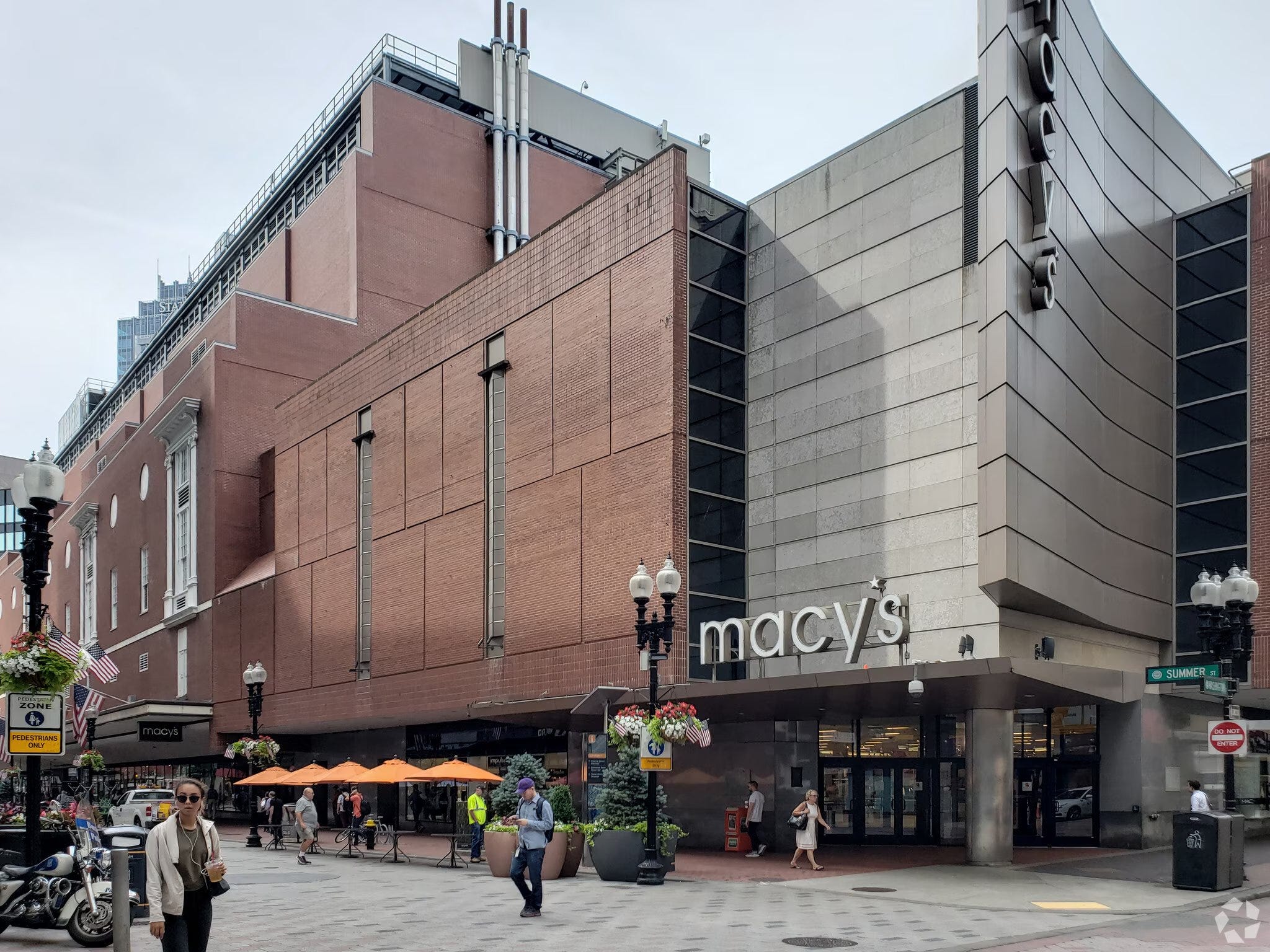
There is a building in downtown Boston where you can buy a suit at Macy's, ride the subway home to a 442-unit condominium tower next door, and never once suspect that the structure you just walked past is the most important telecommunications facility in New England. One Summer Street was built in 1949, converted to a data center in the late 1990s, and now houses roughly 920,000 square feet of data center connecting more than 100 network providers. It is not hidden behind razor wire in a distant industrial park. It is embedded in the Downtown Crossing retail core, and the neighborhood never noticed because there was nothing to notice.
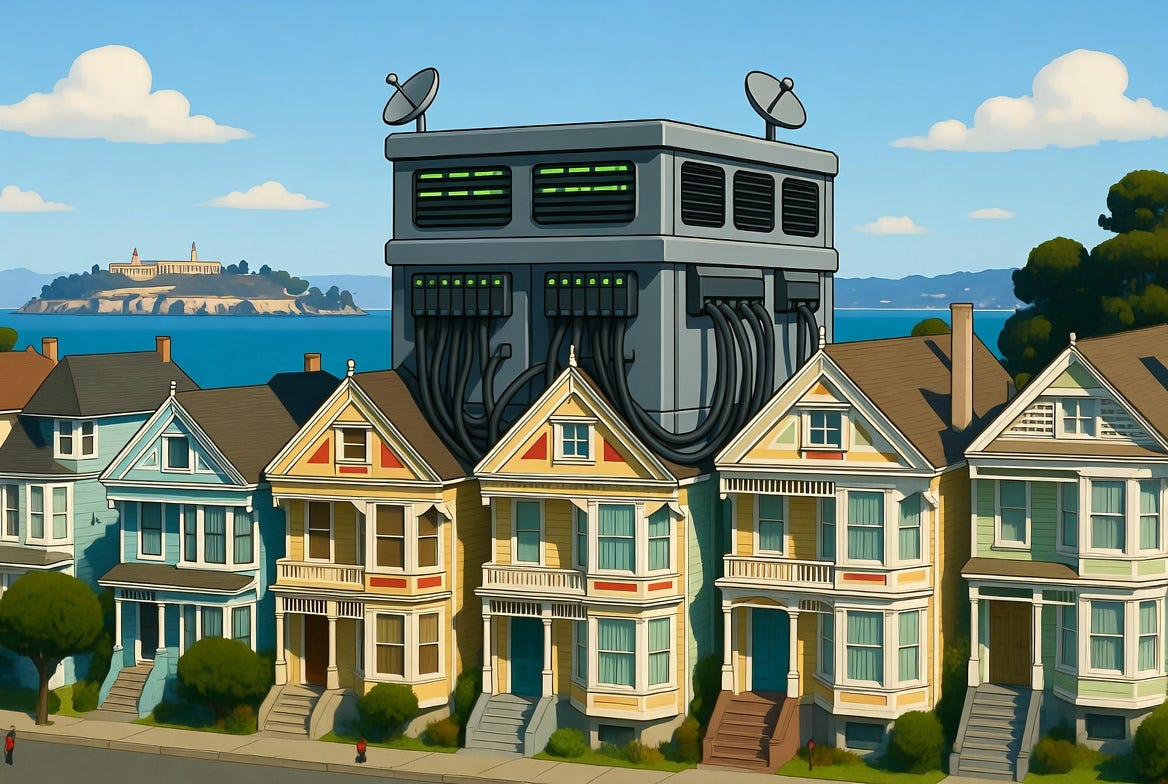
That building is the answer to a question now being litigated in county boards and city councils across America: can data centers coexist with homes, businesses, hotels, restaurants, and active downtowns? Activists insist they cannot. They describe the facilities as too loud, too bright, too dangerous, too industrial for ordinary community life. The claim sounds plausible if you have never looked at the physical record. Once you look, it collapses.
Consider an audit of 25 major data centers located in major US cities, the continuously operating interconnection facilities where dozens or hundreds of networks physically meet and thousands of computer servers are housed. These are not lightly used server closets. They handle internet, cloud, financial, media, and enterprise traffic around the clock. The 25 facilities operate in 19 cities across 15 states. Twenty-two of them, or 88%, are wholly or partly housed in retrofitted buildings, old printing plants, department stores, postal facilities, warehouses, and office towers. Thirteen, or 52%, occupy structures built in 1949 or earlier. Six operate in buildings constructed between 1910 and 1917. Every single one has apartments, condominiums, hotels, restaurants, grocery stores, offices, schools, arenas, or transit stations in its immediate environment. Several have those uses in the same building.
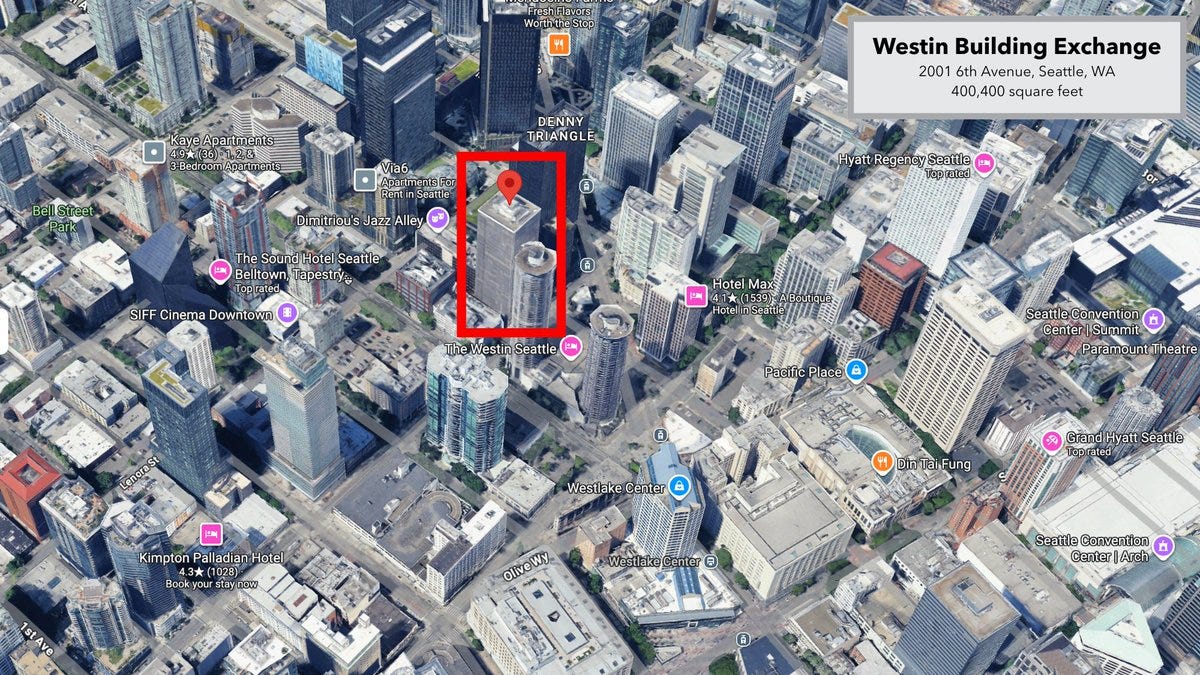
Start in Seattle, because Seattle supplies the most literal rebuttal available. The Westin Building Exchange is a 34-story, 400,400 square foot data center home to thousands of servers, more than 150 carriers and 220 networks, and landing points for ten subsea cable routes serving Asia, Australia, and New Zealand. It is connected by skybridge to the 891-room Westin Seattle hotel. Guests sleep, dine, and hold conferences in a building physically attached to one of the heaviest concentrations of digital infrastructure on the West Coast. Amazon's Doppler headquarters stands immediately adjacent. The Via6 apartments occupy the same corridor. If data centers were incompatible with sleep, the Westin would have failed decades ago.
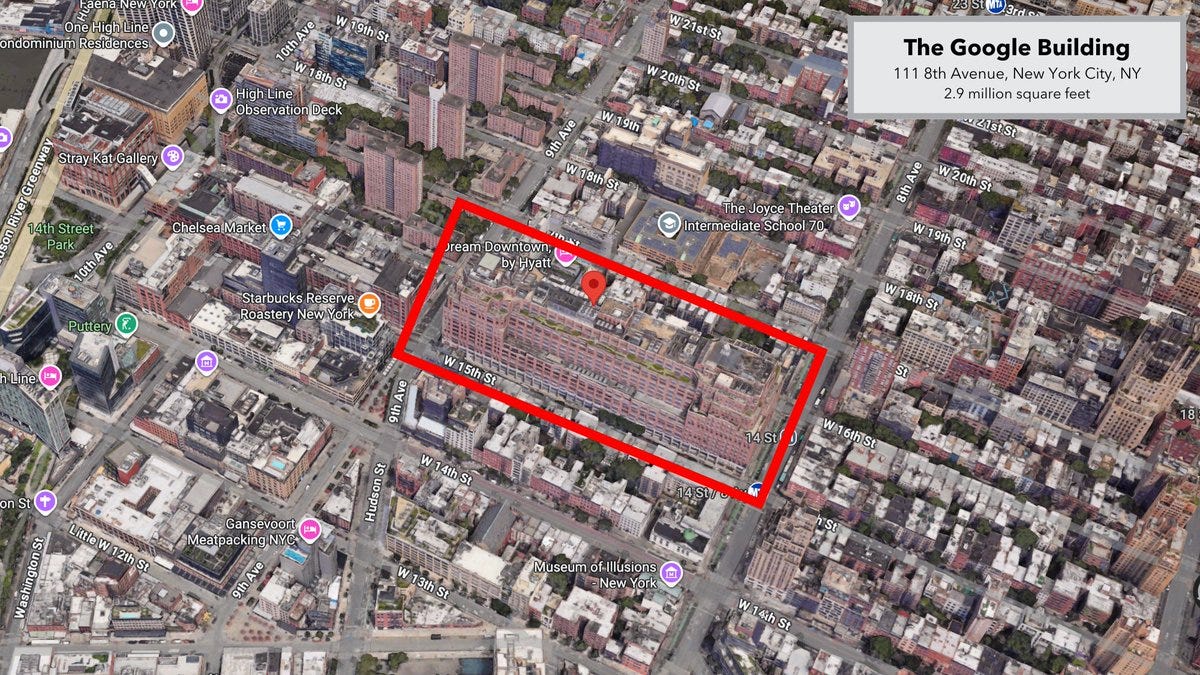
Now Manhattan. The building at 111 Eighth Avenue spans 2.9 million square feet and serves as Google's New York headquarters while simultaneously housing 750,000 square feet of data-center operations. Chelsea Market, one of the most heavily trafficked food destinations in the city, sits across the street. Downtown, 60 Hudson Street has 1.1 million square feet of data center space and offers access to more than 400 network providers from a 24-story Tribeca landmark. I built my fifth data center in this building. New York Law School sits immediately beside it. Students attend lectures next to one of the densest telecommunications ecosystems on Earth, and nobody's education has suffered for it.
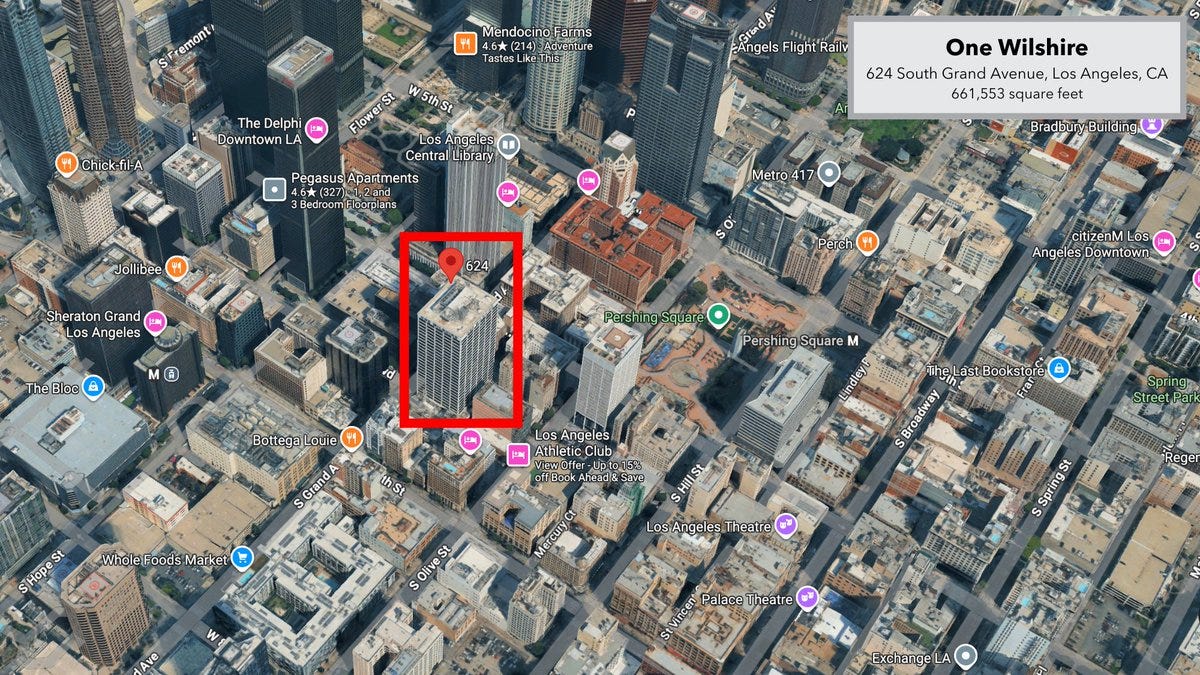
The pattern repeats everywhere. In Los Angeles, One Wilshire has 661,553 square feet of data center space and connects more than 300 providers from a 1967 office tower surrounded by the Hotel Per La, the Brockman Lofts, and the restaurants of the downtown grid. A few blocks away, CoreSite's 424,890 square foot data center facility at 900 North Alameda faces Union Station, the Mozaic apartments, and Philippe the Original, a restaurant that has been serving French dip sandwiches since before the First World War. In Chicago, the 1.13-million-square-foot data center located in a former printing plant at 350 East Cermak anchors a South Loop district that includes the Marriott Marquis and the Arrive LEX apartments. In Newark, a 1912 department store that once housed Macy's commerce now houses more than 360,000 square feet of data-center space beside Prudential Center and the residences of Teachers Village. In Portland, the Pittock Block is itself a mixed-use property, with 200,000 square feet of data infrastructure along with another 100,000 square feet of offices, and retail in one building and a famous food-cart pod across the street. Dallas, Denver, Miami, Minneapolis, Kansas City, Phoenix, Atlanta, Palo Alto, San Jose. The list runs on, and in every city the story is identical: hotels welcome guests, residents sign leases, restaurants seat diners, and data moves silently through the building next door.
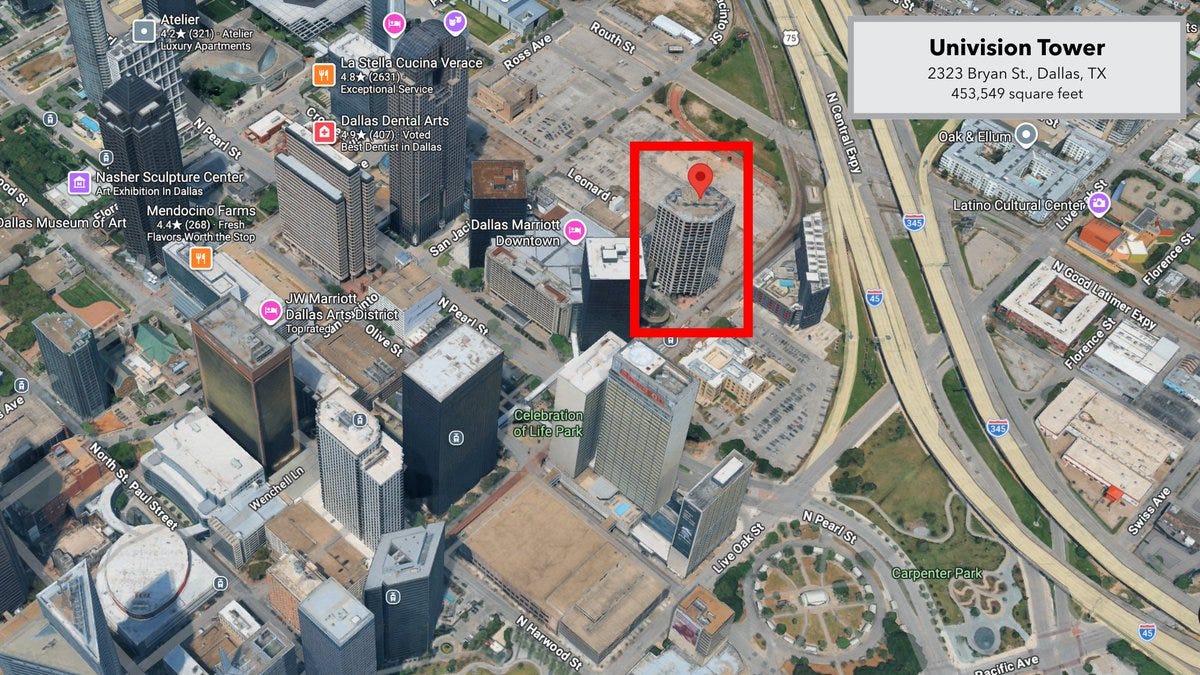
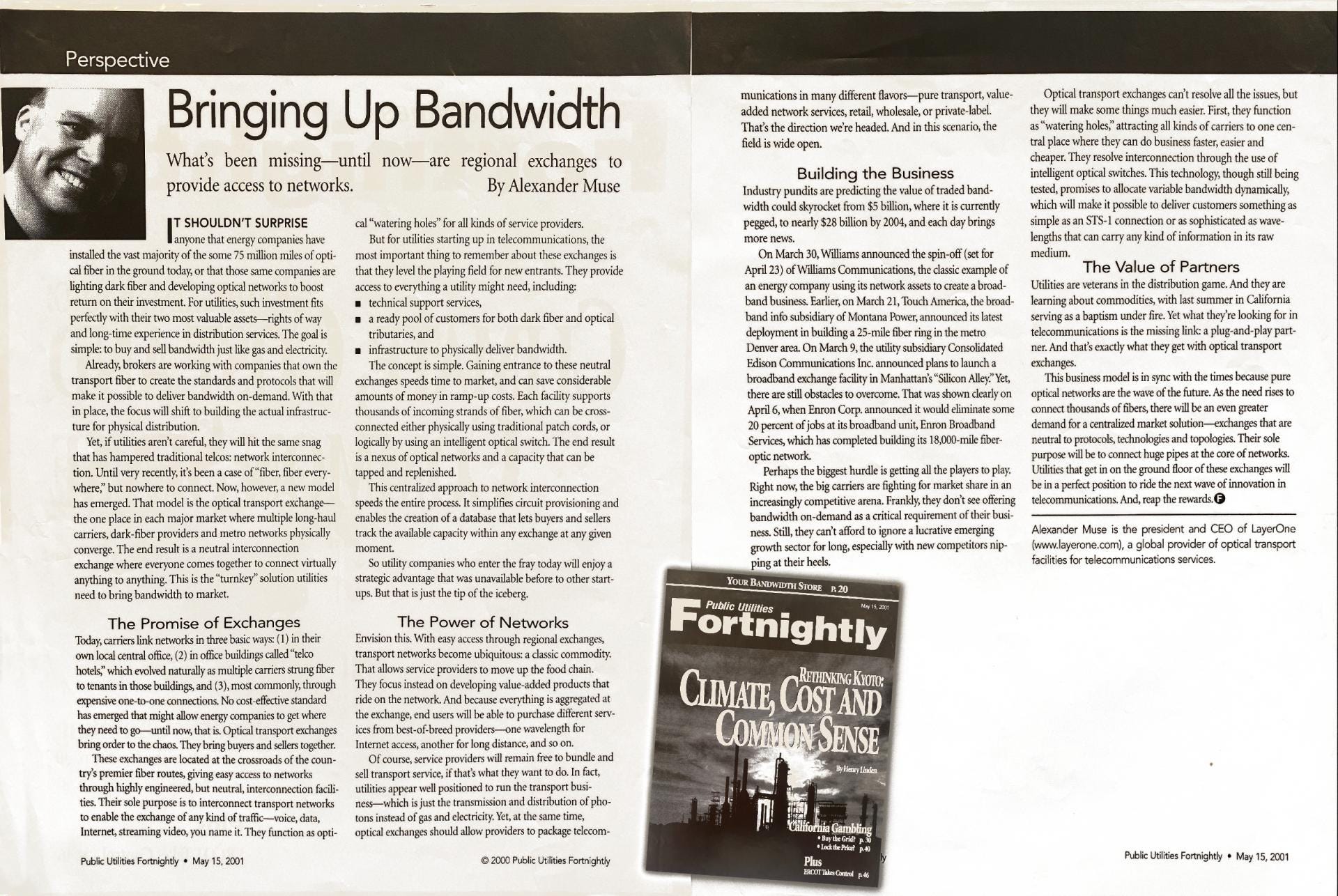
I know this record intimately because I helped build it. As a young entrepreneur I was founder and CEO of LayerOne, a venture-backed data center company, and we built facilities in the heart of Chicago, New York, Miami, St. Louis, Dallas, and Los Angeles. No one ever complained. Not once. Those facilities are all still operating today, and I would wager that 99% of the people who walk past them have no idea they are passing what activists now describe as an evil, dangerous data center. The only water our facilities consumed went to the restrooms and kitchens we provided for our engineers. We paid for all of the electrical switch gear necessary to power our buildings, and the electric company was more than happy to gain another paying customer. The idea that we were imposing hidden burdens on our neighbors would have struck everyone involved, the city, the utility, the landlords, the tenants upstairs, as bizarre.
The trade press has quietly conceded the point. In October 2023, Data Center Dynamics surveyed the history of American carrier hotels and described these legacy facilities as “humming away quietly” in central metropolitan locations, often in buildings more than a century old. DataBank CEO Raul Martynek told the same publication that carrier hotels remain the connectivity bedrock of the modern internet and that these buildings are irreplaceable, because the accumulated fiber interconnections inside them cannot be recreated elsewhere. Even municipal governments have said it plainly. Palo Alto’s own 2015 fiber master plan described the Equinix (the company that eventually bought LayerOne) facility at 529 Bryant Street, which sits across from a well-reviewed restaurant in one of the most expensive downtowns in America, as “the communications hub of everything Internet.” The city did not treat the downtown location as a contradiction. It treated it as an asset.
A skeptical reader will ask the fair question: what about noise? What about the generators? Here the record is equally instructive, because the concern has been measured, engineered, and resolved. When Equinix proposed its SV10 and SV11 facilities at Great Oaks in San Jose, the planning record identified existing residences roughly 320 feet away. The city did not respond with slogans. It applied enforceable numerical standards, 55 dBA at residential boundaries and 60 dBA at commercial ones, and required an acoustical analysis. The preliminary study found that generator testing needed mitigation. The remedy was not prohibition. It was engineering: acoustically rated generator packages and an acoustically lined 25-foot screen wall. The reviewing engineer, David Hessler, concluded that the final design appeared to satisfy the noise requirements at all site boundaries. That is how serious government works. Measure, engineer, verify, build. Phoenix followed the same logic, noting in a land-use document that backup generators are typically tested monthly for three to five minutes. Fairfax County’s 2024 zoning rules require operational equipment to be fully enclosed or screened. Noise is not an unknowable menace, it is a design variable, and any planning department that pretends otherwise is choosing hysteria over competance.
The safety objection fares no better, these facilities are governed by UL 9540A fire testing for battery systems, UL 1778 certification for uninterruptible power supplies, OSHA battery-room requirements, NFPA standards, local fire codes, insurer engineering reviews, and FM’s comprehensive January 2026 loss-prevention standard covering everything from cable penetrations to emergency planning, which makes a modern data center one of the most intensively engineered and inspected classes of commercial property in the country rather than the unregulated hazard of activist imagination. A building subject to that regime is safer than most of the structures its critics live and work in.
Why does this matter beyond zoning hearings? Because the stakes are national. The Department of Energy reports that data-center electricity use nearly tripled from 58 TWh in 2014 to 176 TWh in 2023, roughly 4.4% of US consumption, and could reach 325 to 580 TWh by 2028. President Trump has framed the buildout bluntly. Announcing the Stargate initiative, a planned investment of at least $500 billion expected to create more than 100,000 American jobs, he said, “We want to keep it in this country. China is a competitor.” His July 2025 executive order declared AI data centers and their supporting power infrastructure essential to national security, economic prosperity, and scientific leadership. The Heritage Foundation called the administration’s AI Action Plan a call for a new industrial renaissance. The Cato Institute, hardly Heritage’s ideological twin, described data centers as the infrastructure backbone of the AI industry and warned that public debate is often driven by people who do not understand what the facilities are. When Heritage and Cato agree, the point is probably not partisan.
The conservative position here is not “build anything anywhere.” It is the older and better principle that land-use policy should regulate measurable effects rather than indulge superstition. Noise can be measured. Light can be shielded. Generators can be enclosed and their testing scheduled. Fire systems can be inspected. Water is optional. Set the standard, enforce it objectively, and issue the permit when the applicant meets it. That is the difference between government by rule and government by rumor. America has already run the experiment. For decades, some of the most consequential digital infrastructure in the world has operated beside apartments in Tribeca, condominiums in Boston, a hotel skybridge in Seattle, and a century-old sandwich counter in Los Angeles. The buildings are already there. The neighbors are already there. Normal life continued because engineering, not fear, set the terms. The only question left is whether we will let manufactured panic surrender the next generation of that infrastructure to China. I built these buildings in the middle of American cities, and I can tell you what the record shows: the data center next door was never the problem.
If you enjoy my work, please subscribe https://x.com/amuse/creator-subscriptions/subscribe
Alexander Muse is a Fellow at the John Milton Freedom Foundation and publishes daily political analysis at amuseonx.com. Primary sources cited in this piece are linked inline; campaign finance figures are drawn from FEC filings, polling data from publicly released crosstabs, and legal claims from filed pleadings. Corrections are posted to the original URL with a dated changelog. Readers who identify errors are invited to contact the author directly. Data in sponsored partnership with Polymarket.
I always find it interesting when people conflate yesterday's data centers with the hyperscale AI campuses being proposed today. They're fundamentally different in terms of power demand, water use, footprint, and infrastructure. Pretending there's no distinction doesn't make for an honest discussion.
Good analysis. I was at Google in 2006 when The Dalles (in Oregon) was being constructed, at the time one of the biggest in the world. This was long before the term "AI Data Center" became a redundancy. These were not the Nvidia GPU-heavy servers we see now.
We can ask then, why AREN'T tech companies buying up all that commercial urban real estate, whose prices are plummeting? Why are they buying up farmland instead?
Gemini (obviously Google's) notes: "A traditional data center rack uses 10 to 15 kilowatts (kW) of power. A brand-new AI rack packed with next-generation chips (like NVIDIA's Blackwell GB200 NVL72) requires 100 kW to 120 kW per single rack."
When people say, dismissively, "put it in a rural area" they ignore the fact that people live, farm, and ranch there. It's not garbage land and you don't get to fill it up with one story, windowless concrete buildings.