


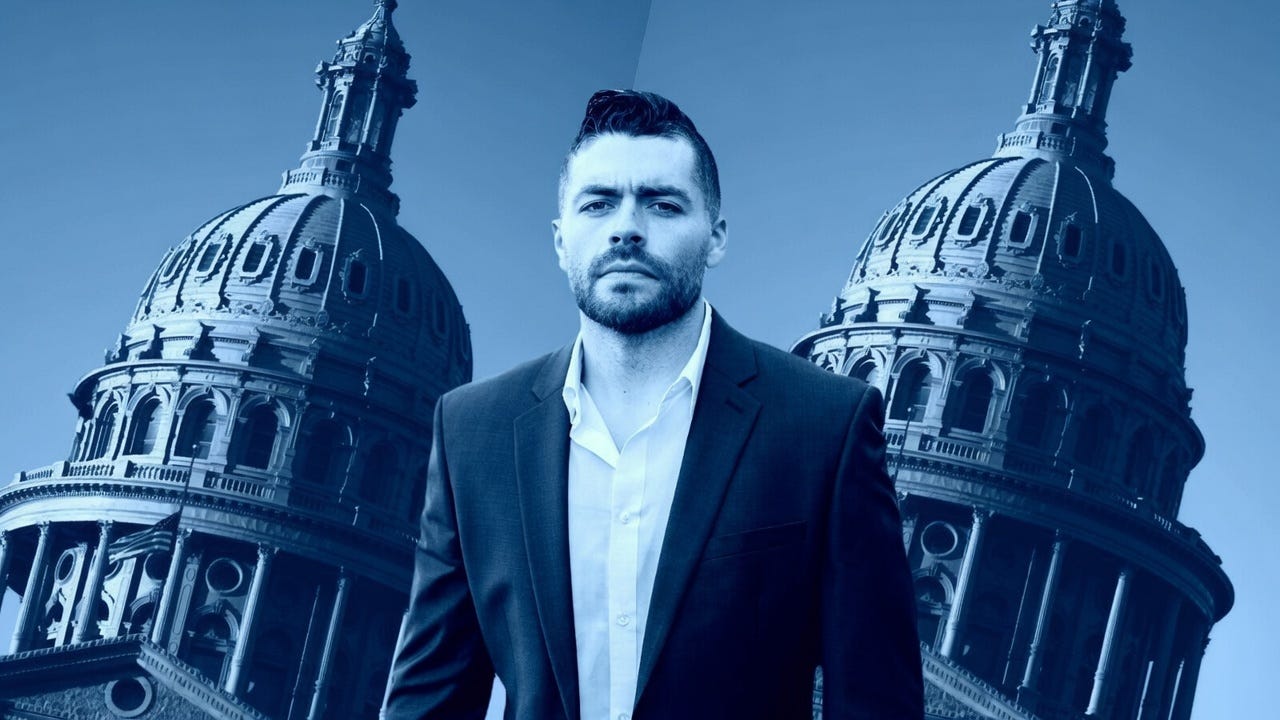
Ken Paxton’s rout of John Cornyn in the May runoff should have settled a long argument inside the Republican Party of Texas. Grassroots conservatives, the same voters who delivered 72.74% support for a closed-primary ballot proposition in March 2024 and 92.38% support at the state convention that summer, had just demonstrated that they, and not the donor class, decide who carries the Republican banner in this state. Governor Abbott read the returns. According to multiple sources, Abbott concluded that he needed to get right with the grassroots on the closed primary, and he moved quickly. He convinced Secretary of State Jane Nelson, who was actively fighting the Republican Party of Texas in federal court over the issue, to step down. Her office announced her departure on June 2. Ten days later, Abbott stood before convention delegates and declared that only Republicans vote in Republican primaries. And the man he intended to install in Nelson’s place was Nate Schatzline, the Fort Worth legislator who authored closed-primary legislation in 2025 and who, was reportedly prepared to sign the consent decree that Attorney General Paxton and the party had jointly proposed to the federal court.
Then the establishment went to work, and by July 2 the plan was dead. To understand why that matters, and why the fight now runs through Jane Nelson’s signature rather than the Capitol, you need to understand what the lawsuit actually says, why the constitutional argument is so strong, and why the people who killed the Schatzline appointment wanted it killed.
Start with the legal foundation. Texas does not register voters by party. A voter affiliates with the Republican Party by requesting a Republican ballot on primary day, an affiliation that expires at the end of the voting year. A Texan can vote in Democratic primaries for a decade, request a Republican ballot in March without changing a single political belief, help select the Republican nominee, vote against that nominee in November, and return to the Democratic primary two years later. The party has no say in any of it. The Republican Party of Texas and Potter County precinct chair Chip Hunt sued the state on September 4, 2025, arguing that this arrangement violates the party’s First Amendment right of association.
The Supreme Court has been building the architecture for this claim for 45 years. In Democratic Party v. La Follette, the Court held that freedom of association presupposes a freedom to identify the people who constitute the association and to limit the association to those people only. In Tashjian v. Republican Party of Connecticut, the Court held that a party’s determination of the boundaries of its own association is protected by the Constitution. And in California Democratic Party v. Jones, Justice Scalia wrote for the Court that in no area is the right to exclude more important than in the process of selecting a party’s nominees. Scalia added a warning that should hang over every close Texas primary: a single election could be enough to destroy the party. A federal court applied these principles directly in Idaho Republican Party v. Ysursa in 2011, striking down Idaho’s open primary as applied to the Republican Party. Idaho then built a party-affiliation system, proving the transition is administrable.
Notice what the principle actually is. It is not that every primary must be closed. Tashjian protected a party that wanted to open its primary to independents over the state’s objection. The principle is party autonomy. The state may run the election machinery, but it does not own the Republican label, and it cannot commandeer a private association and dictate the people with whom that association must choose its standard bearers. Whether Democrats should help pick Republican nominees is not a policy question for the Legislature to weigh against competing interests. It is a constitutional question, and the party has already answered it. The Legislature no more gets a vote on the Republican Party’s membership rules than it gets a vote on the membership rules of a church or a labor union.
The crossover problem is not hypothetical. The party’s complaint cites political-science estimates of crossover participation in open and semi-open systems ranging from 18% to 49% depending on the election, and the Idaho record produced strict estimates near 10% with broader measures of 20% to 30%. In Texas, where winning the Republican primary is effectively winning the office across vast stretches of the state, those numbers decide who governs. The complaint points to the 2024 runoff between Dade Phelan and David Covey, decided by 389 votes out of roughly 25,000 in a district where the party reported that nearly 9% of March primary participants were known Democratic voters. It points to Gary VanDeaver’s 763-vote primary win in a district where no Democrat even ran in November. A political party cannot be held accountable for its nominees when outsiders hold a government-created right to select them.
Paxton accepted this reasoning in October 2025 and joined the party in asking Judge Matthew Kacsmaryk to enter a consent judgment declaring the relevant Election Code provisions unconstitutional as applied to the Texas GOP. He called defending the current system completely indefensible and a slap in the face to the Republican Party and its voters. But the proposed order remains unsigned. Nelson refused to join it, her lawyers moved to dismiss, and the case is still pending as of this writing, with an outside group moving to intervene as recently as July 8. Nelson’s stated objection is procedural. She has publicly said she never opposed closed primaries and would implement whatever the Legislature enacts. Which brings us to the heart of the con.
The Legislature will never enact it. The official record shows at least 14 closed-primary or party-registration bills filed between 2007 and 2025. Leo Berman in 2007. John Davis in 2009. Three bills in 2017. Bob Hall in 2019. Bryan Slaton in 2021 and 2023. Six separate vehicles in 2025 alone, including Schatzline’s HB 4059, which never even received a hearing. Every one died, almost always in committee, without a floor vote, across multiple speakers and political eras. Eighteen years and 14 bills is not a deliberative process. It is institutional refusal dressed up as procedure. So when anyone in Austin tells you the closed primary should go through the Legislature, understand that they are telling you it should go nowhere. That includes, I am sorry to say, the party’s new chair, who arrived after a leadership shakeup that was driven in part by Texans for Lawsuit Reform and Project Red Texas precisely to blunt the closed-primary agenda. She says she supports closed primaries, but through the Legislature, which is where the idea has been buried for 18 years.
Why does the establishment care so much? Because open primaries are the incumbency protection racket of one-party states. When November is a foregone conclusion, the primary is the election, and a supplemental electorate of Democratic crossover voters is a lifeline for legislators facing conservative challengers. TLR, the most powerful advocacy operation in Texas politics, opposes closed primaries, and TLR is run by CEO Ryan Patrick, son of Lt. Gov. Dan Patrick. Dan Patrick himself recently allowed that he could support some form of closed primary while admitting that Texas senators oppose the measure. Read that carefully. The senators whose primaries would be closed oppose closing them. That is not an argument. That is a confession.
Which returns us to Schatzline. My sources describe a man who took the governor at his word. He resigned from the National Faith Advisory Board, the Trump-aligned organization he joined after announcing he would leave the House. He bought a house in anticipation of the new role. And then Abbott, under sustained pressure from establishment Republicans terrified that a Secretary of State Schatzline would sign the consent decree and take the issue away from the Legislature forever, informed him that Article III, Section 18 of the Texas Constitution made him ineligible. The sole authority for that interpretation is a 2002 attorney general opinion, GA-0006, holding that a legislator cannot accept a Senate-confirmed appointment during his elected term. The attorney general who issued it was Greg Abbott. We are asked to believe that Abbott offered Schatzline the job, watched him resign his seat and relocate his family, and only then remembered his own quarter-century-old opinion. I am not buying it, and neither should you.
The opinion is also wrong, and it is not binding on the governor. The constitutional text bars legislators from offices the appointment to which may be made, in whole or in part, by either branch of the Legislature. The governor appoints the secretary of state. The Senate merely confirms or rejects. Confirmation is not appointment, and the framers knew the difference, distinguishing between the two functions throughout the document. Had they intended to reach every Senate-confirmed office, they could have said so. They did not. A flawed 24-year-old advisory opinion became a convenient escape hatch at the exact moment the establishment needed one, and Schatzline was handed a consolation prize as senior election-policy adviser, tasked with drafting legislation for a body that has spent 18 years refusing to pass it. Meanwhile the Chron wrote on July 2 that Nelson had grown uncomfortable with the plan to install Schatzline and might stay. She is staying, and she is still fighting the party in court.
So here is where the fight actually is. Not in the 2027 session, which will bury the issue again as surely as the sun rises over Amarillo. It is on Jane Nelson’s desk. Nelson says she has never opposed closed primaries. She says her objection is to the process, not the principle. Fine. The process is a pending federal case, a proposed consent judgment already joined by the State of Texas through its attorney general, and a constitutional right recognized in an unbroken line of Supreme Court precedent. Madam Secretary, you do not need the Legislature’s permission to stop violating the First Amendment. Withdraw the motion to dismiss. Join the consent decree. Let Republicans choose Republicans, and let history record that you were the official who finally said yes.
If you enjoy my work, please subscribe https://x.com/amuse/creator-subscriptions/subscribe
Alexander Muse is a Fellow at the John Milton Freedom Foundation and publishes daily political analysis at amuseonx.com. Primary sources cited in this piece are linked inline; campaign finance figures are drawn from FEC filings, polling data from publicly released crosstabs, and legal claims from filed pleadings. Corrections are posted to the original URL with a dated changelog. Readers who identify errors are invited to contact the author directly. Data in sponsored partnership with Polymarket.
Yikes. Even Texas is unanswerable to the voters, despite the Paxton rout.
I am still sending every Republican party solicitation back with nothing but a note, "Pass the SAVE America Act."
Abbott has been one of the worst things to happen to Texas when it has mattered most. It’s tragic really. Under his watch that state, which was once a stalwart, deep red state has turned an into a hazy purple, at serious risk of going entirely blue, and is in absolute chaos as a result.