


There is a useful way to test whether a “privacy” bill is really a privacy bill. Ask who gets the cause of action, who gets the attorney’s fees, and who gets the takedown letter. If those three answers all point to the same politically favored class, the bill is not protecting privacy. It is protecting a constituency. California Assembly Bill 2624, which the lower house passed 57 to 19 on May 26, 2026 and sent to the Senate, fails that test on its face. The bill arms a defined class of immigration-services workers, volunteers, and participants with injunctions, mandatory fee awards, statutory damages of at least $4,000 per violation, treble damages in some circumstances, and a written-demand takedown mechanism that runs for four years. It is the regulatory state’s response to a 23-year-old with a camera who did in 40 minutes what the California State Auditor could not get Sacramento to do in four years.
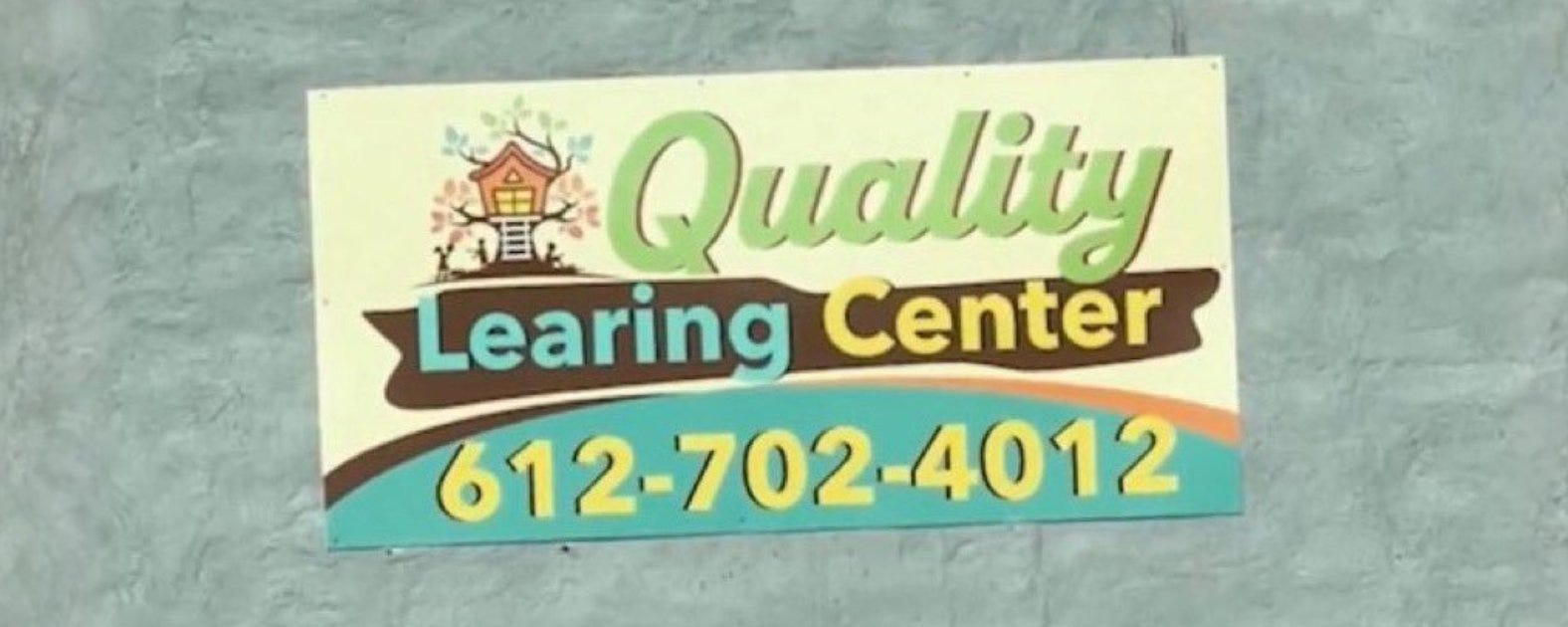
To understand why the bill exists, you have to understand who Nick Shirley is and what he did. Shirley is a freelance YouTube journalist with no newsroom behind him. In December 2025 he walked into the Quality Learing Center in Minneapolis, a Somali-run daycare, asked simple questions on camera, and posted what he found. Within weeks, the Department of Health and Human Services froze $185 million in federal child-care funding to Minnesota, the FBI surged agents into the state, and federal prosecutors indicted Quality Learning Center operator Fahima Egeh Mahamud on $4.6 million in child-nutrition fraud charges. That happened in a state where Aimee Bock of the nonprofit Feeding Our Future was already on her way to a 41-year federal prison sentence for stealing roughly $250 million in pandemic child-nutrition funds. Then, in March 2026, Shirley turned his camera on Los Angeles County hospices. His 40-minute video alleged roughly $170 million in fraud and drew more than 7 million views on 𝕏 within hours. Thirty days later, California Attorney General Rob Bonta held a press conference announcing Operation Skip Trace, the dismantling of a $267 million Medi-Cal hospice fraud ring, and 21 criminal charges.
That sequence is the part Sacramento does not want anyone to think about for very long. Consider the contrast. In March 2022, the California State Auditor delivered a report titled, in the auditor's own words, that the state's weak oversight of hospice agencies had created opportunities for large-scale fraud and abuse. The auditor documented a 1,500% increase in Los Angeles County hospice agencies since 2010 against a senior-population growth of just 40%. The auditor found 112 hospices registered to a single address in Van Nuys. The auditor reported that the Department of Public Health had revoked exactly one hospice license in seven years. That report was hand-delivered to Governor Newsom and to legislative leadership. Almost nothing happened for nearly four years. Then a freelance YouTuber posted a video, the public reacted, and the system that had ignored its own auditor moved within a month. AB 2624 is the regulator's instinct to legislate against future embarrassment rather than to fix the failure the embarrassment revealed.
Here a careful reader might pause. Is it really fair to call AB 2624 the “Stop Nick Shirley Act”? Or is that just partisan branding from a Republican floor critic, Assemblymember Carl DeMaio, who voted against the bill and called it exactly that on April 13, 2026? It would be fair to ask, except that the Foundation for Individual Rights and Expression, FIRE, reached almost identical conclusions ten days later. FIRE is not a conservative organization. It is the country’s leading leftwing free-speech institution, founded in 1999, and its analysis on April 22, 2026 was blunt. FIRE wrote that the bill, in operative section 6218.19(b)(1), “covers any information that ‘relates to’ the immigrant or service provider,” and that the provision “could facilitate censorship of all kinds of speech the Constitution protects.” FIRE walked through examples, including unrelated negative reviews of an immigration law firm, criticism of a government official who happens to volunteer at an immigration nonprofit, and the one-off citizen-journalist post that has no newsroom protection. When the partisan critic and the non-partisan civil-liberties organization arrive at the same verdict from different starting points, the bill is the problem.
The mechanism FIRE and DeMaio are describing is worth slowing down on, because it is the entire engine of the statute. AB 2624 does three things in combination, and the combination is what makes it dangerous. First, the bill creates a written-demand process: a covered person, or an entity acting on that person’s behalf, can send a letter asserting “reasonable fear” and demanding that the speaker stop disclosing the person’s information or image. That demand is good for four years. Second, the bill authorizes injunctive and declaratory relief plus mandatory attorney’s fees and court costs to any successful plaintiff. Third, in the adjacent civil-damages prong, the bill provides that “if a jury or court finds that a violation has occurred, it shall award damages to that individual in an amount up to a maximum of three times the actual damages, but in no case less than four thousand dollars ($4,000).” The number is not symbolic. It is the floor. Each post, each video, each repost can be priced at $4,000 minimum plus fees. That is a per-shot tax on watchdog journalism, payable by the speaker to a politically favored plaintiff class with state-funded counsel on call.
Now consider who pays that tax and who collects it. The Coalition for Humane Immigrant Rights of Los Angeles, CHIRLA, is the bill’s named sponsor. CHIRLA reported $33,966,572 in government grants on its 2023 IRS Form 990. Adam Andrzejewski’s Open The Books, reporting through The Center Square, documented that California provided roughly $73.6 million in 2023 and 2024 to anti-deportation groups, of which CHIRLA received about $35 million. The California Department of Social Services has sent CHIRLA approximately $3 million annually since 2020 for legal-services contracts, plus an additional $1.37 million in 2022 for removal-defense services. The asymmetry here is the point. A $4,000-per-shot lawsuit plus mandatory fees is fatal to a freelancer with a tripod and a YouTube channel. It is trivial to a $44.7 million-revenue NGO whose general counsel is already on payroll. The bill does not need to ban speech. It only needs to make the speech expensive enough that the marginal speaker walks away.
The carveout for the press is exactly as narrow as it has to be to make the chill effective. The written-demand subsection exempts “a person or entity defined in Section 1070 of the Evidence Code.” Section 1070 dates to 1935. It protects “a publisher, editor, reporter, or other person connected with or employed upon a newspaper, magazine, or other periodical publication, or by a press association or wire service,” along with radio and television personnel. The Reporters Committee for Freedom of the Press notes that California courts have at points extended this language to bloggers, but the line for “non-traditional newsgatherers” and one-off internet posters is unsettled. FIRE put it more plainly: “If someone captures a newsworthy video and just makes a one-off post about it, it looks like the bill would allow its censorship.” The class of journalist who broke the California hospice and Minnesota daycare stories is exactly the class the carveout does not clearly cover.
Then comes the structural critique, which is the most damning of the four. The First Amendment was meant to be content-neutral. The principle, stated by Justice John Paul Stevens for the Court in Bartnicki v. Vopper, is that “a stranger’s illegal conduct does not suffice to remove the First Amendment shield from speech about a matter of public concern.” California has spent the last several legislative sessions building exactly the opposite, a content-protective First Amendment in which certain categories of speech subjects get a private cause of action and others do not. Reproductive-care providers got a dedicated state Safe at Home apparatus with injunctive remedies and fee shifting. Gender-affirming-care providers got their own version. Now immigration-services workers, volunteers, and participants will get a third. Three speech regimes, three privileged classes, three Democratic constituencies. No comparable regime exists for pro-life pregnancy-center workers, ICE officers, religious counselors, or anyone else whose privacy interests are equally real but whose politics are inconvenient. Two-tier civil liberties are not civil liberties. They are patronage.
There is also a federalism overlay worth naming. The same legislature that tolerated the 1,500% explosion in Los Angeles hospices, the 112 hospices at one Van Nuys address, and the Department of Public Health’s one-revocation-in-seven-years pace is now moving to make exposure of that ecosystem legally costly. The Ninth Circuit has been here before. In Animal Legal Defense Fund v. Wasden, 878 F.3d 1184, the court struck down Idaho’s ag-gag law because it criminalized recording an institution’s operations in a way that was content- and viewpoint-discriminatory. AB 2624 is not a criminal ban on recording, but its civil mechanism reaches the same choke point, the publication of newsworthy material about a politically favored sector. The Supreme Court in Miami Herald Publishing Co. v. Tornillo was equally direct about the limits of state interference in editorial choice. AB 2624’s written-demand takedown power is, in operation, governmental compulsion of editorial choice mediated through a plaintiff class.
The last objection worth taking seriously is the conflict question, which is more political than statutory but is real either way. Assemblymember Mia Bonta authored AB 2624. Her husband, Attorney General Rob Bonta, held the April 9, 2026 press conference announcing Operation Skip Trace. The AG’s office concedes that California’s ecosystem of state-funded NGOs and care providers is, in fact, where some of the largest fraud in the country is being committed. The AG’s spouse is moving a bill to make documenting the next one harder. There is no proof of a Government Code section 87100 violation on the face of the bill, and serious critics should not claim one. But appearance-of-conflict standards exist for a reason, and Mia Bonta herself acknowledged that reason in 2023 when she recused herself from overseeing the Department of Justice budget to avoid perceived conflict.
The cleanest summary is the one Susan Shelley of the Howard Jarvis Taxpayers Association offered after Operation Skip Trace: California officials, she observed, did not take meaningful steps to investigate and stop hospice fraud after the state auditor warned of it. They moved when shamed, not when warned. AB 2624 is the institutional response to that shame. It does not fix the auditor’s findings, it does not strengthen the Department of Public Health, it does not raise the bar on Medi-Cal eligibility verification, it does not coordinate the silos the auditor named in 2022. It does exactly one thing: it makes the next 23-year-old with a camera hesitate before posting. That is not privacy protection. That is the regulator protecting itself from the citizen.
If you enjoy my work, please subscribe https://x.com/amuse/creator-subscriptions/subscribe
Alexander Muse is a Fellow at the John Milton Freedom Foundation and publishes daily political analysis at amuseonx.com. Primary sources cited in this piece are linked inline; campaign finance figures are drawn from FEC filings, polling data from publicly released crosstabs, and legal claims from filed pleadings. Corrections are posted to the original URL with a dated changelog. Readers who identify errors are invited to contact the author directly.
Apologies to Spencer Pratt and Steve Hilton, but in my opinion the whole damn state needs to be trashed, and sooner than they're accomplishing themselves. What a wretched place run by wretched people.
I was hired by a Taiwanese insurance company to obtain, with the written permission of the clients, their medical records of giving birth in California to anchor babies. The Chinese woman arrived shortly before birth and stayed for a month at considerable expense. When it came time to pay the hospital bill, all eighty-three of them signed a document pleading poverty. CA residents paid 90% of each of the average $55,000 hospital bill.