


On Sunday, Flávio Bolsonaro beat Luiz Inácio Lula da Silva in the first round of Brazil’s presidential election, 47.03% to 45.16%, by more than 2.2 million votes. Lula is the sitting president, a three-time winner of the office, and the most celebrated figure on the Latin American Left. He now heads into the October 25 runoff in second place. Results like this invite local explanations, and Brazil offers plenty: grocery prices, street crime, corruption, a high court that has grown too comfortable policing speech. Each of those matters. None of them explains why 7 other countries in this hemisphere made the same turn before Brazil did, all within about 14 months.
Ecuador re-elected Daniel Noboa with 55.63% in April 2025. Bolivia ended nearly two decades of MAS dominance by electing Rodrigo Paz with 54.96%. Honduras chose Nasry Asfura in a race decided by less than a point. Chile elected José Antonio Kast, the most conservative president since the country’s return to democracy. Costa Rica gave Laura Fernández 48.53% in the first round, comfortably clear of a runoff. Peru elected Keiko Fujimori by 49,641 votes out of more than 18 million cast. Colombia, after nearly four years under a former guerrilla, chose Abelardo de la Espriella over Gustavo Petro’s heir, Iván Cepeda, by 251,854 votes. The countries differ in size, history, and temperament. What they share is a date. Every one of these elections followed January 20, 2025, the day President Trump froze the foreign-aid bureaucracy and began taking USAID apart.
Most Americans picture USAID as sacks of grain and boxes of malaria medicine. In Latin America that picture was badly incomplete. The agency’s inspector general reported that democracy, human rights, and governance made up its largest program category in the region, and the portfolio was candid about its purposes. It funded “political competition and consensus building,” civil society, independent media, the free flow of information, governance, human rights, and election-related work. Political competition is the contest for power itself. An agency that funds it inside another country has entered that country’s politics, whatever label it prints on the grant.
A political party resembles a business storefront. Voters see the sign, the candidates, the slogans. Behind the storefront runs a supply chain: the advocacy groups that draft policy, the institutes that produce studies, the journalists who decide which stories count as news, the monitors who certify an election as clean, the lawyers who bring the lawsuits, and the foreign validators who tell other capitals which side speaks for democracy. A party can survive a bad candidate. It struggles to survive losing its supply chain. USAID ran no storefronts in Latin America, but it financed a large share of the supply chain, and the goods on those shelves suited one kind of store far better than the other.
El Salvador shows how the arrangement worked in practice. When USAID concluded that Nayib Bukele’s government was backsliding, its inspector general recorded that the agency moved money away from four government institutions and toward civil-society groups working on transparency, anti-corruption, and human-rights monitoring. It paid for legal assistance and advocacy, for protecting activists and journalists, and for mechanisms that helped civic organizations and media push back against the government. Bukele did not deserve the pushback. Salvadoran voters had handed Bukele enormous majorities, and a US agency, having judged him objectionable, used American tax dollars to strengthen the people opposing him at home. Bukele saw it plainly. In a February 2025 post on 𝕏, he wrote that funds sold as democracy promotion were mostly “funneled into opposition groups, NGOs with political agendas, and destabilizing movements.”


Money of this kind rarely tells anyone how to vote. Its influence is quieter, lasts longer, and is very effective. It decides which causes get full-time staff, which activists are flown to conferences in Washington and Geneva, which outlets earn the title “independent,” and which governments get described as threats to democracy. The causes this network rewarded were climate, gender, identity, migration, Indigenous-rights advocacy, and the policing of “misinformation.” They sit comfortably inside progressive coalitions. They sit awkwardly beside a conservative running on border security, public order, energy production, religious liberty, and the family. Max Primorac, who wrote the USAID chapter of the Heritage Foundation’s Mandate for Leadership, warned that the agency had drifted from development toward exporting a progressive social agenda. Latin American voters have spent 18 months testing his claim, and their judgment is damning.
USAID’s defenders reply that the agency never gave a dollar to a party or a candidate. That is true, and it rebuts a charge almost nobody makes. Imagine a mayoral race in which one candidate raises money from voters, businesses, churches, and relatives, while the other walks into a city already stocked with professionally staffed nonprofits running voter education, leadership training, legal advocacy, policy research, and international messaging that echoes his platform. The second candidate never cashes a check from any of them, yet nobody would call the race even. For decades that was the arrangement across much of the region, and Trump ended it fast. By March 2026, the Government Accountability Office reported that 6,780 of USAID’s 7,510 awards had been terminated, roughly 90% of the portfolio.
The cuts did not wait for a new grant cycle. According to an electoral-assistance specialist, the freeze suspended US technical support to Ecuador’s election authority, including cybersecurity and poll-worker training, 13 days before the February 2025 first round. In Honduras, the shutdown arrived 44 days before the March primaries and interrupted work with three institutions. Critics of the cuts cite these episodes as proof of recklessness. They read better as proof of reach. Washington had embedded itself so deeply in the machinery of other nations’ elections that its departure registered in the final weeks of a campaign, and a sovereign country ought to be able to train its own poll workers. Noboa won his runoff that April, and Asfura won in November.
Peru offers the cleanest single case. The country’s official cooperation registry lists a $7.355 million program run by USAID and International IDEA titled “Promoting Democratic Values and Political Dialogue in Peru.” It convened political and civil-society actors nationwide and funded local partners throughout a long national crisis. International IDEA’s own 2026 budget concedes that the project ended after the USAID shutdown. When Peruvians finally voted, Fujimori won by 0.27%. A dialogue program casts no ballots. In a race that close, however, the disappearance of a multimillion-dollar network devoted to defining which political ideas counted as democratic is hardly a rounding error.
Voters in these countries were nobody’s puppets, and the Right did not win on an empty field. It won because left-wing and establishment governments had failed on the things people live with every day: violent crime, cartel power, inflation, corruption, illegal migration, and weak growth. For years the USAID network absorbed that anger before it reached the ballot box, converting it into process debates, elite messaging, and international warnings about the dangers of the conservative alternative. In Gazeta do Povo, the Brazilian political scientist Ludmila Culpi offered a mechanism. She argued that the loss of funding demobilized left-wing unions and NGOs, criminal organizations moved into the space, and rising insecurity made voters receptive to zero-tolerance candidates. Read one way, that is a warning about crime. Read another way, it admits that much of the Left’s ground game had been running on Washington’s dime.
Colombia shows the same pattern in governance, not elections. In February 2025, USAID terminated major projects there, including DAI’s Responsive Governance program and Chemonics’ Inclusive Justice program, which worked through municipalities, public-finance systems, and conflict regions. Together they formed much of the international scaffolding around the post-FARC political order, the order Petro inherited and repackaged as “total peace.” Colombians had watched nearly four years of total peace deliver neither the peace nor the totality; they had watched armed groups tighten their grip on Cauca and Catatumbo while Bogotá kept negotiating with them, and once the scaffolding came down they could see the building for what it was, and they voted for the candidate who promised to stop pretending otherwise. De la Espriella won 16 months after those terminations.
In Brazil, the charge was never abstract. For years the Brazilian Right argued that US-funded NGOs, media partnerships, anti-disinformation projects, and advocacy networks had helped build an information environment hostile to the Bolsonaro movement. Mike Benz, a former State Department official, laid out that case before a committee of Brazil’s Chamber of Deputies, describing a wider USAID-linked influence network. One need not accept every link in his chain. The Brazilian Right believed it was running against two opponents at once, Lula and an international apparatus that kept certifying Lula as democracy’s candidate. Trump removed the second opponent, and on Sunday Flávio Bolsonaro beat the first, at least for one round.
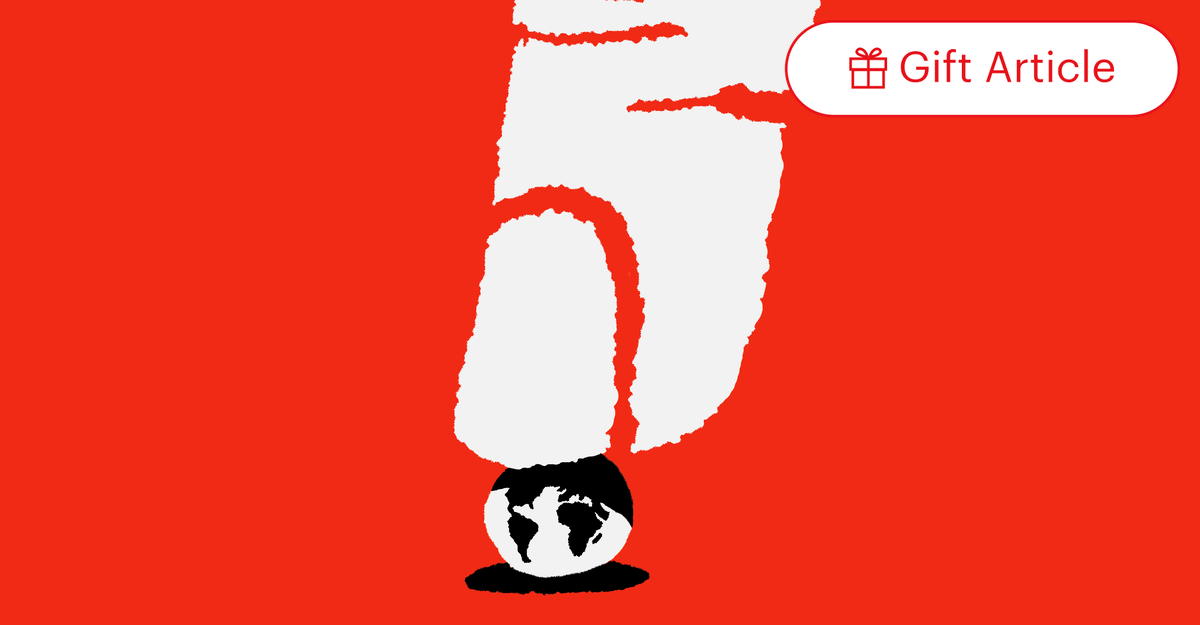
Thomas Sowell wrote that there are no solutions, only trade-offs. Ending USAID carried real costs, and some of the programs that vanished did honest good. Trump’s trade was simple to state. Latin American politics would be decided by Latin Americans, with their own money and their own institutions, and any movement that wants power would have to persuade its own citizens without a US-funded network to pressure, monitor, and out-organize its rivals. For decades Washington sat in the referee’s booth, training the monitors, funding the advocates, writing the misinformation rules, and deciding which goverments needed a counterweight. Trump did not change a single ballot. He emptied the booth.
Brazilians will settle the runoff on October 25, and Lula may yet recover. If he loses, his allies will blame disinformation and foreign meddling, and they will have to make that complaint without an American-funded chorus to amplify it. The agency’s defenders have not reckoned with an irony here. USAID spent decades promoting democracy in the hemisphere, and the hemisphere’s voters seem to have waited for it to leave before saying what they actually wanted.
If you enjoy my work, please subscribe https://x.com/amuse/creator-subscriptions/subscribe
Alexander Muse is a Fellow at the John Milton Freedom Foundation and publishes daily political analysis at amuseonx.com. Primary sources cited in this piece are linked inline; campaign finance figures are drawn from FEC filings, polling data from publicly released crosstabs, and legal claims from filed pleadings. Corrections are posted to the original URL with a dated changelog. Readers who identify errors are invited to contact the author directly. Each op-ed edited for grammar and clarity using Ai in partnership with Grammarly. Data provided in a sponsored partnership with Polymarket.
When the Satan-worshippers and their minions are starved of USA taxpayer cash, freedom prevails.
Who'd a thunk it?
USAID financed Ann Dunham, Obama's mama, in Indonesia for five years while she was working for USAID and the Ford Foundation, both CIA affiliates.