


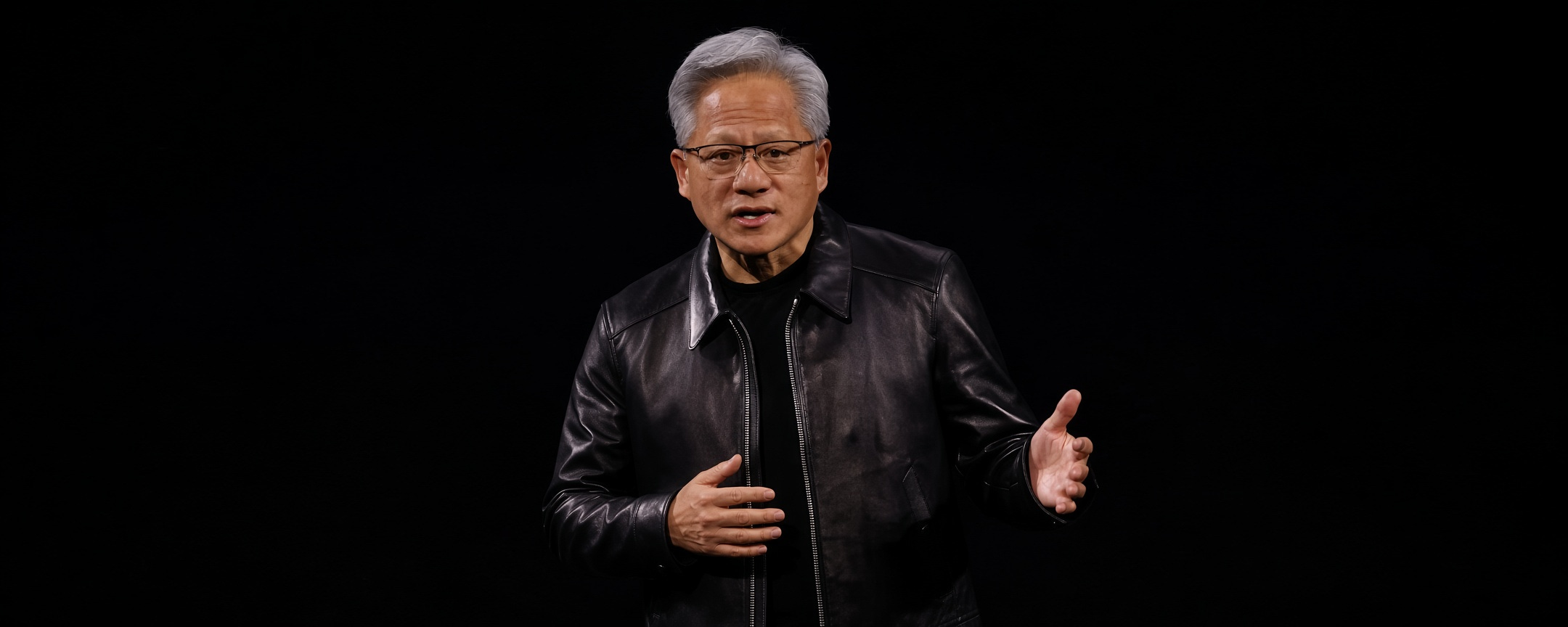
Jensen Huang ran Nvidia for 33 years and lost his job within a week. On October 29th, the New York Times reported that a woman with whom he had been involved, an executive at the Singapore data-center company MegaSpeed, was suspected of working for Chinese intelligence. The paper cited "people briefed on the surveillance." On November 6th, 3 days after the midterm elections, it reported on a classified memo saying China's Ministry of State Security had recruited her. Huang acknowledged the affair on November 8th, a second story alleging a relationship with a subordinate followed within days, and on November 12th he was out. No investigator had established that he gave up a single secret, and on November 12th the attorney general said the Justice Department had reached no conclusion as to whether the woman was a spy.
David Sacks has this right. “People who are hostile to Jensen, who were briefed on this memo, broke the law in order to leak it, in order to take him down,” he said on the All-In podcast. The hostility had a cause, and the cause was access. Huang had the president’s ear on chip sales to China and was winning the argument, and since nobody in the national-security establishment can overrule the president, officials with no authority to choose his advisers used a classified leak to make one of them politically impossible to keep.
Huang could walk into the Oval Office and make a case nobody else could make with his authority. He argued that by denying Beijing its most advanced chips and selling it older ones, licensed sales keep Chinese customers dependent on American technology and starve Huawei of the revenue it needs to catch up. President Trump heard that from the man who built the chips, and in December 2025 he approved licensed sales of the older H200 with 25% of the revenue going to the federal government. Sacks points out that the Biden and Trump administrations both drew a line between leading-edge chips and lesser models. For the officials and legislators who wanted a blanket ban, the December decision was an irritant. The access that produced it was the real problem.
Section 798 of Title 18 makes disclosing classified communications intelligence a felony punishable by up to 10 years in prison, and it carves out no exception for leakers who are sure their policy is the better one. Their lawful options are the ordinary ones. An official who thinks the president is being badly advised can write the memo, brief his principal, resign in protest, or persuade Congress to pass the ban he wants. He cannot choose the president’s advisers for him, because Article II vests the executive power in one elected man, and the power includes deciding whom he listens to. Who advises the president belongs to the president, and through him to the voters who chose him.
Christine Fang got close to Eric Swalwell when he served on the House Intelligence Committee and had access to classified material, and what Swalwell received was a defensive briefing, the standard first move when officials believe a foreign agent has gotten close to an American with sensitive knowledge. He cut off contact and kept his seat. Huang, a private citizen, received a newspaper story. On the available account, nobody ever warned him, though a quiet warning would have protected what was at risk and let him keep advising the president. The leak protected nothing and ended the advising, which tells you which result its authors valued.
The allegation is thin where it should be thick. Sacks notes that the coverage identifies no classified information Huang possessed, no secret he conveyed, and no design files that changed hands. Restricting where a commercial chip may be sold does not make its CEO a keeper of state secrets, and the engineering files that matter are hardly the kind of thing one hands over across a pillow. Sacks does not claim the memo was forged, and neither do I; a real counterintelligence concern, disclosed at its most damaging angle, does the job without a single invented fact. According to Politico, Rep. Jim Himes, the likely incoming Democrat chairman of the House Intelligence Committee, left the classified briefing unsure the woman was a spy at all and wondered aloud whether she was a “useful idiot.”
A leaker needs no power to fire anyone, and Chamath Palihapitiya supplied the mechanism. Once the spy story and the affair became public together, Nvidia’s directors had to ask what Huang had disclosed about a relationship with someone tied to a business partner, what he had told the auditors, and what liability insurance backed both questions. A board can doubt the espionage claim entirely and still feel compelled to act on the disclosure failure. The president, for his part, now pays a price every time he takes Huang’s call, because the Democrats and their willing accomplices in the drive-by media stand ready to describe each licensed sale as a favor to Beijing. The Times had first mentioned the relationship in October 2025. It acquired the authority of classified intelligence a year later, 5 days before the midterms, and the memo itself surfaced 3 days after them.
Chamath asked who gains and ruled out the obvious suspects. An AMD chip runs no faster with Huang gone, and Google appears to have no manufacturing capacity. The winners are the people who want Washington to hold the off switch, meaning location tracking, remote shutdown, and federal keys to privately owned computing power. Huang opposed back doors and kill switches. A successor who arrives under a national-security cloud will have every reason to concede them, and Rep. John Moolenaar wasted no time calling for Nvidia leadership that puts national security first. Nothing connects Moolenaar to the leak. The scandal was days old and already a lever over who runs the company and what the next CEO agrees to build. Sacks adds the cost abroad. Nvidia’s edge is a better chip roughly every year, and 1 or 2 missed cycles hand Huawei time it could not have bought.
In Smith v. Van Gorkom, decided in 1985, the Delaware Supreme Court held directors personally liable for approving a company sale after a 2-hour meeting. Nvidia is a Delaware corporation, and its directors owe the same duty of care, meaning they must make informed, deliberate decisions. By Bill Ackman’s reckoning on 𝕏, where he has laid out why the directors failed their shareholders, they had time for perhaps a single Zoom call before a founder of 33 years was gone. Ackman grants that a board may fire a CEO over a relationship with a subordinate. He insists the decision should never be automatic; he would have had the directors meet in person, sleep on it, and meet again. Instead, these directors ruled out Huang’s return before the facts were known and launched an investigation of unstated scope. When Huang said on November 17 that he would be honored to return if the board judged it best, the new chairman answered on that day’s earnings call that the board “does not intend to reinstate Jensen as CEO.” “They couldn’t stand the heat,” Ackman concluded.

Huang concealed a relationship with an executive at a business partner and, allegedly, another with a direct report, and a board cannot shrug at either. His marriage is his own affair to repair; his standing at Nvidia is for informed directors and shareholders to settle. Sacks agrees. He wants MegaSpeed investigated, any smuggling stopped, and serious consequences imposed if Nvidia knowingly broke the law. That investigation already exists: the Justice Department leads a criminal case against MegaSpeed, which Nvidia put on its no-sell list in June 2025. Adultery is a sin and nondisclosure is a governance breach. Espionage is a crime, and the leak existed to blur the three. A board acting responsibly would have kept them apart, with a leave of absence, independent counsel, directors in one room, and a decision made on evidence. Shareholders got a 33-year tenure ended in a week on the strength of newspaper stories.
“People briefed on the surveillance” describes a short list with a paper trail, since access to material like this is logged, and the Attorney General should open a criminal leak investigation at once. Huang sits for a closed-door interview with three House committees on December 1st, and the intelligence committees have a narrower question to put in writing: whether Huang was ever offered a defensive briefing and, if he was not, who made that call. Nvidia’s directors should rescind the bar on his return and narrow their investigation to the facts that matter. The president should keep taking the call. If Congress wants a blanket ban on chip sales to China, it can vote for one in public, a result Sacks says he could accept.
Huang has his own work to do. Uber founder Travis Kalanick, who knows a thing or two about boards and bad weeks, has posted 12 principles for surviving what he calls a modern-day coup, and the first is to own what you did while refusing to own half-truths. “The op is not about your past actions,” he writes, “it’s about your enemies and this event as their opportunity.” He advises finding the people at the root of it, building a loyal team with a dedicated war room, and carrying on with business as usual, unashamed. The affair and the spy story are 2 seperate things. Huang has admitted the first, he owes nobody a confession to the second, he should say so every day until the facts are in and let his lawyers and his friends do the rest.

Washington has run this play before. In February 2017, leaked intercepts of Michael Flynn’s phone calls removed a national security adviser 24 days into the administration, and nobody was ever charged for the leak. A method that works and costs nothing gets used again.
Flynn at least held an office. Huang held nothing but the president’s confidence, and that was enough to make him a target. If an anonymous official can cancel the president’s choice of adviser with a phone call to a reporter, then every executive, general, and scholar who tells this president something the bureaucracy dislikes now knows the price of candor. I suspect most of them will pay it by staying silent, and the country will be governed by people nobody elected and nobody can name. One indictment under Section 798 would change that price in a way no executive order can, and the list of suspects is short and logged.
If you enjoy my work, subscribe https://x.com/amuse/creator-subscriptions/subscribe
Alexander Muse is a Fellow at the John Milton Freedom Foundation and publishes political analysis at amuseonx.com. Readers who identify errors are invited to contact me directly. Each op-ed is edited for grammar and clarity using AI in partnership with Grammarly. Data provided in a sponsored partnership with Polymarket.
It is unfortunate that our expectations of people in leadership positions must be as squeaky clean as nuns. And even in that comparison, one does not have to scratch very hard to unearth malfeasance and hypocrisy. Jensen is a human being and is therefore fallible. He at least deserves to be heard before facing severe penalties. I’m sure his home life is already upside down.
Getting to the point though, there must be a better way to find these leakers that seem to use calamity to ensure policy they find agreeable. The Flynn issue, the Supreme Court leak, the Russia scandal and more, all took time to investigate and had the effect of providing significant distractions that created distrust amongst the electorate. This is untenable and delays or counters the implementation of the President’s agenda. He/She is the one person voted to power by the people. But I suppose that circumventing this power is the point. It appears that the same holds true for CEOs
I genuinely believe that an example needs to be made by finding and prosecuting these leakers. With the penalties so severe that anyone else considering these actions would think twice.
In my view it is a function of the opposition party to hold the government to account. Not activists burrowed within the administration. There is a process in place that should be followed. Truth must be found. Slipping anonymous information to the media simply avoids and expedites the process. We should expect better.
Political vengeance destroys another genius. Way to go USA!