


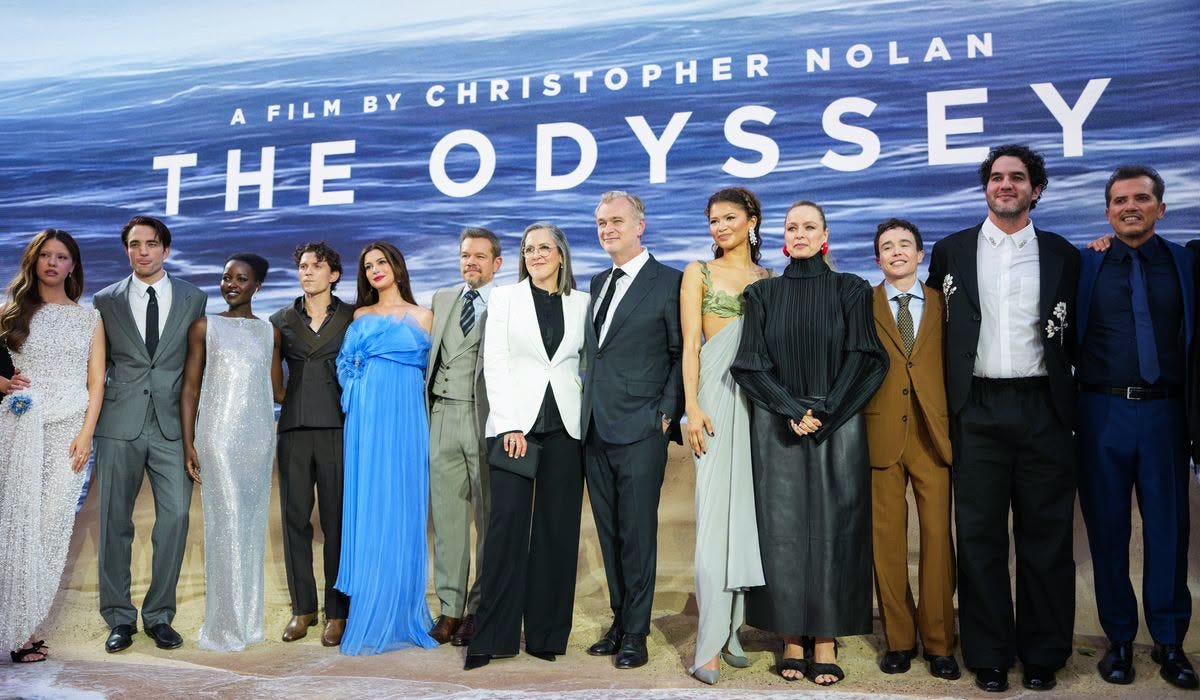
Christopher Nolan may have made The Odyssey to adapt Homer, but Universal also had to make it for the Academy’s confidential diversity, equity, and inclusion spreadsheet. Before the Academy will even consider a 2026 film for Best Picture, the studio must document compliance with it’s identity-based standards covering race, sex, and gender identity of the actors, crew members, interns and even executives. Nolan’s cast contains many excellent performers. But under the Academy’s rules, excellence alone is no longer the measure, and that changes how we should read every casting announcement coming out of Hollywood, including this one.
Start with what the rules actually say, because most moviegoers have no idea they exist. Since 2024, a film cannot compete for Best Picture unless its distributor submits a confidential Representation and Inclusion Standards Entry form, known as the RAISE form, and demonstrates compliance with 2 of 4 standards. Standard A concerns what appears on screen. It can be satisfied if at least one lead or significant supporting actor submitted for Oscar consideration belongs to an Academy-approved list of racial and ethnic groups, or if at least 30% of secondary and minor actors come from at least two categories that include women, racial minorities, LGBTQ+ people and people with disabilities, or if the story itself centers on one of those groups. Standard B counts the crew, requiring qualifying department heads, or at least six technical workers from designated racial groups, or a 30% overall crew threshold. Standard C counts paid interns and apprentices from the designated groups. Standard D counts senior marketing and distribution executives by race, sex and sexual orientation. Of course, none of standards give a picture any credit for hiring white men - they are specifically excluded.
Notice what this is. It is not a mission statement or an aspiration. It is a numerical eligibility gate, with thresholds, categories and a filing deadline. For films released between July and December of 2026, the RAISE form is due November 12, 2026 at 5 p.m. Pacific. The form is confidential. The Academy knows which demographic evidence each studio claims. You do not, and you never will.
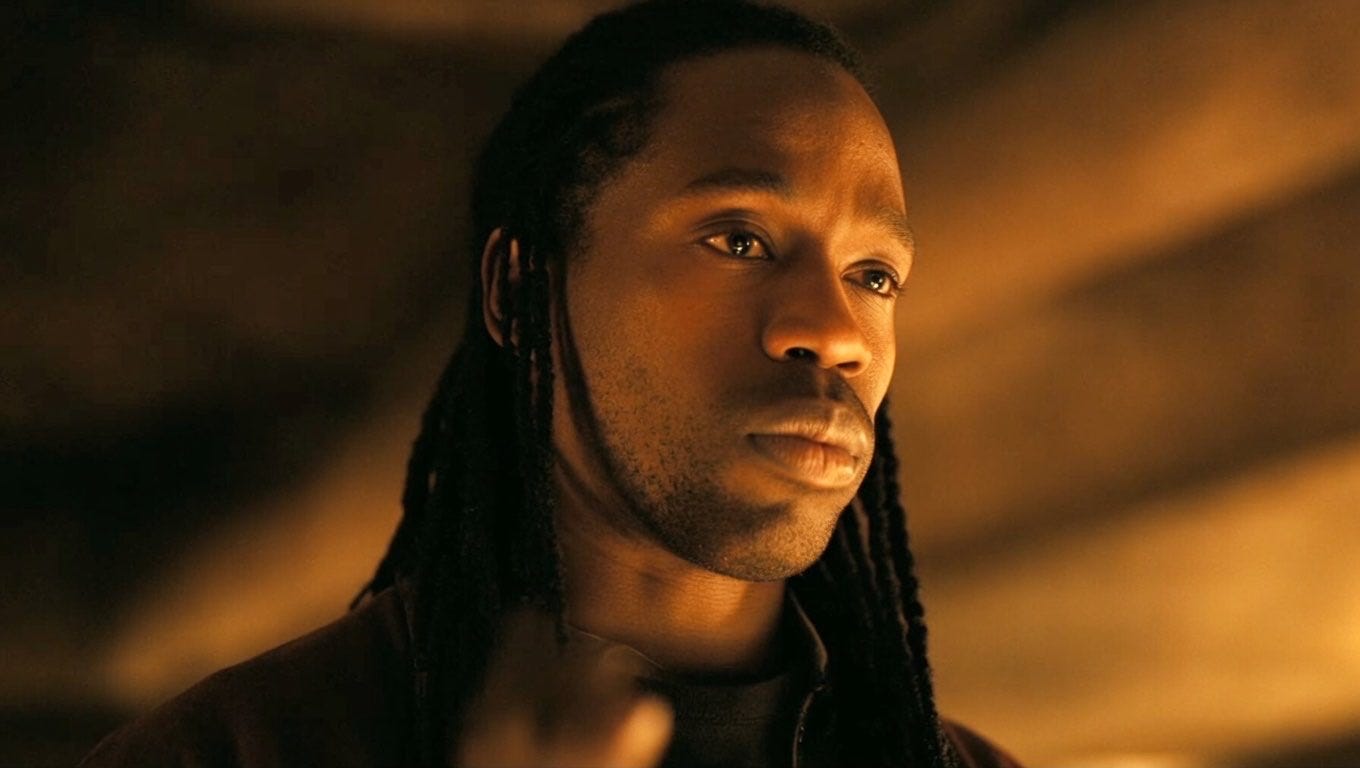
Now consider the man on the other side of that gate. Nolan is coming off Oppenheimer, which earned 13 nominations and won 7 Oscars, including Best Picture and Nolan’s first Best Director statue. The Odyssey is a reported $250 million production distributed by Universal, the same partnership that carried Oppenheimer to the podium. No rational studio spends $250 million on a prestige epic from the reigning Best Director and then treats Best Picture eligibility as an afterthought. Losing eligibility over demographic paperwork would be an unforced professional and financial catastrophe. So ask the obvious question. When Nolan and Universal assembled a sprawling ensemble that includes Matt Damon, Tom Holland, Anne Hathaway and Robert Pattinson alongside Lupita Nyong’o, Zendaya, Himesh Patel, John Leguizamo and the rapper Travis Scott, was every choice made purely to serve Homer? Or were the choices also made to serve the racial or sexual orientation preferences of the Academy?
Here is the honest answer, and it is more damning than the crude version of the charge. Nobody outside Universal can prove that any individual actor was hired because of race, and this argument does not require that proof. What the public record proves is structural. The Academy deliberately made protected identity an eligibility requirement. One submitted performer from a listed racial group can satisfy Standard A1 by himself. A sufficiently diverse secondary cast satisfies A2. A studio that wants insurance builds multiple qualifying routes into the production before cameras roll, because casting happens months before the filing and no producer wants to discover a shortfall after release. Call it compliance optionality. A performer can be artistically desirable and simultaneously improve the studio’s regulatory position inside the Academy’s private awards system, and once the Academy created that second kind of value, no serious filmmaker seeking Best Picture could rationally ignore it. It cannot be denied that the system excludes straight white men from consideration.
Nolan says he wanted to cast big and get the finest bunch of actors. Take him at his word and the problem remains. Discrimination law has never required that race be the only reason for a decision. Suppose two actors are both excellent and one of them also carries eligibility value under the Academy's racial categories. If that value breaks the tie, race was a motivating factor in an employment decision. That is the textbook definition of what Title VII prohibits. And some of Nolan's choices invite exactly this scrutiny. When a director casts a rapper with no meaningful acting resume in a $250 million epic, audiences are entitled to wonder whether the finest-bunch-of-actors standard was really the only standard in the room. Nolan offered an artistic rationale, saying the casting nods to the oral poetry tradition that is analogous to rap. Perhaps. But the fact that he needed to offer it tells you the question is live.
The deeper scandal is legal, and here conservatives should be precise rather than hyperbolic. The Academy’s published rule has not been struck down by any court, and the Academy is generally not the employer of the workers being counted. The sharper claim is this: the Academy has constructed a system that solicits, measures and rewards identity-conscious employment outcomes, and studios that satisfy those standards through actual race-, sex-, sexual-orientation- or gender-identity-based employment decisions are exposing themselves to federal and state discrimination liability. Title VII forbids covered employers from hiring or classifying workers because of race or sex, and it separately forbids discrimination in apprenticeship and training programs, which puts Standard C squarely in the crosshairs. Section 1981 forbids racial discrimination in private contracts, which is how most Hollywood talent actually works. California’s Fair Employment and Housing Act reaches employers with as few as 5 employees and expressly covers training, apprenticeships and even unpaid internships.
The case law is not friendly to the Academy’s project. In Taxman v. Board of Education, the Third Circuit held that a generalized desire for diversity could not justify a race-based employment decision between two equally qualified teachers, writing that Title VII does not permit an employer to advance the goal of racial diversity through non-remedial discriminatory measures. In Ricci v. DeStefano, the Supreme Court held that an employer may not take race-conscious action merely because the demographic numbers came out wrong. The Academy’s 30% thresholds create precisely that pressure, an incentive to inspect the spreadsheet and adjust the humans. In Bostock, the Court held that sexual orientation and gender identity discrimination is sex discrimination, which means the LGBTQ+ components of Standards A through D enjoy no legal safe harbor. And in June 2025, a unanimous Court in Ames v. Ohio Department of Youth Services confirmed that white, male and heterosexual plaintiffs face no heightened burden, reiterating the old principle that discriminatory preference for any group, minority or majority, is exactly what Congress proscribed. The label underrepresented has no legal power to reduce anyone else’s rights.
Studios will reach for the First Amendment, and for acting roles they have a real argument. A federal court in Claybrooks v. ABC held that casting decisions shaping a program’s expressive message are protected, and the judge in the Hadestown litigation acknowledged both halves of the truth, that casting is of course an employment decision and that artistic message can shield it. But notice how the shield works. It is strongest when identity is tied to what the work communicates, a historically specific figure, a family resemblance, a bard evoking oral tradition. It is weakest when the real explanation is an external compliance formula. A confidential memo selecting a performer to secure Standard A1 or to push the secondary cast above 30% is not authorship, it is demographic accounting, and demographic accounting is what civil rights law exists to stop. Behind the camera the shield barely exists at all. Electricians, editors, interns and marketing executives are not expressive instruments. They are workers, and counting them by race is simply hiring by race with better production values.
The enforcement climate has also changed in ways Hollywood has not absorbed. The Academy wrote these rules in September 2020, when corporate America assumed identity preferences would never be policed. In February 2026 the EEOC sent a Title VII compliance letter to the entire Fortune 500, companies employing more than 30 million workers, and filed a subpoena enforcement action against Nike over 16 allegedly race-restricted programs, its chair declaring that the only lawful way to stop discriminating on the basis of race or sex is to stop discriminating on the basis of race or sex. Heritage Foundation analysts have warned for years that corporate DEI architecture skates the legal line, and America First Legal has already filed a federal civil rights complaint against Disney over its own inclusion standards. The RAISE regime is a subpoena magnet waiting for its first aggrieved applicant, and when that applicant appears the confidentiality that currently protects the studios will become the very thing that occured to prosecutors as evidence of consciousness of guilt.
Which returns us to the deepest irony, the one that should bother even people who love Nolan’s films, the award is called Best Picture but the Academy no longer asks first whether a picture is best, it asks whether the studio documented the approved combination of identities among its actors, crew, interns and executives, and only then does artistic judgment begin. An award that gates excellence behind demographics is not measuring excellence anymore. It is measuring compliance. Nolan may well have made a masterpiece. The tragedy is that under the Academy’s own rules, we can never again be fully certain that a masterpiece’s cast was chosen for the masterpiece, and the Academy designed it that way, on purpose, in writing, behind a form you are not allowed to see.
If you enjoy my work, please subscribe https://x.com/amuse/creator-subscriptions/subscribe
Alexander Muse is a Fellow at the John Milton Freedom Foundation and publishes daily political analysis at amuseonx.com. Primary sources cited in this piece are linked inline; campaign finance figures are drawn from FEC filings, polling data from publicly released crosstabs, and legal claims from filed pleadings. Corrections are posted to the original URL with a dated changelog. Readers who identify errors are invited to contact the author directly. Data in sponsored partnership with Polymarket.
So it sounds like the Oscars have joined the Nobel Peace Prize and the Pulitzer journalism awards as performative, ideological trophies, reserved for the ideologically pure, rendering them worthless as measures of actual talent or merit. Maybe that’s why no one watches or talks about the Oscars anymore.
Not only do we not hate the lamestream media enough, we also don't hate Hollywood enough, with a special emphasis on the piece of crap known as Disney. Walt must be turning over till he's dizzy in his grave. I haven't watched a "modern" movie in at least 8 years, and I have no intention of ever doing so again.