


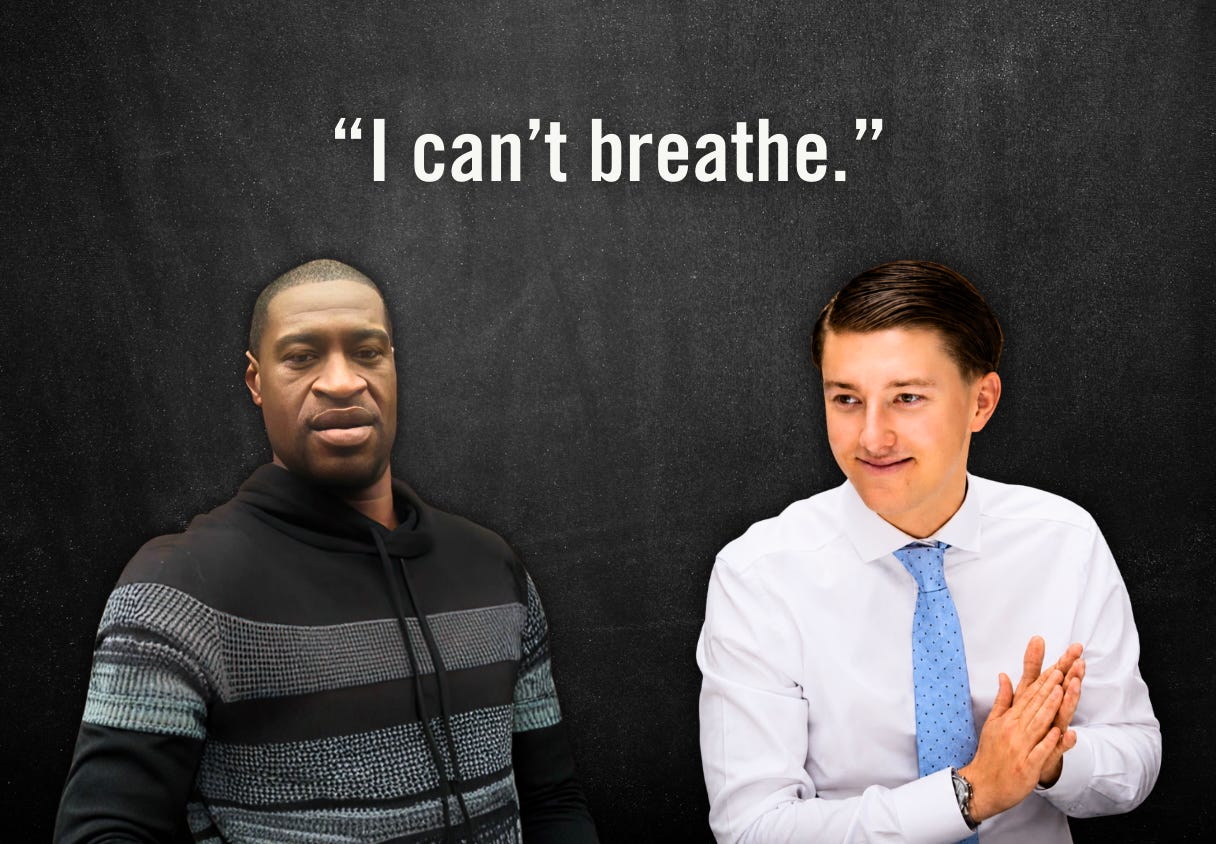
Consider what a nation chooses to see. Attention is not a neutral faculty, a camera that simply records whatever passes before it. A society has only so much moral attention to spend, and the way it spends that attention, what it magnifies and what it lets slide past, is among the most honest confessions it ever makes about its real beliefs. We learn what a people values not from its official creeds but from the deaths it cannot stop talking about, set beside the deaths it manages to forget within a week.
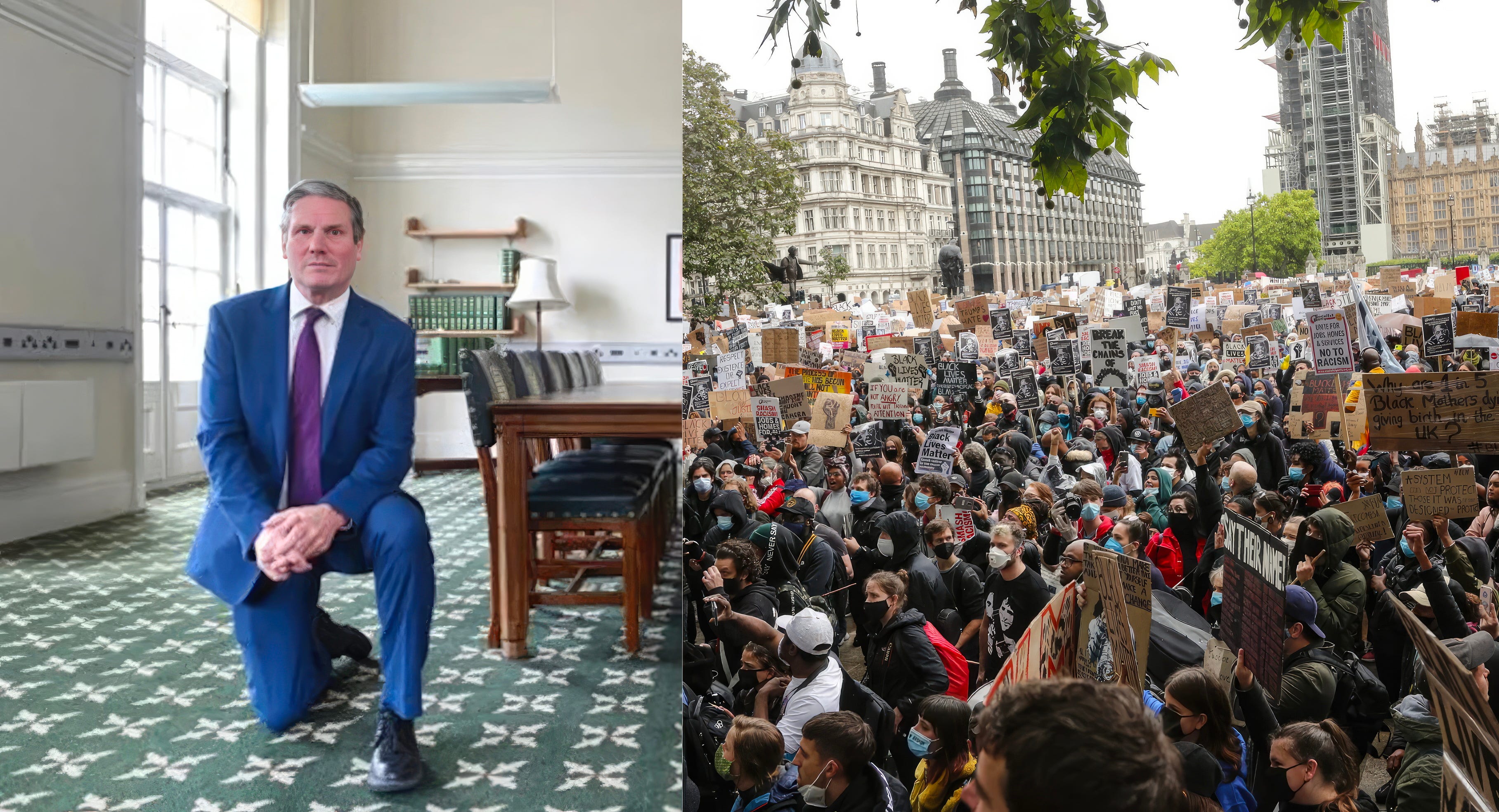
Begin, then, with the deaths a nation could not stop talking about. When George Floyd died under a Minneapolis officer’s knee in May 2020, Britain responded as though the killing had happened in Bristol rather than 4,000 miles away. The Guardian’s own survey of that summer found demonstrations in more than 260 British towns and cities, from Shetland to south Wales, with crowds of 15,000 in Manchester and well over 210,000 marchers nationwide by mid June. The future Prime Minister knelt for the cameras. This is worth dwelling on, because it proves something the British establishment now seems eager to deny about itself. It is fully capable of treating a police death on another continent as a domestic moral emergency. The machinery exists. The will exists. The question is only when it switches on.
Now set against that the case of Henry Nowak. Last December, Nowak, an 18-year-old finance student at the University of Southampton, walked home from an evening out with his football teammates and was stabbed five times by Vickrum Digwa with a 8.5 inch blade, one wound piercing his heart. When officers arrived, Digwa told them what prosecutors would later call a wicked lie, that he was the victim of a racist attack. The gravely wounded teenager told police he had been stabbed. They handcuffed him anyway. They arrested the dying boy on the word of the man who had killed him, and only when Nowak collapsed did they remove the cuffs and begin first aid. He died at the scene. This week a Southampton jury convicted Digwa of murder, rejecting his claims of self defence and racial provocation, and convicted his mother of assisting an offender for hiding the weapon. Hampshire’s Deputy Chief Constable apologized that Henry was handcuffed and arrested in the moments before he lost consciousness, the Independent Office for Police Conduct opened an investigation, and his reported final words, according to trial reporting and the shadow home secretary, were the three that a nation had treated as sacred only six years earlier: I can’t breathe.
Let me anticipate the first and fairest objection, because the strength of this argument depends on conceding it. The two deaths are not medically identical, and no honest observer should pretend otherwise. Floyd was wasn’t killed by the police but from a fatal overdose of fentanyl according the coroner’s report. Nowak was murdered by a private criminal, and Hampshire Police have cited a pathologist’s view that the depth of the chest wound meant officers could not have saved him even had they believed every word he said. If the claim here were that the police killed Henry Nowak in the way Democrats claimed an officer killed George Floyd, that claim would be false. But that was never the comparison worth making. The variable under examination is not the cause of death. It is the response of a society to a death, and on that variable the two cases are almost laboratory clean.
Measure the response, and the asymmetry stops being a matter of impression and becomes a matter of arithmetic. Signal AI, a media analytics firm and no conservative organ, found that in the two weeks after Floyd died he was named in 1,880,507 news items, more than the 1,668,210 that mentioned Donald Trump in the same period and roughly 20% of the entire global volume on coronavirus at the height of the pandemic. Of those items, 82.5% referenced the protests and 54.7% invoked racism or police brutality. That is not coverage. That is saturation, an industrial event in which a single death became, for a fortnight, the organising fact of the Western news cycle. Henry Nowak’s killing, by contrast, moved through a narrow pipeline, a local stabbing, a trial, a verdict, a police apology, and only then a national argument, and it reached that national stage chiefly because conservative writers, opposition politicians, and Elon Musk’s intervention dragged it there. The reaction was not absent. It was rationed.
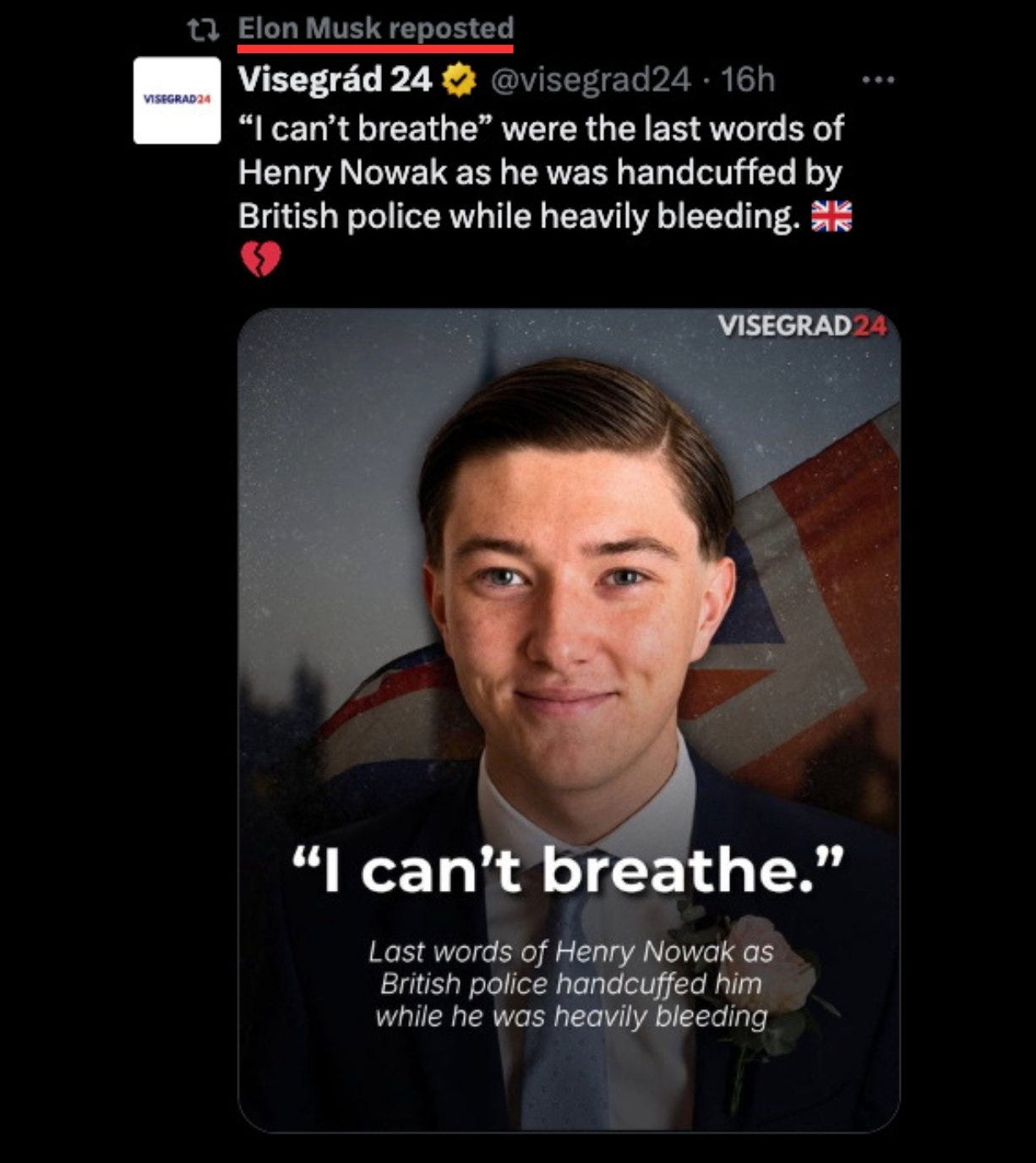
What, then, accounts for the difference? Here the puzzled reader deserves the obvious counter put plainly. Perhaps Floyd simply mattered more because police killings are rarer and graver than street crime. Yet even sympathetic scholars concede that Floyd (had he been killed by police and he wasn’t) was one of roughly 1,100 people killed by American police use of force that year, and his case alone became the catalyst for the largest protest movement in American history. Frequency did not select him. Video did not select him either, since custody deaths with video and the same gasped phrase, Edward Bronstein in California weeks before Floyd, drew no movement at all. The element that reliably predicts which death becomes a movement is not the conduct of the police, nor the presence of a camera, nor the words of the dying. It is whether the death fits an available racial narrative. That is an uncomfortable conclusion, and it is the conclusion the evidence keeps delivering.
The deeper indictment, and the one conservative analysts have stated most precisely, is what the night in Southampton reveals about the institutions themselves. The reforms that followed the Macpherson Report were built to ensure that British policing would never again ignore a victim because of his race. The columnist Lee Cohen put the resulting irony with painful accuracy in GB News, arguing that Nowak’s death is not Britain’s George Floyd moment but the product of it, the spectacle of officers placing an unverified racism complaint above the visible, life threatening injury bleeding out in front of them. Writing in The Spectator, the legal scholar Andrew Tettenborn distilled the governing principle into a sentence, that partial policing can be deadly. When an institution is trained to fear one kind of accusation above all others, it will, under pressure, commit precisely the failure it was built to prevent. The instrument of correction becomes the instrument of harm, and an 18-year-old spends his last conscious minutes in handcuffs being told by the police that he is making it up.
The political silence completed the lesson. Robert Jenrick observed that the case had been met with what he called a collective shrug, with, in his words, not a peep from the Home Secretary and not a word from a Prime Minister normally quick to comment on deaths involving the police, at home and abroad. The shadow home secretary, Chris Philp, called the officers’ conduct shameful and demanded the bodycam footage be released. The contrast with 2020 is not subtle. The same political class that found its voice instantly for a man killed in Minnesota could not summon a single sentence for a boy killed in Southampton, and the difference between the two cannot be explained by distance, since distance ran the wrong way.
To be clear, a civilization reveals what it is by what it permits itself to mourn. If a death must first be checked against a narrative before the nation is allowed to grieve it, then grief has become a political instrument, and the dignity owed to the dying has been made conditional on their usefulness. Henry Nowak said the words a nation had already declared holy. He said them as his own blood pooled beneath him, in his own country, with his own police standing over him. The least his countrymen owe him is the attention they gave so freely to a stranger an ocean away. A boy who says I can’t breathe deserves to be heard, whoever he is, and a society that can hear him only when it is politically convenient has forgotten the first thing a society is for.
If you enjoy my work, please subscribe https://x.com/amuse/creator-subscriptions/subscribe
Alexander Muse is a Fellow at the John Milton Freedom Foundation and publishes daily political analysis at amuseonx.com. Primary sources cited in this piece are linked inline; campaign finance figures are drawn from FEC filings, polling data from publicly released crosstabs, and legal claims from filed pleadings. Corrections are posted to the original URL with a dated changelog. Readers who identify errors are invited to contact the author directly.
Henry Nowak did not fit the script, so Britain looked away. That is the whole disgrace. When Floyd died in America, Britain acted like Minneapolis was Manchester. But when a British teenager bled out after a savage stabbing and police allegedly treated the killer’s racism claim as more urgent than the dying boy in front of them, the same elites went quiet. This is what ideological policing produces: officers terrified of the wrong accusation, politicians terrified of the wrong headline, and media terrified of the wrong truth. Britain’s problem is not lack of compassion. It is selective compassion. That is civilizational decay.
Starmer kneeling for a black thug infuriates me. George Floyd was used as a political weapon by the global progressive movement now bordering on socialism/communism. The media pushed the Dem agenda of hate and their thirst for power. The US politicians kneeling were appalling and disgusting. 🤢 🤬 The athletes and activists all deserve disgust for their kneeling and acts of violence that followed.