


There is an old puzzle in epistemology about how a community of sincere, intelligent people can converge, with near unanimity, on a conclusion that is false in nearly every particular. The puzzle is not how individuals make mistakes, since that requires no explanation at all. The puzzle is how error becomes consensus, how a belief that would collapse under five minutes of scrutiny instead hardens into something a city will write into its own law. On June 2, 2026, the voters of Monterey Park, California, supplied a textbook case. By a margin of roughly 86%, they passed Measure NDC and made their city the first in the nation to permanently ban data centers by popular vote. To reverse it now requires another citywide election. They did not regulate. They did not condition. They prohibited, and they did so on the basis of claims that do not survive contact with the public record.
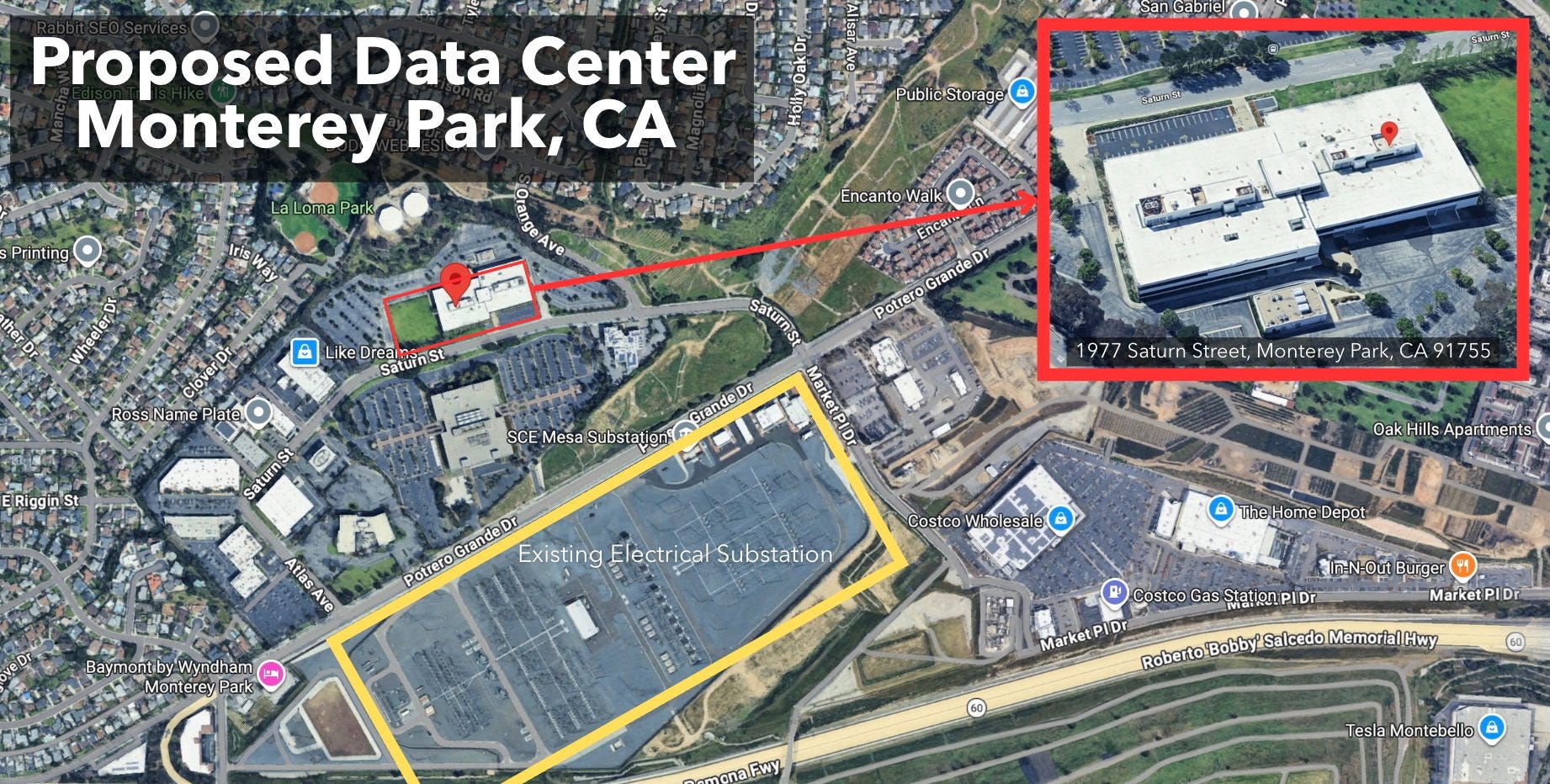
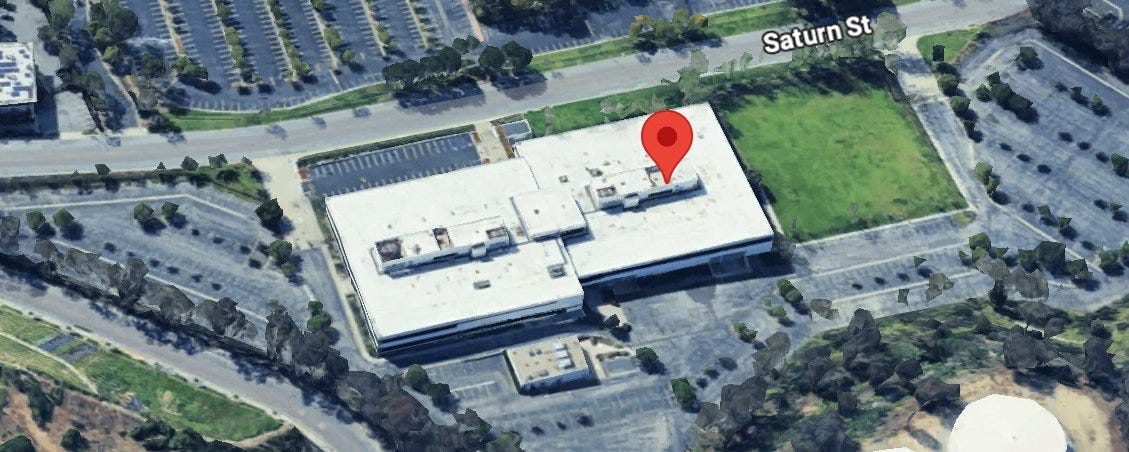
Consider first what the voters believed they were stopping. The picture painted for them was of heavy industry descending upon a quiet residential street, an alien facility bulldozed into a neighborhood of homes and schoolchildren. That picture was false at the level of geography. The proposed project sat at 1977 Saturn Street, on a 15.8 acre parcel inside the McCaslin Park business district, a 72 acre commercial campus that the city itself describes as office space and that already houses tenants such as Care1st Health Plan, TMC Power Equipment, Ross Name Plates, and the Association for Los Angeles Deputy Sheriffs. The site had been a vacant commercial office complex since 2016, complete with a two story office building, a utility building, surface parking, and, tellingly, an existing diesel emergency generator. It was bounded by the La Loma Reservoir water tanks to the north, open space to the east, Saturn Street to the south, and more commercial offices to the west. This was not a meadow behind someone’s backyard. It was a derelict office park beside a freeway, and the proposal was a renovation, not an invasion.
The fiscal claim collapses just as quickly. Opponents insisted that data centers take land and give little back, that they pay some taxes but produce empty buildings of no benefit. Yet the analysis attached to this specific project told a different story. It projected roughly $5 million to $7 million per year for Monterey Park’s general fund, plus about $6.5 million in one time construction revenue, between 200 and 300 construction jobs, and 26 permanent positions. For a city of about 62,000 people, recurring revenue near $6 million represents close to 10% of the annual operating budget, and it arrives without new demand for schools, housing, or the dozens of municipal services that residential growth requires. A community that claims to worry about funding its parks, libraries, and street repairs voted to extinguish a revenue stream of that magnitude. The developer was not asking the city to subsidize it. The developer was offering to pay the city, handsomely, in perpetuity.
The two most emotionally potent claims concerned utilities and the environment, and here the gap between fear and fact is widest. Residents were told their electricity and water bills would climb. Southern California Edison, the utility that would actually serve the site, said otherwise. Rates in California are set through the California Public Utilities Commission, not by the arrival of a single customer, and the facility was to be served by dedicated power infrastructure funded by the developer rather than by the ratepayers. The project would have drawn less than 1% of SCE’s projected total demand and would not have touched water rates at all. The underlying economic intuition the opponents relied upon, namely that more demand must mean higher prices, is simply not how regulated utility infrastructure works when a large customer pays for its own interconnection. When a heavy user shoulders the cost of its own transmission and is folded into a broad rate base, the fixed costs of the system are spread across more consumption, which tends to lower the average cost borne by everyone else. The voters punished themselves to prevent a harm that the economics run in the opposite direction.
The environmental case was no stronger. The city’s own Notice of Intent for a Mitigated Negative Declaration concluded that the project would not produce significant environmental impacts once standard mitigations were applied, and the earlier staff report had supported it before the council reversed itself under political pressure. The developer went further still and offered to complete a full Environmental Impact Report to answer every remaining concern, an offer a serious city accepts rather than refuses. On traffic, the transportation memo projected about 52 daily vehicle trips from 26 on site employees, well under the city’s own 110 trip screening threshold, and the site sits directly beside the 60 Freeway. A data center of this kind is among the least traffic intensive uses imaginable for that parcel. A school, a shopping center, a housing development, or simply a re tenanted office would each generate far more. On noise, the modeled level at the nearest homes was 48.6 to 52 dBA at full capacity, which the analysis compared to light rain or a household refrigerator, mitigated by sound enclosures, acoustic screening, and an 18 foot wall, with the loudest events confined to roughly monthly generator testing. On water, the cooling was closed loop and recirculating, with daily consumption comparable to a few households. On emissions, the backup units were Tier 4 diesel generators meeting federal and state standards under the regulatory eye of the South Coast Air Quality Management District. Every horror was answered in advance, and every answer was ignored.
There is one more fact that exposes the whole affair as something other than a careful weighing of costs and benefits. The developer offered Monterey Park a nearly one acre public park, about 39,900 square feet, at Saturn and Orange, along with new sidewalks, landscaping, lighting, street widening, and pedestrian improvements, all at no cost to the city. A community supposedly anxious about its quality of life voted down free parkland, free infrastructure, and millions in annual revenue in order to preserve a vacant building that will now, in all likelihood, continue to rot. That is not prudence. That is the opportunity cost of a panic, and Monterey Park will pay it to neighboring cities and other states that are wiser about where the next decade of investment will land.
Why does any of this matter beyond one San Gabriel Valley city? It matters because Monterey Park is not an isolated event but the leading edge of a coordinated national campaign, and because the stakes of that campaign are far larger than local zoning. The hyperscale facilities that frightened these voters are the physical substrate of artificial intelligence, the railroads and interstates of this century. The competition with China to build them is real and openly acknowledged across the political spectrum. China pays less than half what American operators pay for electricity, builds power capacity in anticipation of demand rather than in reluctant response to it, and can move a project from plan to operation in months while ours take years. Governor Spencer Cox of Utah has warned that Americans have not yet awakened to the stakes. Conservative analysts at outlets such as Power the Future, writing in the language of a new space race, and energy policy voices at the American Energy Institute have argued the same point. Every moratorium, every zoning fight, every manufactured environmental challenge that delays a domestic data center is, whatever the intentions of the locals who cast the votes, a gift to a rival that has made AI dominance an explicit national priority.
And the intentions, it turns out, are not always purely local. The American Energy Institute reported this spring that foreign sources have funneled billions into the anti data center movement in the United States, leading its chief executive, Jason Isaac, to conclude that the opposition is not organic and that policymakers should treat calls for moratoriums with heightened scrutiny. The Washington Free Beacon documented Chinese, Russian, and Iranian state media outlets amplifying the very themes that animated Monterey Park, the spiking bills, the thirsty cooling, the dirty generators. Remember, just last month Eileen Wang, the former mayor of Arcadia, California pled guilty to working as an agent of the People’s Republic of China promoting pro-PRC propaganda in the US. How many other Chinese agents do we have in our local communities fighting against data centers and Ai? Representative Brett Guthrie, who chairs House Energy and Commerce, put the logic plainly: if you were China, you would use America’s free press and open information to turn Americans against building the thing you most fear them building. The residents of Monterey Park were almost certainly not agents of anyone. They were the audience for a script written, in part, somewhere else.
This is the pattern, and it repeats. Every time one examines the specific claims advanced by the Democrat aligned NGOs that drive these bans, against the actual filings, the actual utility statements, and the actual environmental reviews, the claims dissolve. They were false in Monterey Park about traffic, noise, water, rates, emissions, and revenue, comprehensively and individually false. A city was persuaded to amputate its own future to cure a disease it never had. Monterey Park is the first victim of this movement to make its self injury permanent at the ballot box. It will not be the last, and that is precisely why its example must be understood for what it is, a manufactured consensus built on a foundation of falsehoods, and a small but unmistakable victory for everyone who would prefer that America lose the most important technological race of the century.
If you enjoy my work, please subscribe https://x.com/amuse/creator-subscriptions/subscribe
Alexander Muse is a Fellow at the John Milton Freedom Foundation and publishes daily political analysis at amuseonx.com. Primary sources cited in this piece are linked inline; campaign finance figures are drawn from FEC filings, polling data from publicly released crosstabs, and legal claims from filed pleadings. Corrections are posted to the original URL with a dated changelog. Readers who identify errors are invited to contact the author directly.
Alexander, I am in the middle of Data Center fight in Portage County Ohio, and in Ohio itself for that matter. Your article today is EXACTLY what is happening in our community and I want your permission to send this out to residents, perhaps by mail, to try and sway their opinion. How do I get that permission? Tom Zawistowski, Portage County TEA Party, tomz@PortageCountyTEAParty.com
Those dam Chinese the interfered with the 2020 election also. 🤨