


In November 2020, an intelligence official wrote a sentence that should end every argument about whether Americans were entitled to ask hard questions about their elections. Coordinating a pending President’s Daily Brief on China-related activity, the official admitted in an internal email, “We have deliberately massaged our one pending PDB to avoid any direct links to the election.” Read that again. The product built to give the President the clearest possible picture of the most important threats was consciously softened, and the softening target was the election itself. The word deliberately forecloses the accident defense. The word massaged concedes that officials were managing perception, not adding precision. That email sat inside a classified process for years, released only last night by the White House; the archive, 58 PDFs and 269 pages documenting a pattern that runs far beyond one brief.
The FBI supplies the second exhibit, and it is worse. On September 24, 2020, Director Christopher Wray testified that the Bureau had not historically seen a coordinated national voter-fraud effort. The next day, FBI headquarters recalled an Albany Intelligence Information Report containing allegations about fraudulent Chinese driver licenses and mail voting. Senate Judiciary records released by Chairman Chuck Grassley tie the recall to concern that the report would contradict Wray’s testimony. An Albany analyst objected in real time, warning that “it gets dangerous if we cite potential political implications” as a reason to withhold intelligence. Headquarters responded by requiring centralized coordination for all raw election reporting. Consider what happened there. A claim that deserved rigorous investigation, whether to confirm it or to expose it as smoke, was instead pulled back because it threatened the director’s public credibility. Grassley’s standard is the right one: intelligence must be fully investigated. Recall for reputational reasons protects only the institution, and in the end it did not even accomplish that. Two things happened, the truth was hidden from President Trump and the FBI decided not to investigate a very real case of foreign election interference.
Once you see the instinct, you see it everywhere in the record. GAO found in February 2020 that CISA’s classified threat briefings did not always include actionable recommendations or unclassified versions that state and local officials could hand to the technicians actually running the servers, people who mostly lack clearances. The information existed. The operators could not use it. CISA’s own later findings describe known, documented vulnerabilities persisting for months or years on production election systems, and assessors gaining full network control of state and local environments within hours or days. In Georgia, a federal court gave computer scientist J. Alex Halderman 12 weeks with the state’s ImageCast X ballot-marking devices. His report sat under seal for nearly two years while the equipment stayed in statewide use. When a redacted version finally emerged in June 2023, the public learned what CISA had already flagged in a nine-vulnerability advisory, including a flaw that could let an attacker forge the activation mechanism and print unauthorized ballots. Compare that to Washington DC in 2010, when officials invited the public to attack a planned internet-voting system before it went live. Halderman’s team gained near-complete control within 48 hours, changed every vote, exposed almost every ballot, and went undetected for nearly two business days. DC scrapped the system. That is what disclosure buys you. Georgia’s sealed report bought nothing but delay. Ironically we now learn that China had these vulnerability reports while our own officials were denied access.
The pattern crosses the Atlantic. The UK Electoral Commission says hostile actors first accessed its systems in August 2021. The breach was detected in October 2022. The public was not told until August 2023, and attribution to a China state-affiliated actor came in March 2024. Register data covering people who registered between 2014 and 2022, roughly 40 million voters, had been accessible. Nearly three years elapsed between entry and full public understanding, which means the adversary understood the exposure long before the citizens whose data was taken. In Michigan, an investigation that began in 2020 with concrete evidence, roughly 8,000 to 10,000 registration applications from one operation, a 20-form review that found seven completely fabricated applications, a box of 107 forms yielding 91 identities with no database match, and a witness who admitted signing approximately 100 false forms, took nearly five years to close. Interviews were postponed in October 2023 until after a local election. When the FBI closed the case in September 2025, it published no charging analysis reconciling the fabricated forms with the declination. A declination without a public rationale leaves citizens with neither accountability nor exoneration.
Even the disclosures that look like transparency fail the test. The White House announced approximately 278,000 noncitizen registrations, combining public-file reviews in four states with enhanced SAVE screening of more than 68 million records across 25 states. The found hundreds of thousands of noncitizen registrations with just a small subset of each state’s voter data. Federal law requires election officers to preserve records for 22 months, yet the America First Policy Institute found that only two states and six of the top 100 counties could supply the actual 2020 election-day voter files it requested.
I did not learn about this pattern from documents. I lived it. My name was given to Twitter by the Department of Justice as one of the accounts the government wanted shadowbanned or suspended. There were thousands of us targeted by the Biden administration. The posts that ultimately got me suspended for almost two years concerned an election integrity issue that was very real and that the intelligence community was actively suppressing, the same category of information now sitting in the White House archive for anyone to read. Think about the sequence. Officials massaged the intelligence, recalled the reports, sealed the technical findings, and then used federal influence to pressure a private company into silencing citizens who discussed the very problems the government knew about. It was wrong, and it should be illegal. When Elon Musk bought Twitter, he restored my account and the accounts of thousands of other conservatives on 𝕏, and I cannot help but think that decision changed the information environment enough to matter in 2024. A government that hides the evidence and then punishes the people asking about it has forfeited any claim to the benefit of the doubt.
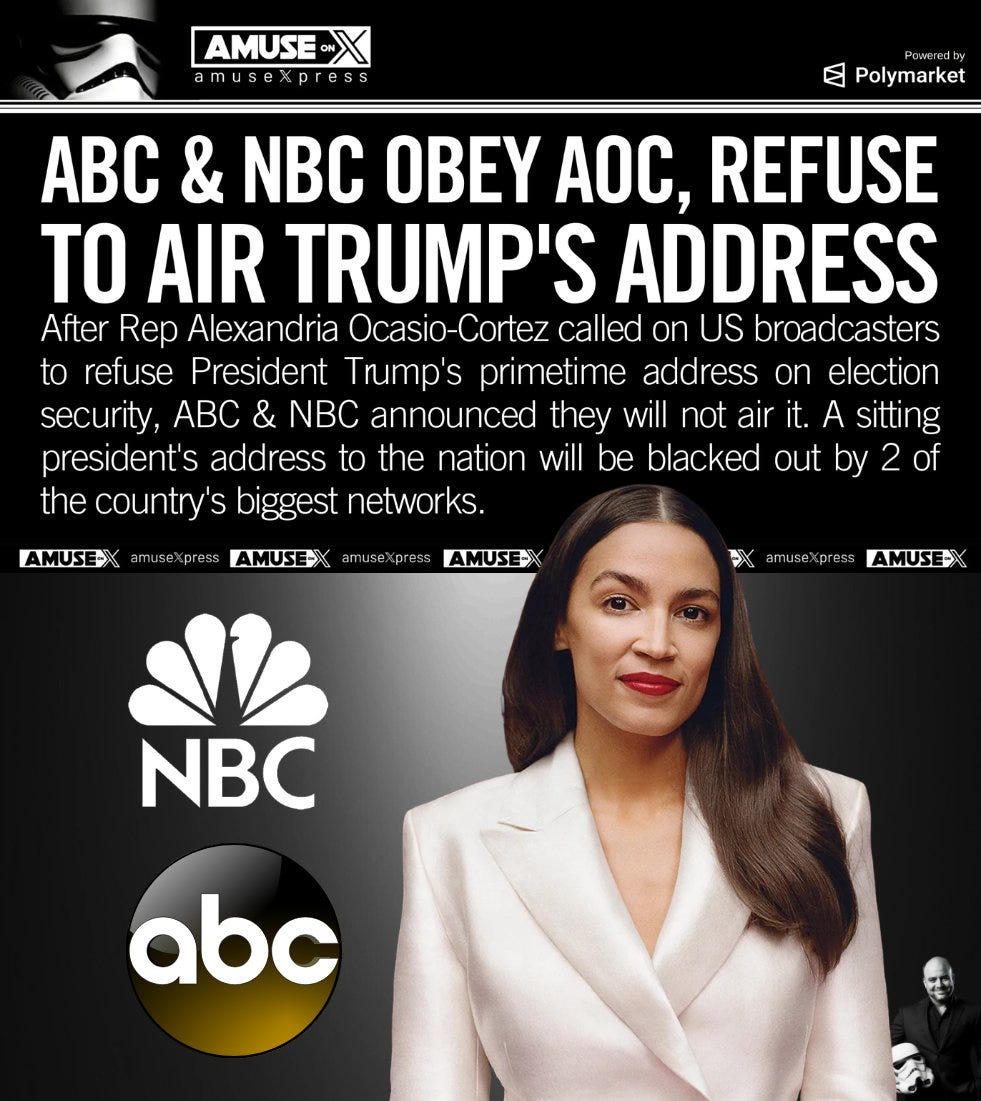
If you doubt that the instinct survives, look at what happened last night. Representative Alexandria Ocasio-Cortez called on television networks not to air the President’s address at all, telling reporters that broadcasters have an ethical obligation to withhold speech that undermines confidence in elections, which is a remarkable standard when the speech in question consists largely of declassified government documents from the Biden era. ABC, NBC, and CNN obliged, refusing to carry the address live on their primary networks. CBS cut away after 20 minutes and deployed fact-checkers to dispute evidence the President had just declassified, and MS Now did the same. Set aside the question of whether any network owes the President airtime. The spectacle of a sitting member of Congress urging broadcasters to keep a presidential address about government secrecy away from the public, and the networks complying, is the thesis of this essay performed in real time. The response to newly released evidence was, once again, to manage what citizens were allowed to see.
Here is the principle the whole record teaches. Trust is not the premise of election integrity. Trust is the result of evidence citizens are permitted to inspect, and it certainly is not earned by censoring their speech. James Madison wrote in 1822 that a popular government without popular information is but a prologue to a farce or a tragedy. Elections are exercises of delegated sovereignty. The officials, vendors, analysts, and prosecutors who run them are custodians of the facts, not proprietors. Will trusting them harder fix anything? Not necessarily, and the numbers prove it. Gallup found that confidence in the accurate counting of the 2024 presidential vote stood at 57% overall, with Republican confidence at 28%, down from 55% in 2016, against 84% among Democrats, a 56-point gap. Pew found only 52% of voters confident that election systems were secure from hacking, with Harris and Trump supporters divided 73% to 32%, and similarly enormous gaps on mail ballots and ineligible voting. Reassurance has been tried for a decade. It failed, because reassurance is not evidence.
The conservative answer is neither compulsory trust nor perpetual speculation. It is architecture. Elections should run on human-readable paper ballots and software-independent records, because integrity should not depend on unreadable machine code. Manual audits should precede certification in every state, with publicly documented sampling and discrepancy procedures, treated as routine controls rather than insults to administrators. Vulnerability disclosure should be transparent and fast, with patch-approval pathways that do not strand jurisdictions on exposed software for years. Election-day database snapshots should be preserved as immutable records with documented chain of custody, so the 22-month statute means something. Citizenship verification should come with notice, cure periods, human review, and published error rates, so the program survives scrutiny instead of merely surviving litigation. Major prosecutorial declinations in election cases should be publicly explained. Risk descriptions and significant analytic dissent should be declassified on a clock, not a news cycle. None of this requires proving any particular theory about changed vote totals in any particular year. It requires only the recognition that the burden sits where the Constitution put it, on the institutions, which owe the sovereign people systems and records that permit verification.
The scandal is not that Americans asked questions after 2020. The scandal is that their government made the answers unnecessarily difficult to verify, then treated the questioners as the threat. President Trump’s address and the files behind it did not settle every dispute about that election. They settled something more important: that Washington’s answer to every election-security question was trust us, and that the people saying it knew, in writing, that they had not earned it. The last thing I will leave you with is a request that you call your senator and representative and demand that they do everything in their power to pass the Save America Act.
If you enjoy my work, please subscribe https://x.com/amuse/creator-subscriptions/subscribe
Alexander Muse is a Fellow at the John Milton Freedom Foundation and publishes daily political analysis at amuseonx.com. Primary sources cited in this piece are linked inline; campaign finance figures are drawn from FEC filings, polling data from publicly released crosstabs, and legal claims from filed pleadings. Corrections are posted to the original URL with a dated changelog. Readers who identify errors are invited to contact the author directly. Data in sponsored partnership with Polymarket.
If broadcasters use public airwaves to censor a sitting president’s evidence-backed address while hiding the legislative remedy from voters, the executive should fight back hard — lawfully, publicly, and without apology. Review FCC licenses. Investigate viewpoint discrimination where federal privileges are involved. Fine violations where statutes and regulations allow it. Expose coordination between politicians and networks. Demand equal-time scrutiny, public-interest review, and congressional hearings. Nobody has a constitutional right to a government-granted broadcast license while operating like a partisan blackout machine. The First Amendment protects speech. It does not require the public to subsidize cartel censorship by corporations using public spectrum for private political control. Trump released the receipts. The networks cut the feed. That tells America exactly why the SAVE Act — and media accountability — must move together.
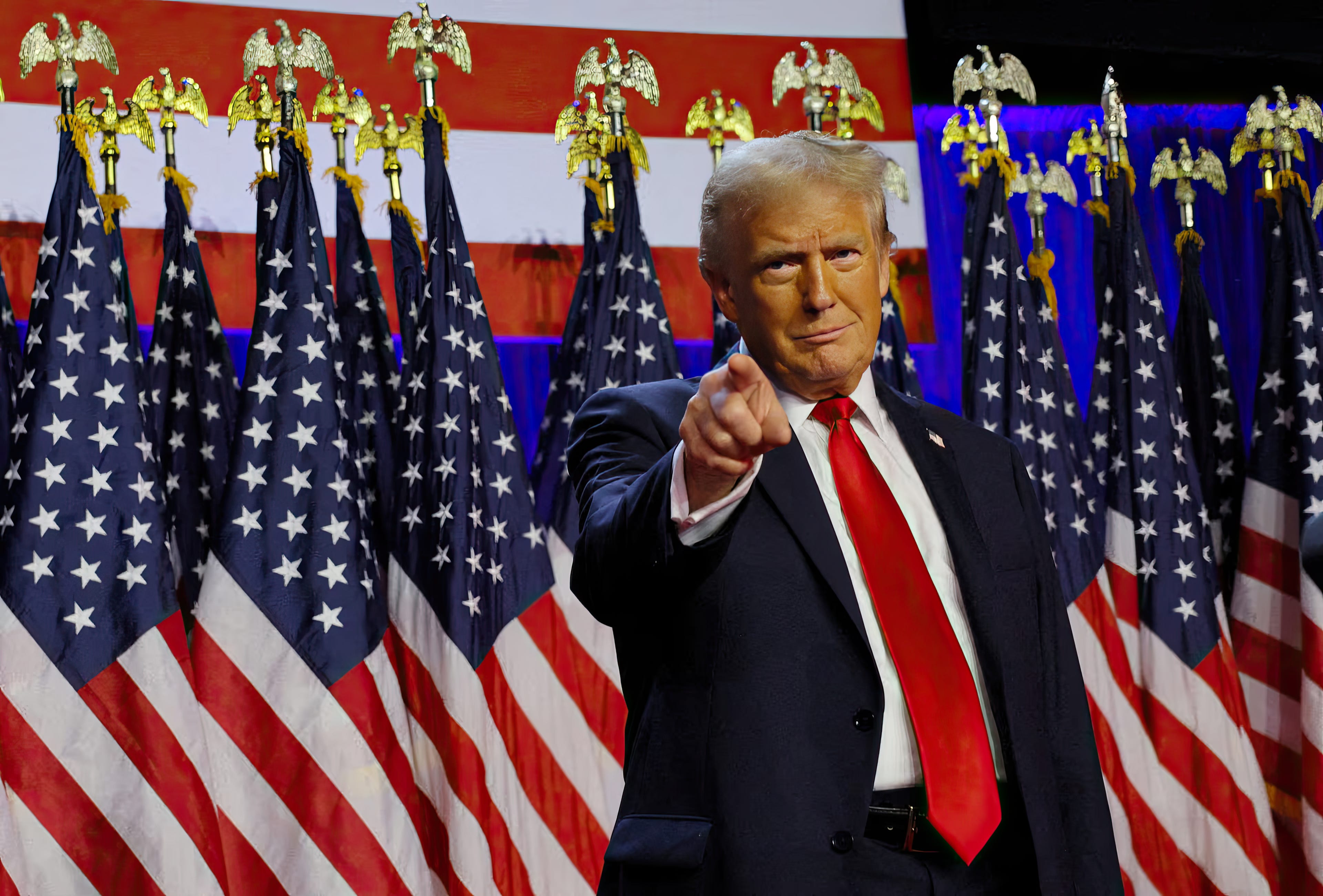
"Congress must pass the SAVE America Act. How easy is that to do? Unless you want to cheat." When President Trump said this last night, he nailed the whole boondoggle about not passing the SAVE Act. And those in the Senate know he was talking directly to them.